Isothermal annealing differently
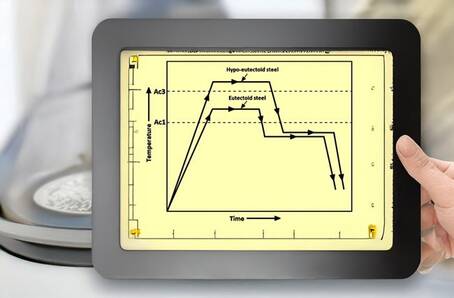
Isothermal annealing is a process that usually requires 2 temperatures. The first is the austenitization temperature, where we must be sure that the material has fully austenitized, the second is a hold in the range around 700 C and with a holding time that ensures full pearlitic transformation.
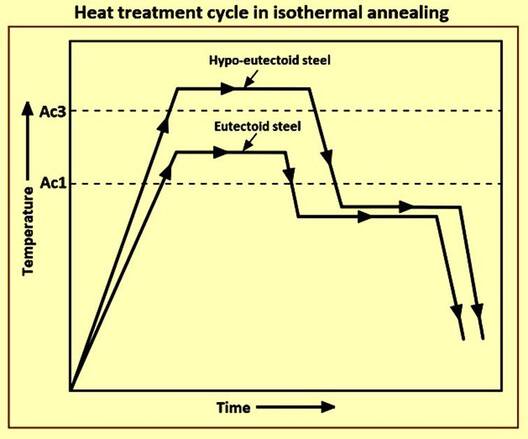
In practice, this means that we must have two furnaces, usually continuous. Because this is how forgings and castings are usually processed, the furnaces must be with a corresponding output of the order of tons per hour.
For example, MSV Metal Studénka or Třinecké železárny
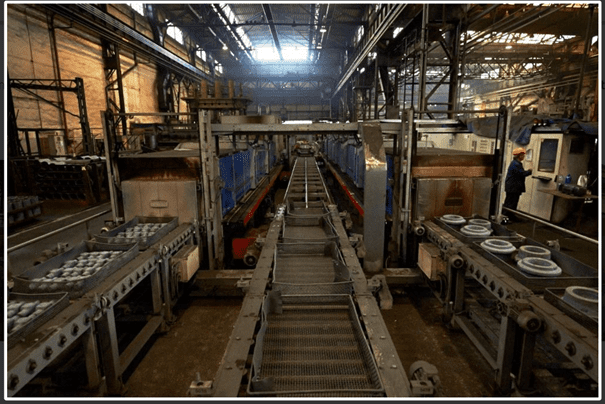
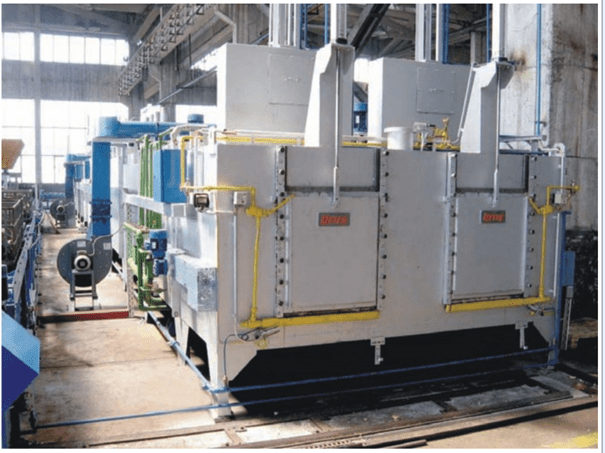
But not always such large volumes are involved. We will need this process for special bearings, fasteners or forgings for medical applications. This type of annealing is usually applied to hypereutectoid steels, e.g. for bearing steels of the SAE 52100, 100Cr6, SUJ2 type according to ISO 683 -17, processing BG / +FP.
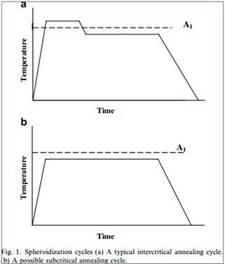
Similarly, for some types of spheroidizing annealing, it may be a two-temperature process, where the first phase takes place above AC1, the second below AC1 – see the picture, process a), GKZ regulation / +AC, b) subcritical annealing
In practice, we cannot carry out such a type of process in multi-purpose furnaces, they are not able to ensure the transition from one temperature to the other operatively, and we do not have the corresponding quantity for two high-performance continuous furnaces. I am not even talking about the energy consumption and idling hours, when we have to keep the furnace at temperature and wait for something to be produced.
ECM Technologies offers an elegant solution forf izothermal annealing in the FLEX type device. The furnace has an input and output chamber, with forced cooling after annealing at 1.5 bar N2, two heating cells, each for one temperature, and the last one is currently equipped with a so-called parking chamber, where the charge can wait for a free position. The device operates in fully automatic mode, when the charge is transported after loading by an internal loader. All this in a vacuum tunnel.
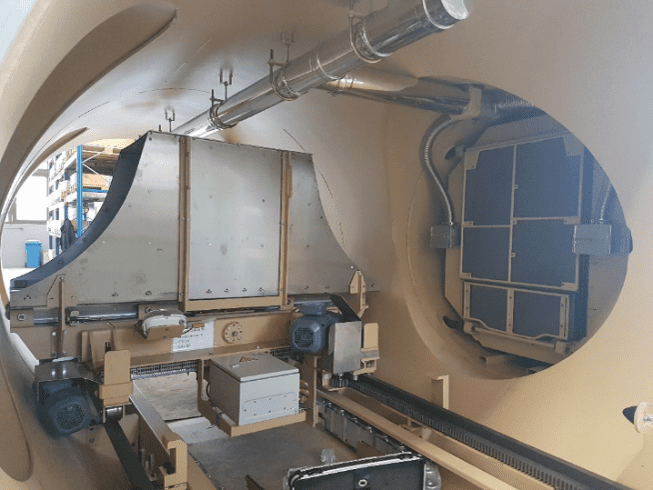
The loading vis I/O cell the batch is transported to chamber 1 and is heated up to the austenitizing temperature with an appropriate hold for perfect heating of the charge. After the end of this phase is transported to the second chamber, where the temperature will be maintained to allow full pearlitic transformation. After the end of this period, the batch is transferred to the input/output module and cooled down to the temperature of removal from the furnace. The entire process is in vacuum and under protective gas or nitrogen. A vacuum-tight door can be added to chamber 1 and 2, allowing the chambers to operate with convection heating at 0.8 bar nitrogen. Heating will be faster and more efficient.
The working cycle in the device will be approximately 6 hours, the tact of isothermal annealing will therefore be approximately 3 hours. With a maximum possible charge of 750 kg, this is an output corresponding to approximately 250 kg/hour. If the forge needs higher output, the device can be expanded to 10 horizontally placed positions. This means that the furnace output would increase to 1,250 kg/hour. That is not a small amount.
The advantage of this concept is a fully automatic mode with the possibility of robotization at the input and output, and vacuum environment, 100% clean surfaces and high process reproducibility. The advantage is the gradual expandability of the device.
If a quenching module in N2 with an overpressure of up to 20 bar were used instead of the input/output cell, then not only can the batch cooling phase for the process be accelerated, but above all the device will become capable of quenching in a gas stream. There will therefore be room for other technologies. Of course, in a device configured in this way, normalization, stress annealing, spheroidizing annealing is feasible. Can be performed without any problems.
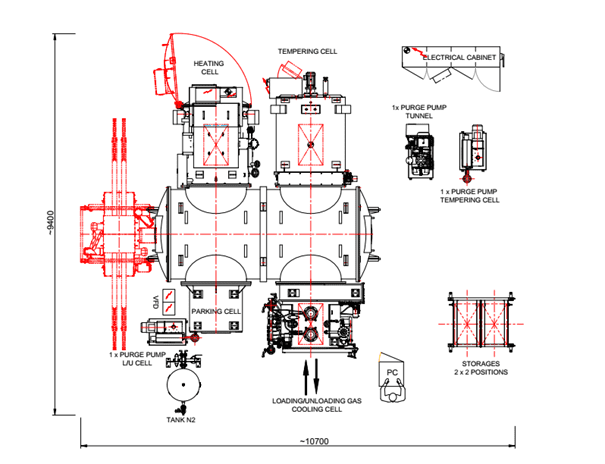
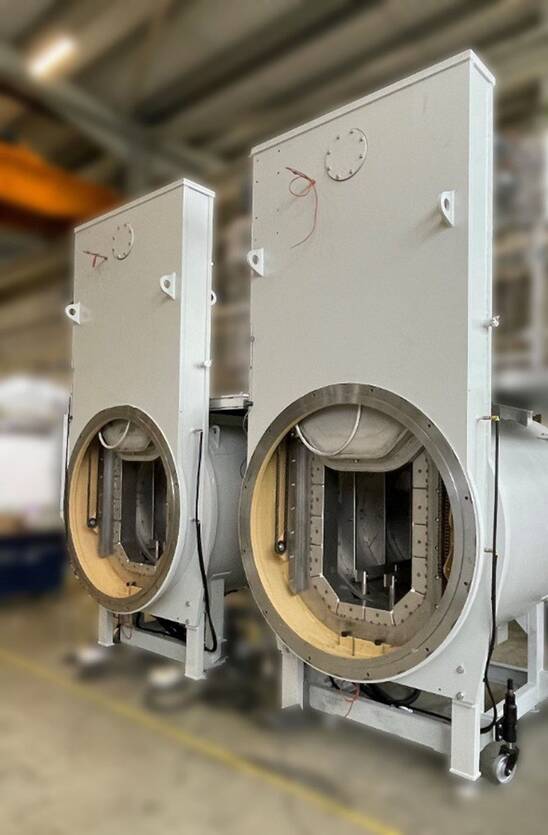
ECM Flex layout and heat cells with tight door
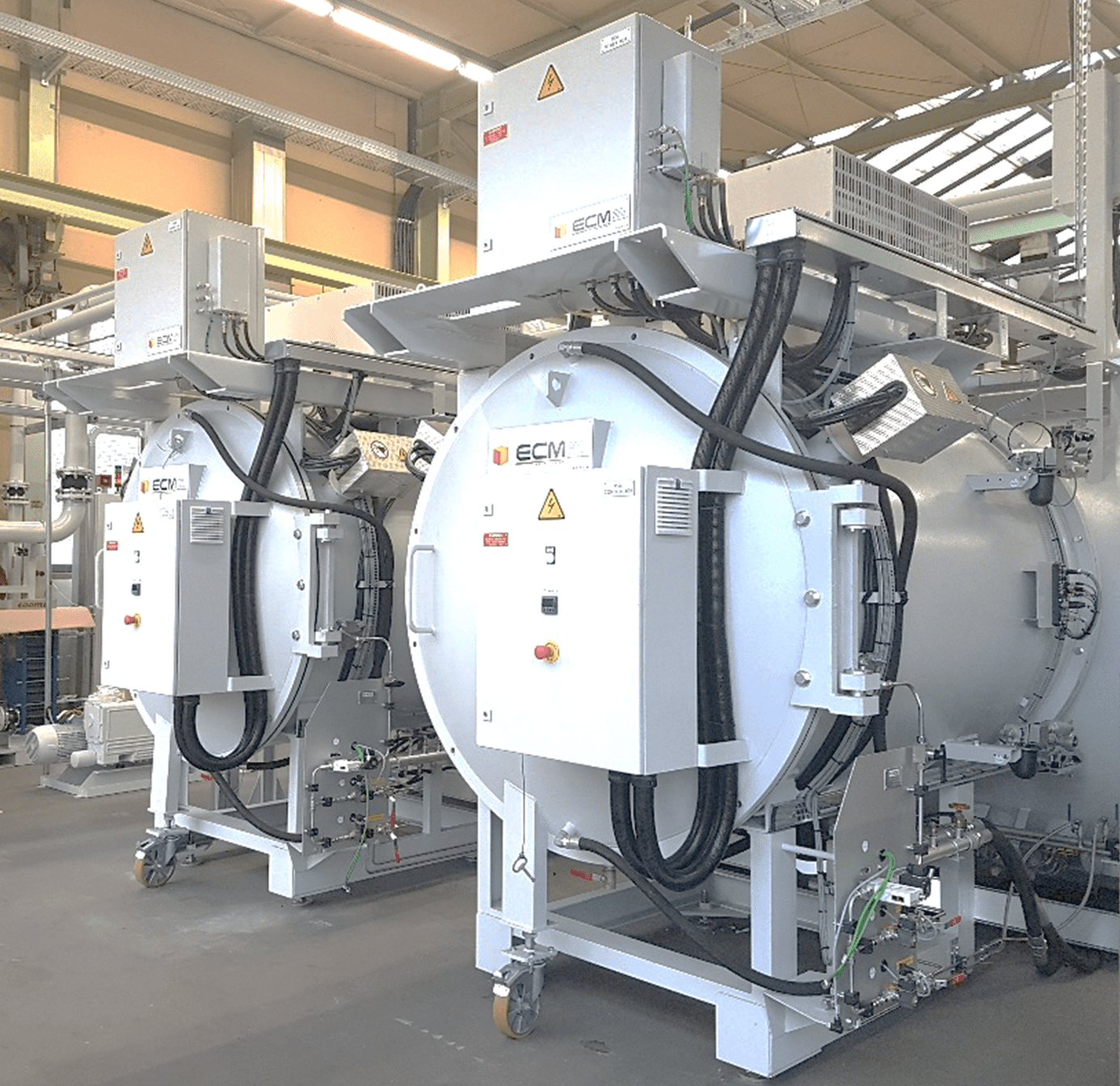
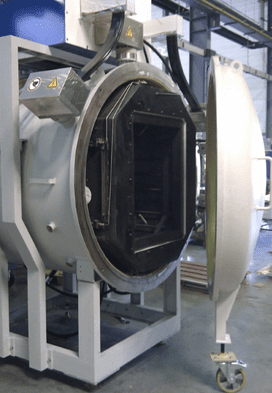
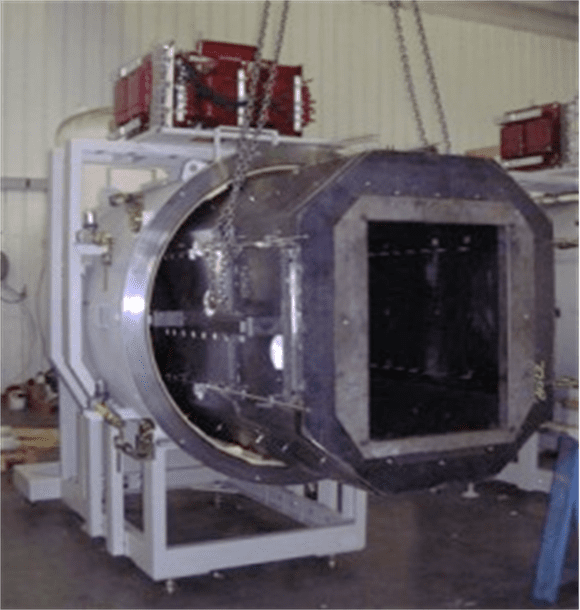
The back side of the heating cells with an opening door allows not only convective heating, but easy replacement of the hot zones. In case the cell is equipped with a vacuum-tight door, the hot zones can be changed even while the furnace is running.
Using the AMR loader with AI, the furnace can be positioned independently of other peripherals, because this type of installation does not require rails and so there is no need to think of a classic linear arrangement.
Does this seem like a good solution to you? I see a certain level of perfection in it. You don’t have to worry about ecology, emissions, you don’t even have to deal with surface cleanliness, decarburization or carburization, and the energy consumption will be less than 0.5 kWh/kg of charge.
Do you want to try it? A similar configuration is right in the hall at ECM in Grenoble and tests can be ordered at any time. If you are interested, you can contact me at any time or
Cédric VILLARD
Business Developer
+33(0)476496560 – +33(0)760283616
46 Rue Jean Vaujany
38100 Grenoble, France
Jiří Stanislav
08. ledna 2025