VIM
VIM stands for Vacuum Induction Melting. What is it good for? To put it in layman’s terms, for everything. Virtually any material can start with this process. VIM covers a very wide range of Fe-, Ni- and Co-base alloys; for highly reactive and refractory alloys Ti, Nb, Hf or Ta, its variant with cold crucible – CCIM is used.”
17-4PH, Inconel 718, Inconel 625, alloys of the Hastelloy X type, Waspaloy, Haynes 282, C103. Just look at the standards for aviation materials, such as AMS 5662, AMS 5663 for Inconel 718, or AMS 5622, AMS 5643 for 17-4PH, etc. The greatest application can be found in materials for aviation or space applications, but it is also an indispensable technology in the development of new materials.
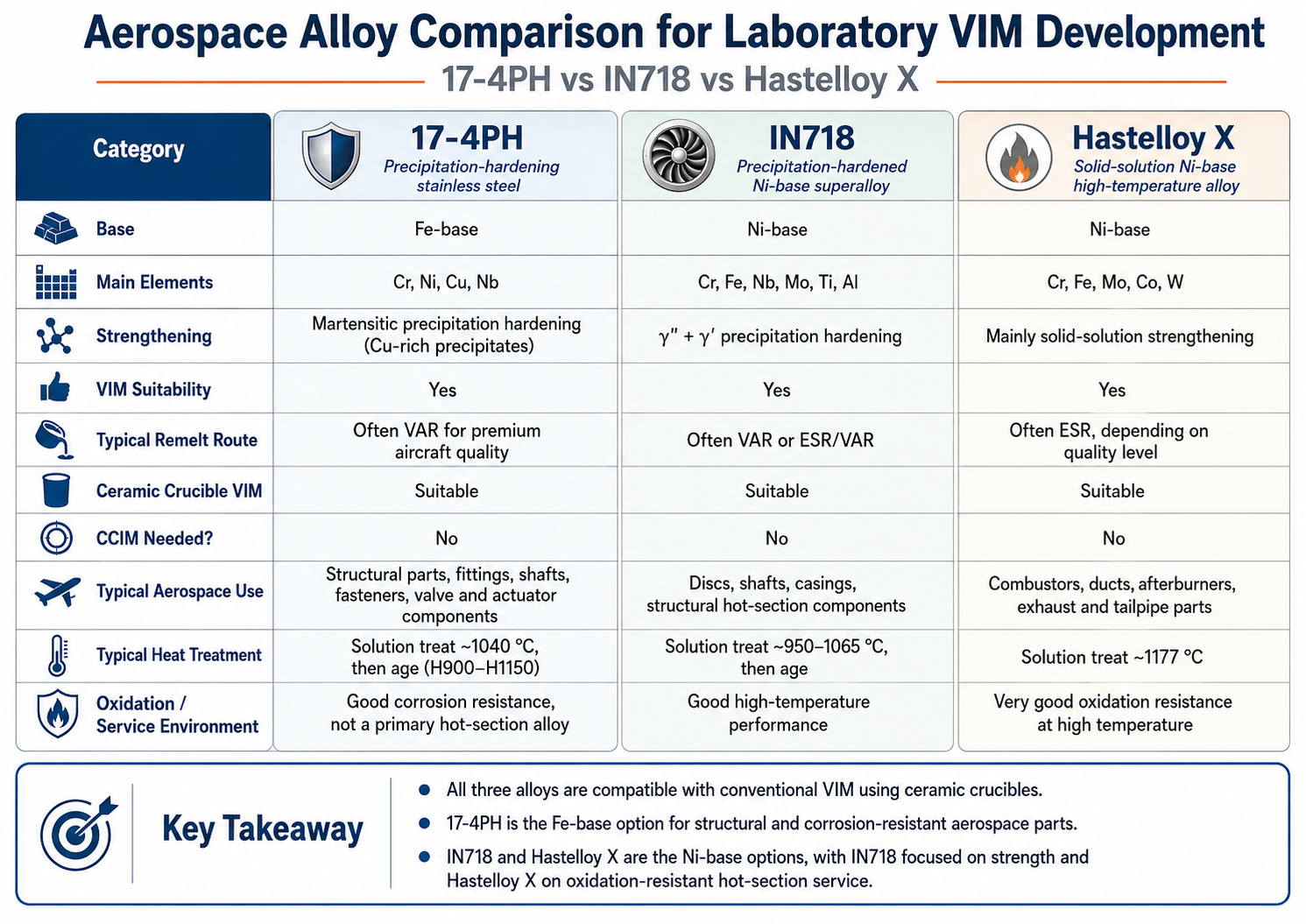
Fig 1 – Comparison of selected aviation alloys from the perspective of laboratory VIM
And what does such a device look like? In essence, it is a vacuum vessel with a pumping system from 10-3 mbar to 10-5 mbar (Fig. 2). For a universal research device, the ability to achieve a high vacuum of up to 10⁻⁵ mbar is advantageous. However, the actual working pressure depends on the molten alloy. If a high vacuum is required, the device is supplemented with a turbomolecular or diffusion pump. To limit the evaporation of more volatile alloying elements, the actual melting can be carried out at a controlled partial pressure of high-purity argon.
If the VIM is to be used for scientific purposes, it is recommended to check the residual atmosphere, either with a mass spectrometer or RGA (Rest Gas Analyser) or with an OPTIX gauge from Gencoa. A classic RGA may require its own differentially pumped sampling system at higher process pressures. Optix operates directly in a significantly wider range of process pressures and is therefore a structurally simpler solution for such a research furnace
The operating temperature can be varied, ECM supplies these devices up to 3,000°C. Such a high temperature range is especially important for Nb- and Ta-base refractory alloys, such as C103 and other refractory alloys
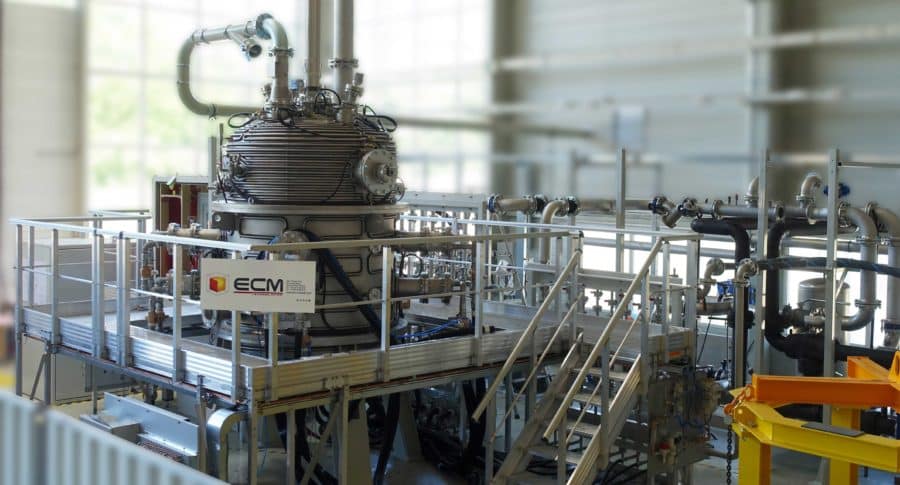
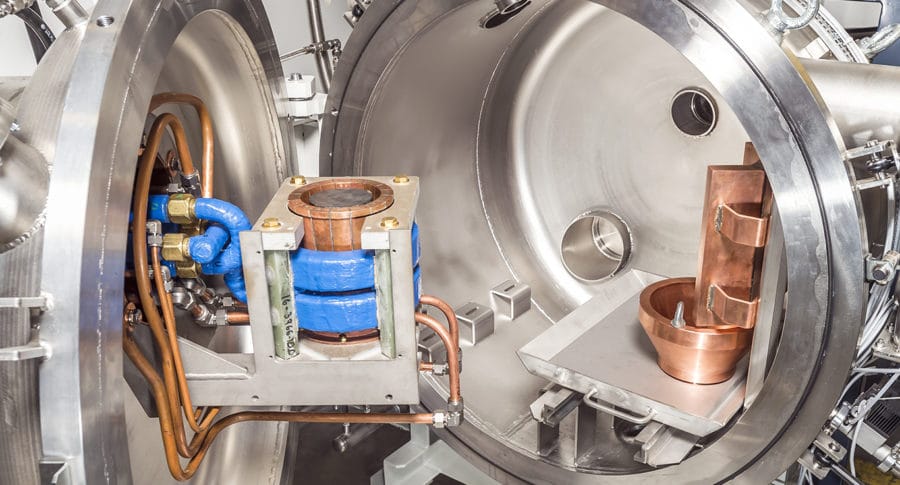
Fig. 2 – Overview of VIM from ECM
Fig. 3 – Internal arrangement of the chamber with a melting crucible and induction heating
The internal arrangement looks simple at first glance, but it is not (Fig. 3). It consists of a crucible, induction heating and electromagnetic mixing of the bath, a tilting mechanism, a pouring path, and a casting mold, e.g. copper, water-cooled. The chamber may also contain a mold manipulator for manipulating the mold to set it against the flow of the melt (mold manipulator) or a device for sampling or adding alloying elements. In order to keep the process under control, an internal camera and an optical pyrometer are advantageous.
The crucible itself can be made of various materials, depending on the molten metal. For example.
- 17-4PH – MgO, Al₂O₃, or ZrO₂
- IN718 – MgO, Al₂O₃ / MgO-spinel, depending on the required purity
- Hastelloy X – MgO or Al₂O₃
- Ti-6Al-4V – Y₂O₃ or special Zr-based ceramics
- Highly reactive or refractory Nb-, Ti-, Hf- and Ta-base alloys use the CCIM (Cold Crucible Induction Melting) method where the actual crucible is copper, water-cooled
Does it still seem simple to us? Not to me. And what does the actual process look like?
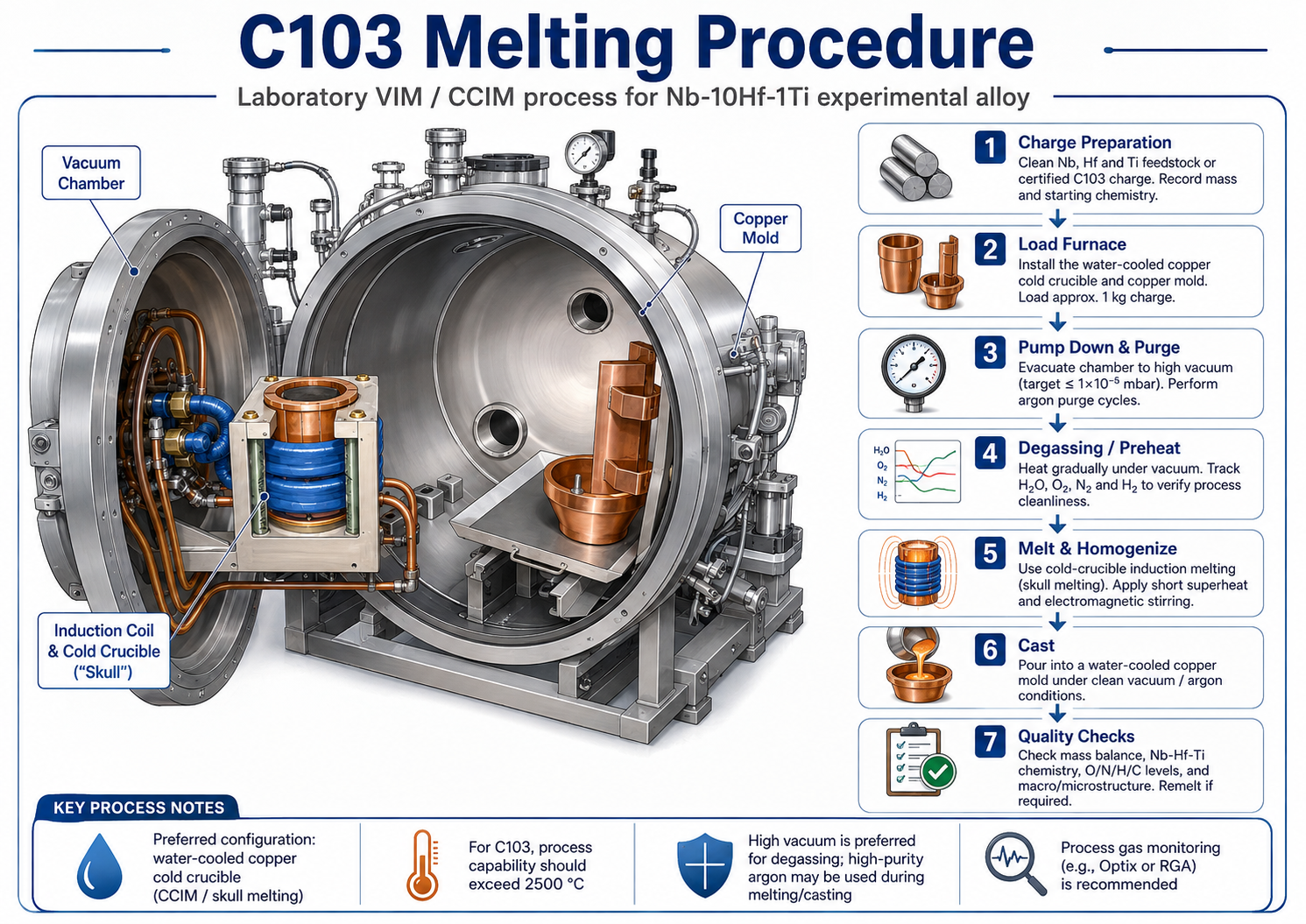
The procedure is roughly as in this infographic.
- Preparation and loading of the charge into the melting crucible
- Pumping the system to a pressure of 1*10-5 mbar
- Degassing the chamber, minimizing O2, H2O,
- Melting and homogenizing the melt
- Casting the melt into the mold
- Cooling the ingot in vacuum or under pure Ar, filling the chamber with inert gas to atmospheric pressure and removing the ingot from the mold
Not many manufacturers have mastered this technology. I am pleased that one of them is ECM Technologies, the company I represent. Find out more here
https://www.ecm-furnaces.com/induction-melting-furnaces/
If you are interested, I am available at any time.
=======================================================================================================
Are you solving a similar problem? I will help you with the analysis…
 40+ years of experience in the field
30+ years of experience… HT-PROGRES, Bodycote, Galvamet
cooperation… VŠB, Czechimplant, ECM Technologies, TAV Vacuum Furnaces, GHC Invest
12+ years of expert activity
Want to ask for a solution or want a non-binding consultation? Click on this link, I will usually respond within 24 hours. Contact email
========================================================================================================
Jiří Stanislav, Ing. CSc.
Consultant and forensic expert
========================================================================================================
10/8/2026