Round or square hot zone?

Discussions about which is more advantageous, a round chamber or a square chamber, have been going on for ages. What is interesting is that even though I was responsible for purchasing furnaces for 20 years, no furnace supplier has ever presented me with a meaningful analysis that would show the differences, advantages or disadvantages of the individual variants. So I set about it myself. The model case is on a die casting mold insert measuring 442*521*1905 mm, weighing ~3,400 kg. We will assume that both furnaces, round and square, have comparable:
- installed heating capacity,
- 10–15 bar N₂ quenching capacity
- equally efficient nitrogen/water heat exchanger
- similar maximum quenching turbine output
- transverse usable dimensions of 1200xx1200 mm.
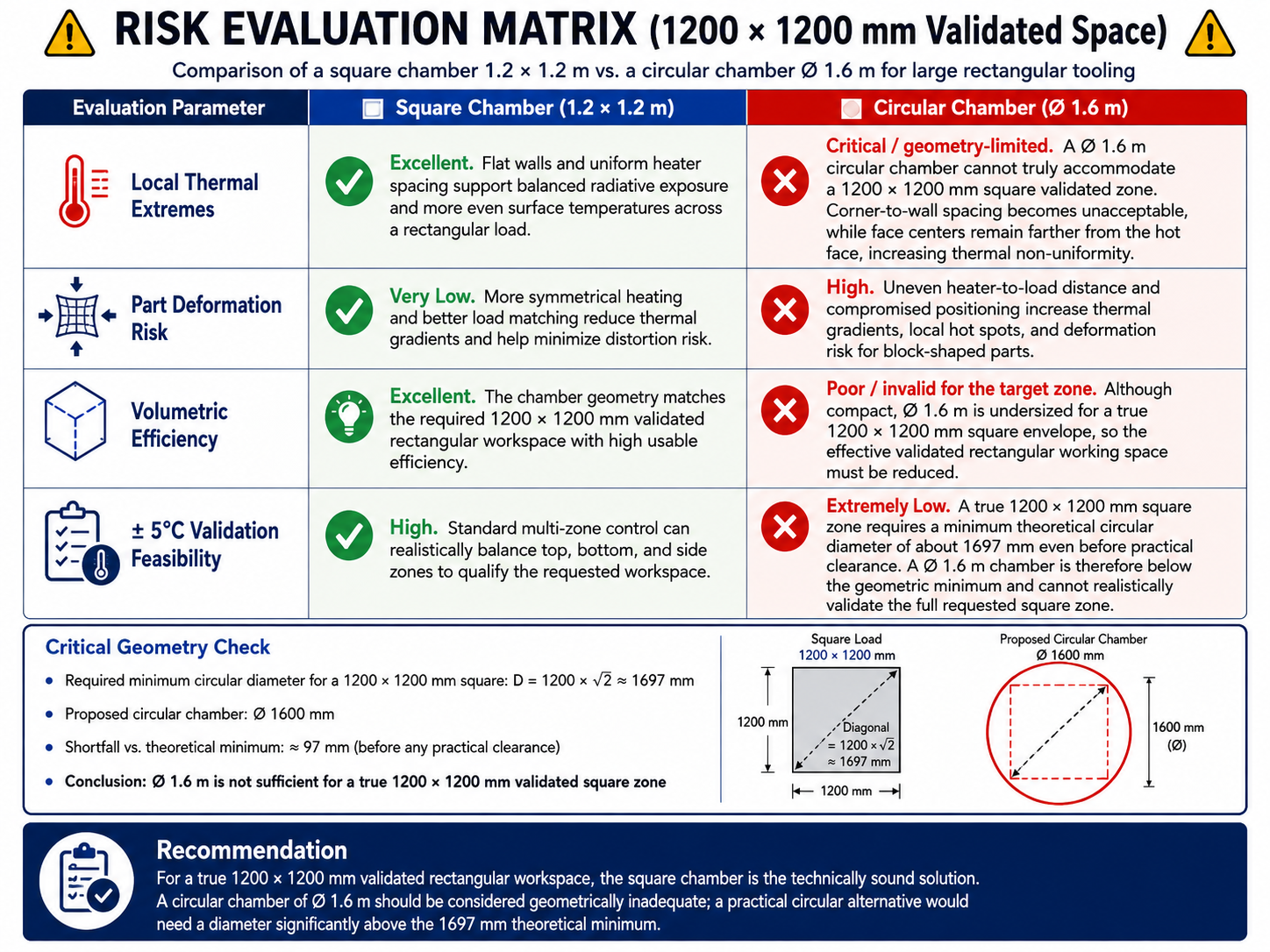
If the same size were to fit into a round chamber, the hot zone diameter would have to be at least 1697 mm dia. The heat exchange surface of a round furnace would be 22% larger than a square one. For the furnace design, this means that a square hot zone would have
- less insulation,
- lower losses
- lower heat capacity,
- less N₂,
- less hot gas that must be circulated during quenching
The volume of a square heating zone with a length of 2,000 mm will be 2.88 m3, a circular one 4.52 m3. However, what will be a problem will be the distance from the heating elements. Heat transfer is calculated according to this equation:
Qrad = σ*ε eff *A * F12*(Th4−Tp4)
wher:
- σ is Stefanova–Boltzmannova konstanta = 5,67 * 10−8 Wm−2K−4
- εeff is the effective emissivity
- A surface in m2
- F12 – view factor
- Th – temperature of heating elements
- Tp – body surface temperature
View Factor F12will therefore have a significant effect on the uniformity of heating – see figure no. 1.
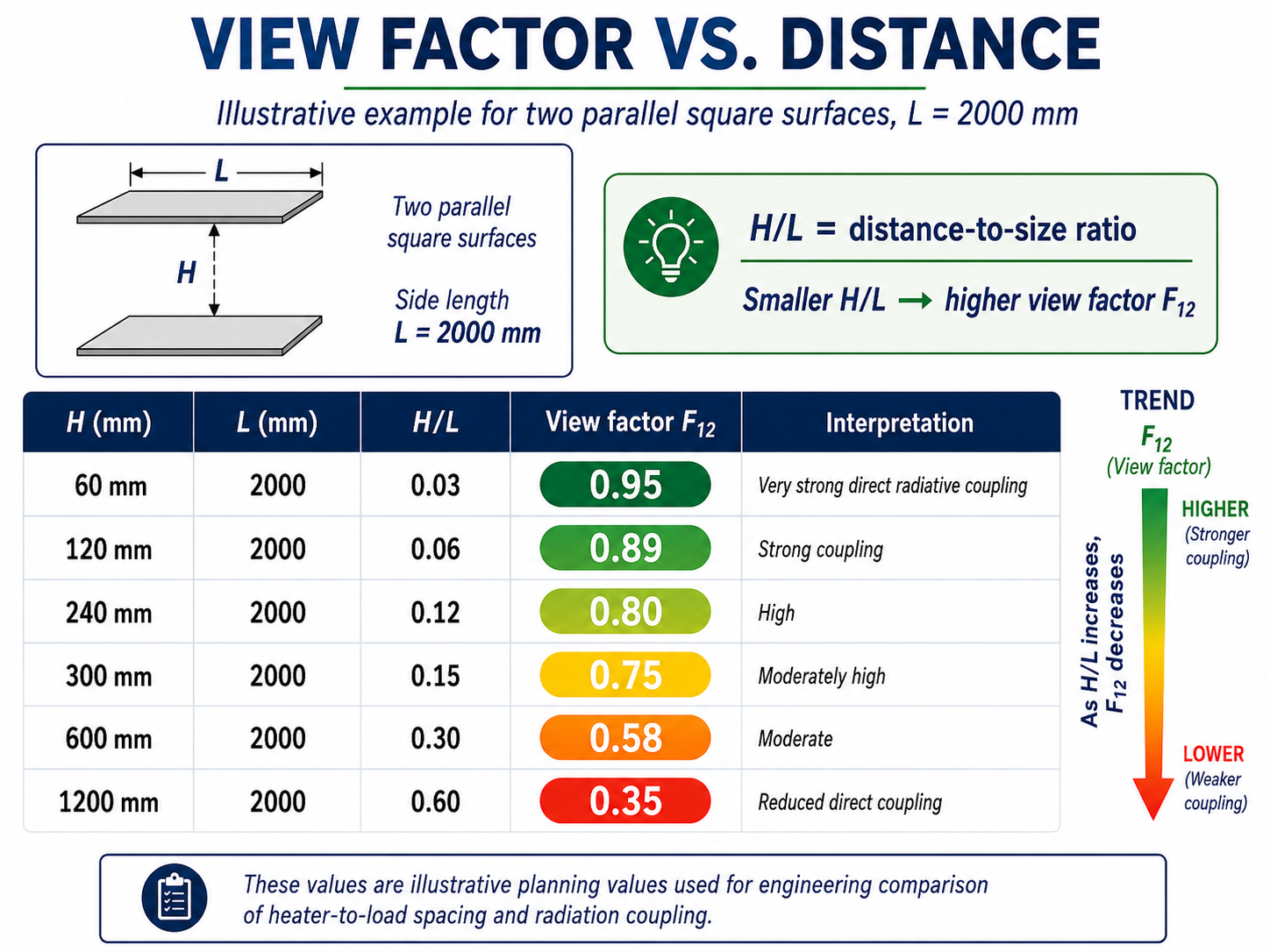
Fig. 1 – Dependence of F12 on the distance from the heating elements, where H is the perpendicular distance between the heating elements and the surface of the part and L is the characteristic dimension of the surface, in our example 2000 mm
The smaller the H/L, the greater the portion of the radiated energy from one surface directly “sees” the other surface, i.e. the higher the View factor. For a very small gap between two equally large parallel surfaces, the H/L ratio will approach zero and the View Factor F12 will approach 1.
On the contrary, at a large distance from the heater, the H/L ratio increases and the View Factor F12 decreases. If we have a three-dimensional space, then we also have 3 different View Factors, Hx/Lx, Hy/Ly and Hz/Lz, and these will affect the heating efficiency. The table (Fig.1) shows that, for example, at a distance from the heater of 300 mm, we will lose 25% of the radiant heat flux. If this distance is approximately the same on all sides of the part, the heating will be uniform, if these distances are different, the heating will be uneven.
With a square chamber, we can get close to this ideal, but never with a round chamber. For a round hot zone, the negative effect is that we have different distances from the heating, with different View Factor F12, and therefore the overall radiation efficiency will automatically be lower. This will of course also be reflected in the energy consumption for heating. The result of the calculation is in this infographic. For the same cycle, the round chamber will have a consumption of 0.315 MWh higher, and the process time will be 9.8% longer.
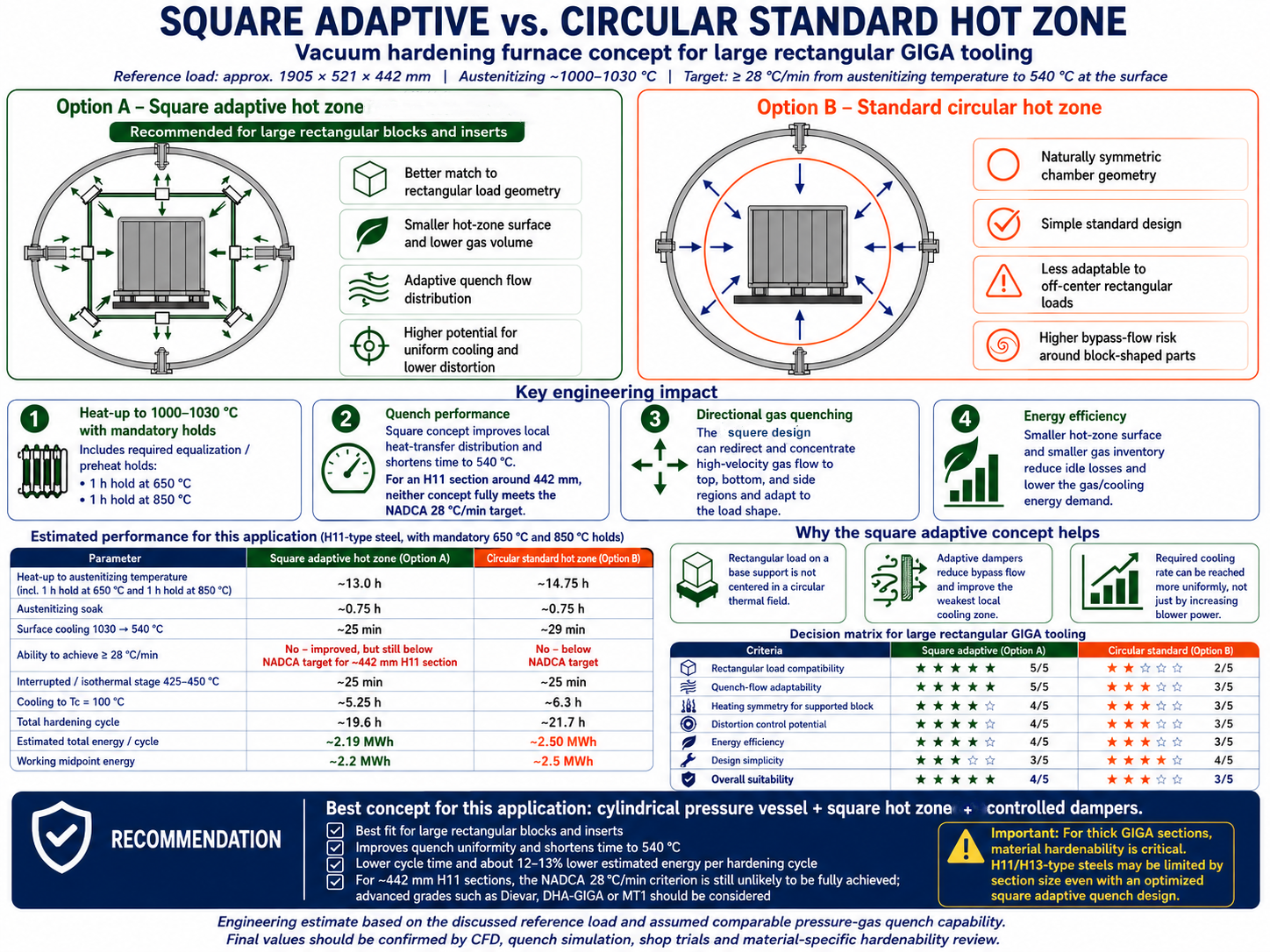
Fig. 2 – Comparison of differences in part heating in a square and round chamber
A 9.8% shorter cycle in a square chamber means I can do 35 more cycles per year, saving 12.6% energy per cycle.
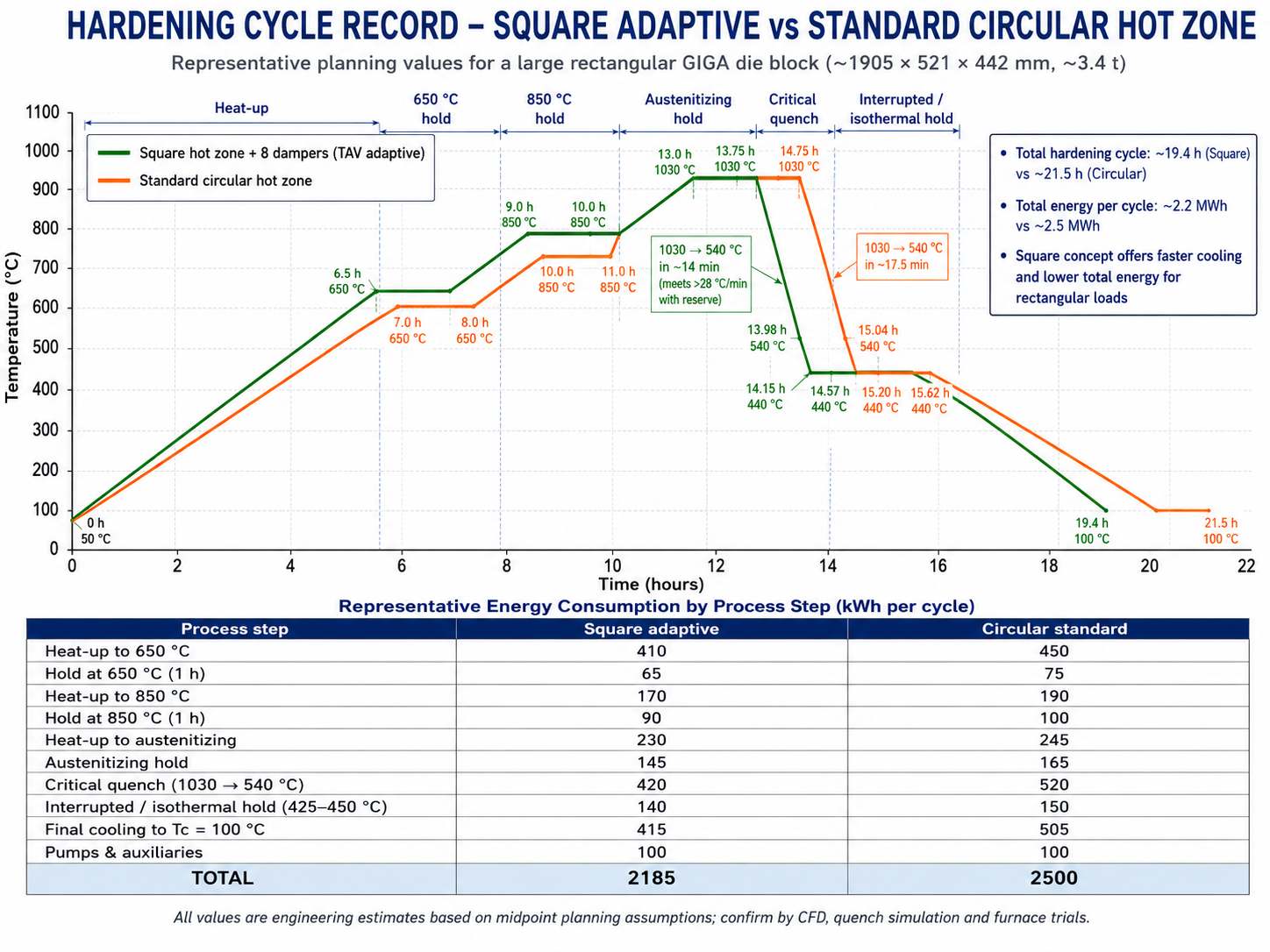
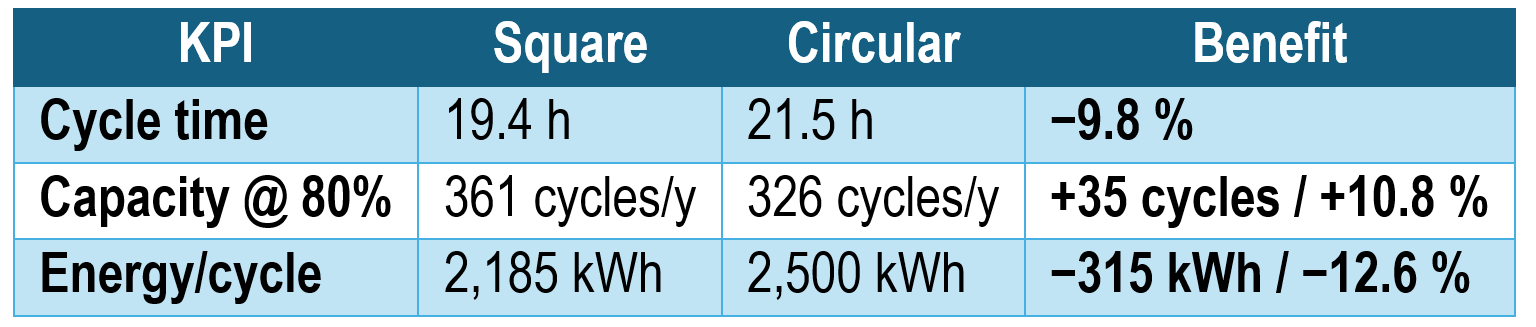
Fig. 3 – Graphical representation of the differences in the quenching cycle between a square and a round chamber
Table 1 – KPI indicators for both types of hot zones
With an initial electricity price of 4 CZK/kWh (0,166 €/kWh) and a 2% annual inflationary increase in energy prices, the cumulative 20-year electricity savings are approximately 11.1 million CZK, i.e. about 0.44 million EUR. So it makes sense to think about it.
And what about cooling and deformations? Here we are no longer interested in radiation, but primarily in heat dissipation, according to the equation Q = h * A *(Tpart−Tgas). The convective heat transfer coefficient h between the gas and the part will depend on a number of parameters, but primarily on the gas velocity, N2 pressure, flow direction relative to the surface, turbulence, geometry of the part and its position relative to the gas flow.
The problem with both square and circular heating zones is that the gas flows along the path of least resistance, instead of flowing where we need to dissipate heat. The result can be different cooling rates of individual walls, different martensitic transformation, higher deformation, higher temperature gradients, uneven hardness in large cross-sections. For GIGA molds, this will be much more important than the difference in energy efficiency. As can be seen from the graph, this phase will also be more effective in a square chamber and the cooling time will be reduced by more than an hour, equivalent to 17%.
TAV Vacuum Furnaces has designed a square chamber for these purposes with an adaptive flap system that allows the hardening to be adapted to the geometry of the part in the furnace. This is especially important for such large parts. With a heating zone height of 1200 mm, it is obvious that the part cannot always be placed in the center of the furnace. If the hardened part is placed on a grid placed directly on supports in the lower part of the chamber, under normal circumstances the gas would flow outside the insert, again along the path of least resistance. However, with the TAV solution, there is the possibility of using adaptive flaps, where I can determine where the gas will enter the chamber with respect to the shape and position of the part. It is even possible to control their opening and position based on the temperature sensing of the part by batch thermocouples. If the temperature difference ΔTTB = Ttop −Tbottom, or ΔTLR = Tleft −Tright were monitored by batch thermocouples, it would be possible to open or close the flaps, control the fan speed, or change the N2 pressure according to this difference, and thus adapt the cooling of the parts directly according to their geometry. Of course, this can only be done with a square chamber, not with a circular one.
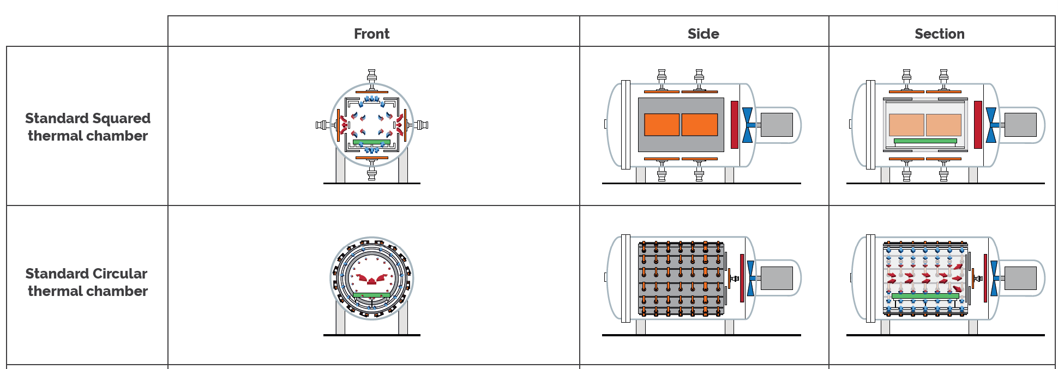
Fig. 4 – Comparison of standard square and circular chamber solutions without adaptive flaps
What I have said is of course not to say that a round chamber is not a good solution. On the contrary. If I am buying a furnace for a commercial heat treatment shop, where there is a very diverse range of products, then this is a very good solution. However, if I know in advance what type of parts, with what geometry I will process, and I make a similar analysis, the clear decision will be for a square chamber.
In a square hot zone, the hot zone provides a geometrically more uniform relationship between the heating elements and the hardened part. For large rectangular parts of molds supported by a base grid, the square hot zone provides a closer match between the geometry of the heating zone and the geometry of the load, which improves the potential for uniform radiant heating and cooling, which cannot be found in a round chamber.
And what is the difference between the theoretical temperature uniformity of the furnace according to AMS 2750 and its geometry? The standard TUS is measured in a qualified working zone on an empty furnace without load. But it says nothing about the behavior of the furnace when processing a specific 3.4t GIGA block. A circular furnace will also have a TUS of +/- 5 C, as will a square zone, yet the heating of the actual tool in it may be significantly less uniform. Why? Because after inserting a large block, the block will shade the heating elements, changing the irradiation ratio, the grid will shade the bottom surface, some walls of the part see the heating elements directly, others through reflections and re-radiation.
This is exactly the reason why, for such a demanding application, we should distinguish between TUS according to AMS 2750, and Load thermal uniformity, i.e. the actual state of TSurface,top,Tsurface,bottom,Tsurface,left,Tsurface,right,Tcore for the reference charge during the actual process.
The analysis results in one more finding. According to Nadca-207, the criterion for cooling must be to get from the austenitization temperature to 540°C in 18 min. In neither case will we achieve this for a block with a characteristic dimension of 442 mm. For a square chamber it will be 25 min, for a round one 29 min. Is there a problem with that? If we insist on H11/H13, then yes. If we change the material of the part to steels such as Divear, DAIDO-GIGA or MT1 from Kind&Co, then although we will not comply with the Nadca-207 regulation, we will get what we need metallurgically.
So what conclusion can we draw? This can be seen in this last picture.
=======================================================================================================
Are you solving a similar problem? I will help you with the analysis…
 40+ years of experience in the field
30+ years of experience… HT-PROGRES, Bodycote, Galvamet
cooperation… VŠB, Czechimplant, ECM Technologies, TAV Vacuum Furnaces, GHC Invest
12+ years of expert activity
Want to ask for a solution or want a non-binding consultation? Click on this link, I will usually respond within 24 hours. Contact email
========================================================================================================
Jiří Stanislav, Ing. CSc.
Consultant and forensic expert
========================================================================================================
25/8/2026