Carbonitriding, how to do it in LPC?
So, I made myself happy. I bought the iconic book Carbonitriding written by Bohumil Přenosil in 1964 year. Back then it cost 22.50 CZK, now I had to pay more than 20 times as much, i.e. 500 CZK. But it’s worth it. One can only admire the systematicity of the author in the treatment of this issue, even if it is related to historical devices for heat treatment.

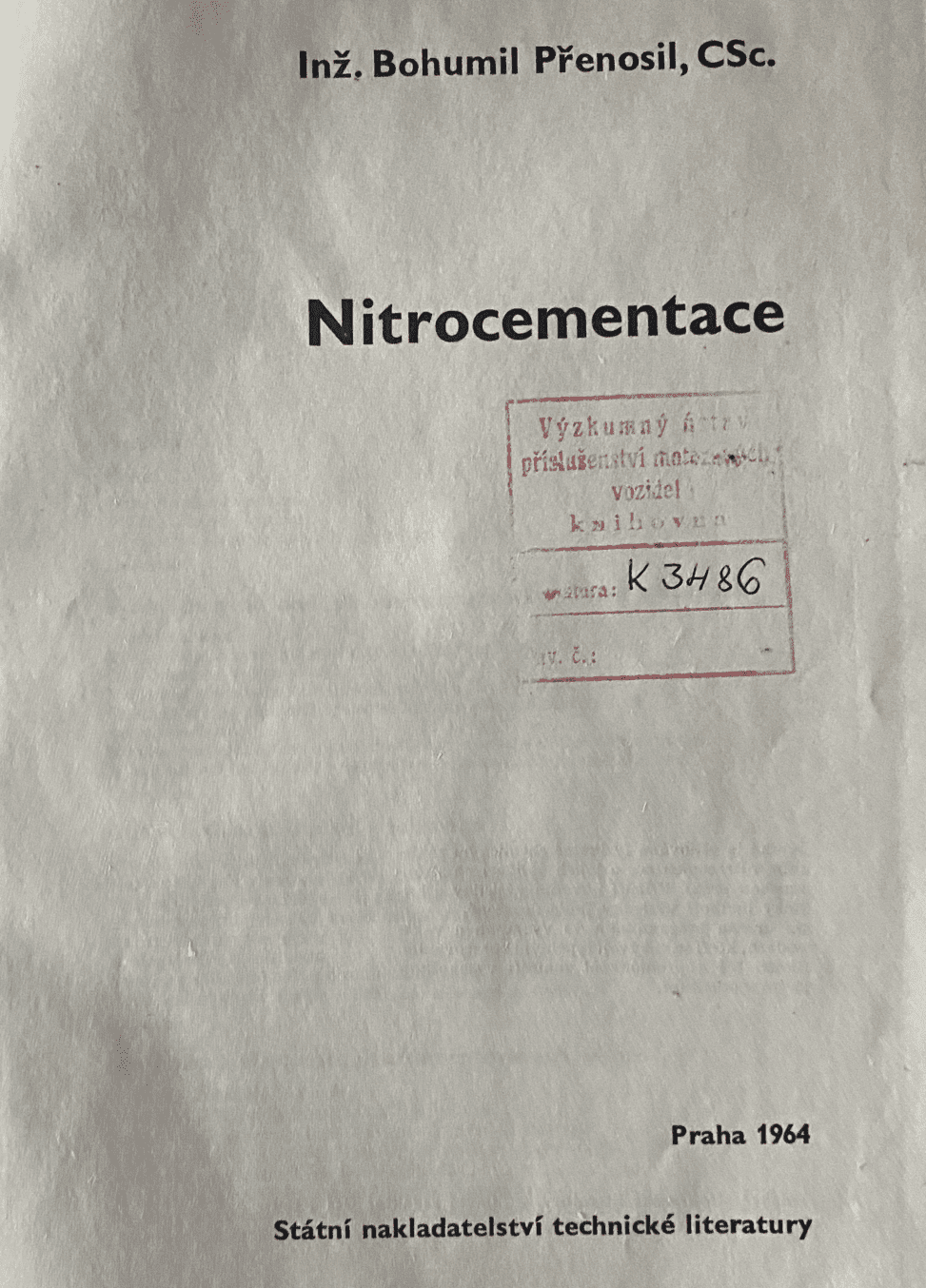
Fig. 1 nd 2 – Iconic publication Carbonitriding from 1964 by Bohumil Přenosil
And since carbonitriding is also discussed in relation to low pressure carburizing (LPC/LPCN), then it is a good basis to deal with this process in a vacuum as well.
When I first contacted ECM and asked them about this topic, the response was shocking. What is it for? We don’t do that. So, I crossed it off and put it off for the future.
But it is Přenosil and his Carbonitriding book that gives the answer to these questions. And right at the beginning he describes the advantages of carbonitriding.
- Carbon diffusion is accelerated when N and C are diffused at the same time. The growth rate of carbonitrided layers at temperatures of 850 to 860 °C is close to the diffusion rate of carburized layers at temperatures ≈ 900 °C
- The lower temperature of carbonitriding contributes to the reduction of deformations
- The lower carbonitriding temperature enables direct hardening from the carbonitriding temperature even for steels that do not have a guaranteed fine austenitic grain under the carburizing conditions
- The presence of nitrogen in the solid solution increases the stability of undercooled austenite. That is why carbonitrided layers have a higher hardenability than carburized layers, and therefore non-alloyed steels can be hardened in oil instead of water.
- Nitrogen increases the content of residual austenite in the structure of quenched layers. On the one hand, it reduces the hardness of the layer, on the other hand, its presence in the martensitic structure inhibits the occurrence of fatigue failures and increases the fatigue strength
And what about LPCN? There are several patents on this subject. One of them is that ammonia is introduced into the device in the last saturation period. Nitrogen is therefore not dissolved in the entire diffusion profile, but only in a layer corresponding to the rate of nitrogen diffusion at a given temperature and in a given time. Therefore, only a certain part of the surface within the CHD will contain nitrogen, but not the entire profile. See Figure 3.
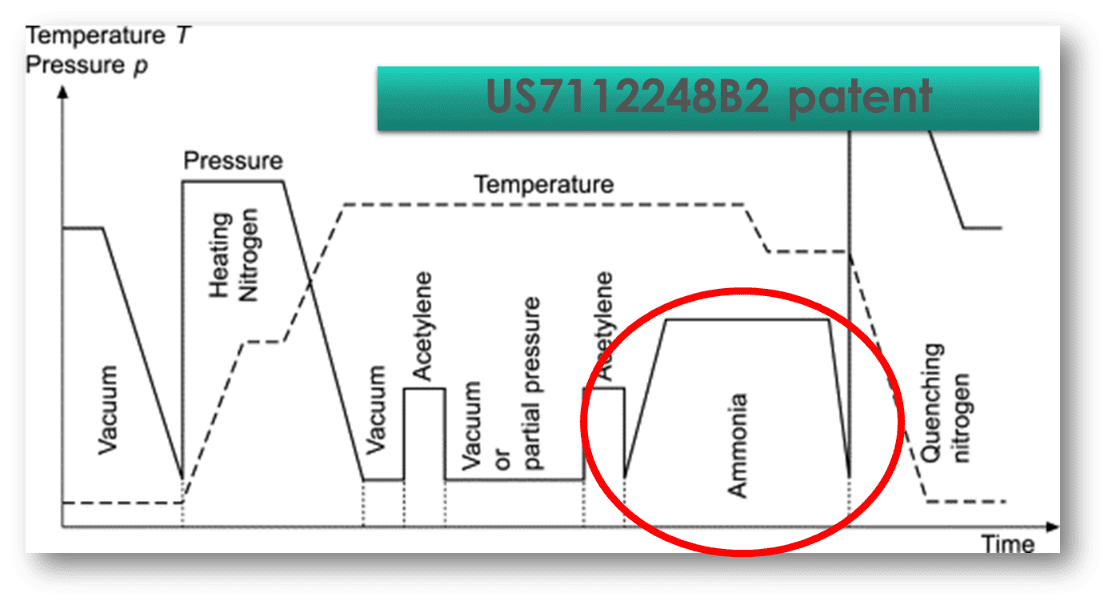
Fig. 3 – Procedure for LPCN carbonitriding according to patent US7112248B2 from JTEKT Thermo Systems Corp
Another ECM patent, number US11242594B2, states that carbon and nitrogen saturation periods are alternated in a different order, and at the same time each of these reference periods is at a different pressure, with a higher pressure being used for the NH3 phase.
Patent number US8784575B2, also from ECM, uses NH3 as part of the diffusion period, simultaneously with the neutral nitrogen gas.
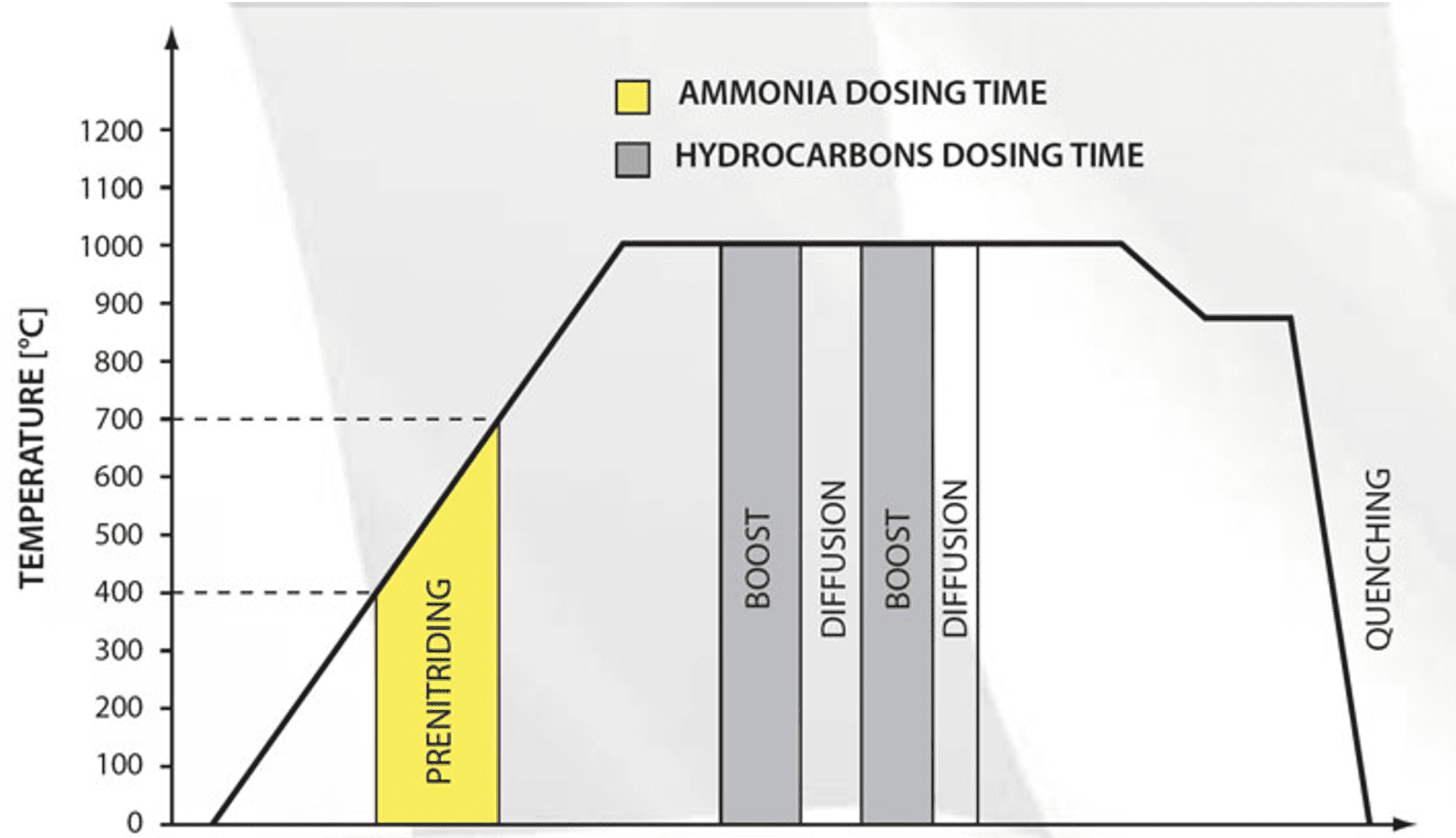
The patent from SecoWarwick, US7550049B2, is that nitrogen is introduced into the steel surface while heating the part to temperature, in a step called PreNIT. Ammonia is introduced from approx. 400°C, with a constant flow rate of 50 l/h, up to a temperature of 700°C, see Fig. 4. The actual carburizing then already takes place up to the surface saturated with nitrogen in the previous step. Nitrogen is therefore present throughout the diffusion profile of the carburized layer.
 ,
,
Fig. 4 – Scheme of carburizing with a period of nitrogen saturation during heating, patent US7550049B2 SecoWarwick
From the mentioned list of patents, it can be seen that furnace manufacturers tried various process modifications in order to ensure the necessary carbon and nitrogen content in the layer. But what about what Přenosil says?
Ad 1) Carbon diffusion is accelerated during the simultaneous carbonation of N and C – with LPC at 900°C, we carburize in C2H2 a layer of CHD =0.3 mm in 50 minutes for 20CrMn5 steel. This time is half of the time for the same CHD in classic carbonitriding at 820°C. At a gas carbonitriding temperature of 860 to 870°C, the carburizing time will be almost the same as for LPC at a temperature of 900°C. The temperature difference of 30-40°C is precisely the contribution of nitrogen to lower the temperature of the carbonitriding process in the gas. But does it make sense with LPC?
After all, the process of carburizing under reduced pressure is based on the fact that the transfer of carbon to austenite takes place much faster than in classic carburizing. And if we really want to speed up diffusion, we still have a huge scope for increasing the carburizing temperature. According to ALD, this temperature is usually 870 to 1050°C, but the standard is 920 to 980C. https://www.heat-treatment-services.com/processes-more/low-pressure-carburizing-lpc/
However, the carbonitriding process, both in gas and under reduced pressure (LPCN), cannot be accelerated by applying a higher temperature, because paradoxically, a higher temperature reduces the nitrogen content in austenite, see Fig. 5 from Přenosil.
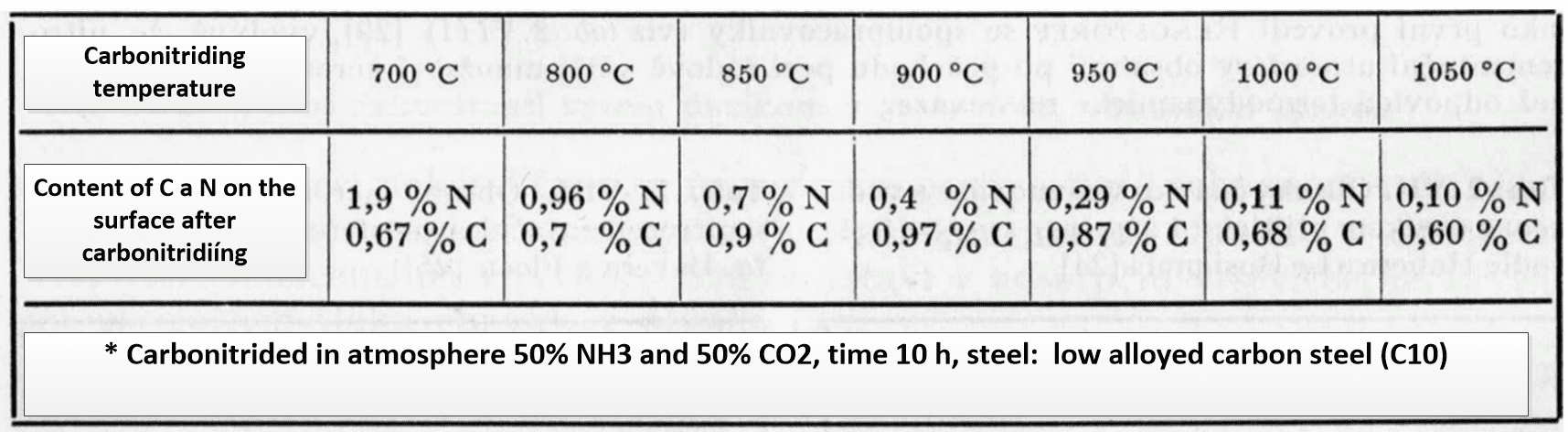
Fig. 5 – Dependence of C and N content on the process temperature during carbonitriding in an atmosphere of 50% NH3 and 50% CO2 for 10 hours
The reason is that the dissociation of ammonia increases with increasing temperature, and therefore its saturating potential approaches zero. Therefore, if the step of saturating with nitrogen from ammonia was applied as the last saturating period, it needs to be carried out at the lowest possible temperature, and the accelerating effect of nitrogen cannot actually be manifested anymore. It will only be applied for the last 10 minutes of carbonitriding.
Therefore, the addition of nitrogen to LPC/LPCN does not have a significant effect on shortening the process if ammonia is added until the last step of cementation. The situation is more positive for the PreNIT process, or for processes where the phases of carbon saturation and nitrogen saturation alternate, but even so, the contribution of nitrogen addition to saving carburizing time will be minimal.
It can therefore be stated that if we want to shorten the carburizing process, the addition of nitrogen to the layer does not represent such a shortening of the process that could not be replaced, for example, by increasing the carburizing temperature, while the carburizing temperature of 900°C is already sufficient to compensate for the increased rate of diffusion at LPCN to 850/860C .
Ad2) A lower carbonitriding temperature contributes to the reduction of deformations – this is true, but we must take into account that even with LPCN, the carbonitriding temperature cannot be set at too high a level. Typically, we will hover around 900°C at most due to ammonia dissociation. Therefore, direct hardening from this carbonitriding temperature will not have a major effect on the deformations.
However, the range of deformations also depends on many other parameters, and it will be very difficult to separate the effect of material creep during austenitization, the effect of deformations caused by not uniform cooling during quenching, or the effect of inappropriate batch preparation or inappropriate fixtures.
In general, if we quench after LPCN in a gas stream, the deformations could be smaller, if we quench after LPCN in oil, then they will probably be larger, or similar to what we have today when quenching in oil in multi-purpose furnaces. In order to limit these deformations, we still have the option of subcooling the batch to the quenching temperature instead of directly quenching from 900°C. https://archivesmse.org/article/145764/en. Thus, even in this case, the contribution of the LPCN process is not so significant, and even demonstrable, that we cannot replace it with pure LPC carburizing.
Ad 3) The lower carbonitriding temperature enables direct hardening from the nitrocarburizing temperature even for steels that do not have a guaranteed fine austenitic grain under the carburizing conditions
Already in 2004, Dr. Altena has published the table below regarding austenitic grain stability at various carburizing temperatures. From the table it can be seen that with respect to typical CHD<0.4 mm for carbonitriding, and with respect to typical carbonitriding temperatures < 900°C, the stability of the austenitic grain will not be affected in any case. Thus, even in this case, the LPCN process does not have a significant effect on the grain size growth and can be reliably replaced by LPC.
https://www.geartechnology.com/ext/resources/issues/0304x/altena.pdf
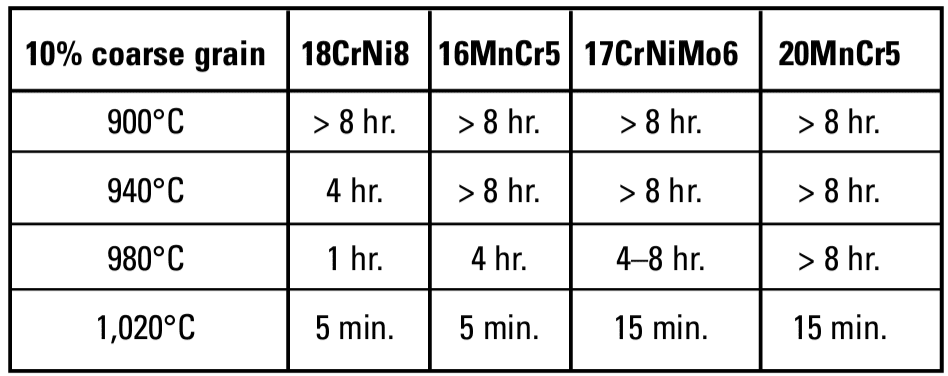
Fig. 6 – Table of austenitic grain size stability for different steels and different carburizing temperatures [2]
Ad 4) The presence of nitrogen in the solid solution increases the stability of undercooled austenite. That is why carbonitrided layers have a higher hardenability than carburized layers – yes, this is also true, see the results of Jomini’s tests on C10 steel, comparison of pure carburizing and carbonitriding with 0, 50% N, fig. no. 7. The measured hardness profiles values of the layer with nitrogen content are flatter.
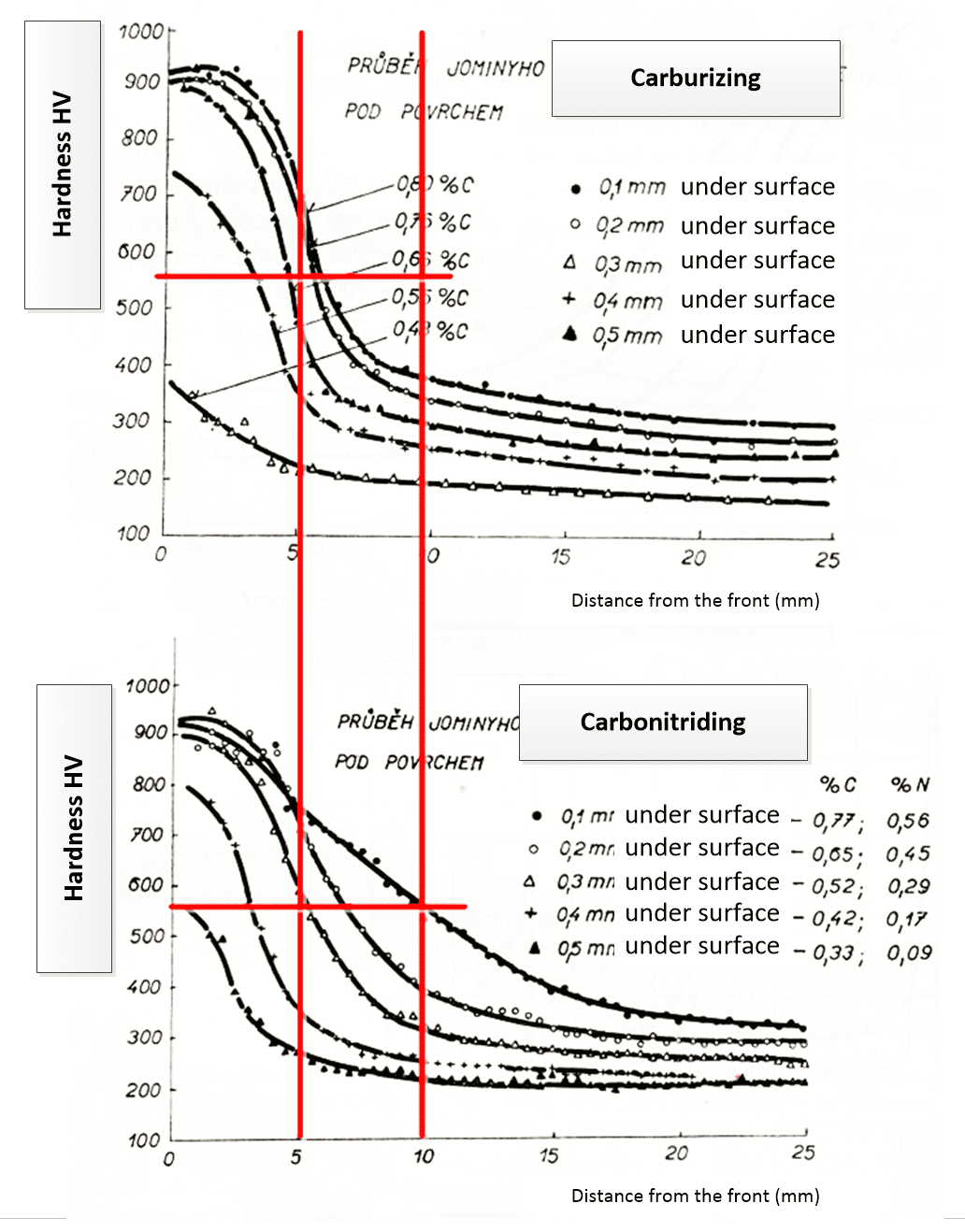
Fig. 7 – Comparison of hardenability curves for C10 steel, hardened from a temperature of 820°C, 30 minutes [1]
However, the positive effect of increased hardenability only applies to the part of the LPCN layer containing nitrogen. Thus, in the case of using ammonia only within the last saturating period, it will be only a part of the CHD affected by nitrogen, in other cases with PreNIT or alternating C and N saturating phases, then the entire CHD, however, from Fig. no. 7 it can be seen that this advantage disappears after 0.1 mm grinding. The rest of the mass of the parts will not be affected by nitrogen or at least minimally, and we will be bound with hardenability only and exclusively by the chemical composition of the steel. Even in this case, the importance of carbonitriding under reduced pressure is debatable.
Ad 5) Nitrogen increases the content of residual austenite in the structure of hardened layers – yes, this is also true, it’s just a question of whether we want it or not. Fig. 8 shows the dependence of the amount of retained austenite (RA) on C and N in the diffusion profile of the layer after carbonitriding for steel 14240 (16MnCr5) according to Přenosil. With a eutectoid amount of carbon of about 0.8%, it can be seen that the layer after quenching can contain more than 50% of retained austenite. This is also why we measure a lower hardness on the surface than under the surface for carbonitrided layers.
If such a layer has a base above 700 HV, then this does not have to be a problem. In some applications, this can even mean higher fatigue resistance. In general, however, residual austenite is an unstable structure and will tend to gradually transform into martensite. This is related not only to a change in mechanical properties, but also in volume.
Except for exceptions, the RA content can be considered harmful, and therefore LPCN carbonitriding has no sense, apart from precisely defined exceptions.
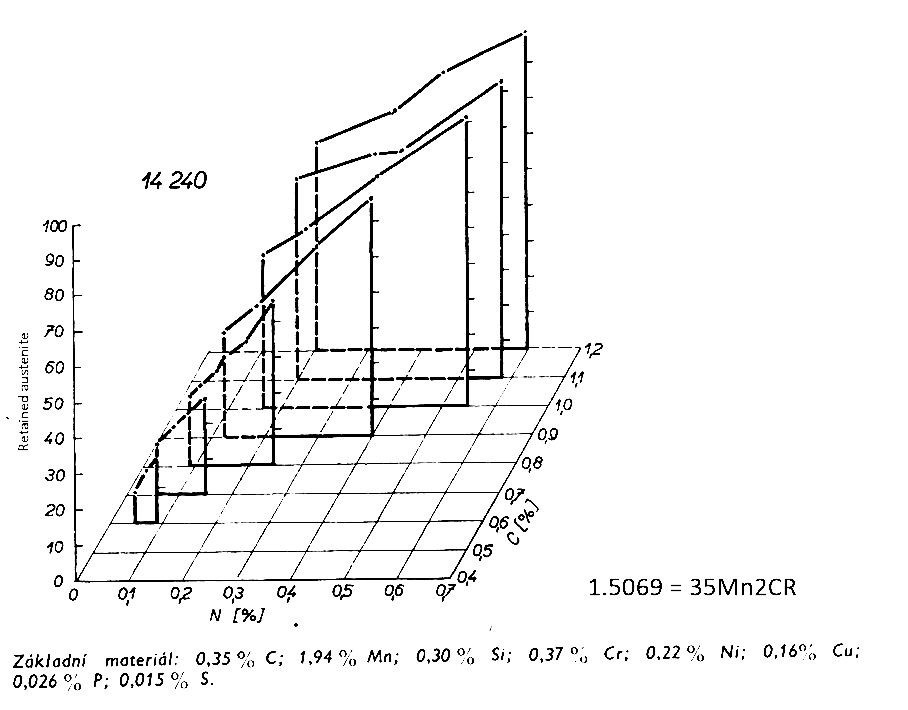
Fig. 8 – Amount of residual austenite for steel according to ČSN 14240, for different carbon and nitrogen content [1]
What to say in conclusion? If I were to approach this topic at all, then I would definitely not apply the LPCN process according to patent US7112248B2. From the point of view of the meaning of carbonitriding, it seems at least strange to me. And if it is procedurally and technically problematic to simultaneously add C2H2 and NH3 to the furnace, then I would choose the option that NH3 saturation and enrichment of the surface with nitrogen N will take place in the first period, and not in the last. If this were the case, then we have nitrogen in the entire diffusion profile of the layer, and therefore we can consider the conclusions made by Přenosil in 1964.
Overall, it can be concluded that the process of low-pressure carbonitriding in vacuum is feasible, however, compared to classic carbonitriding processes in the ENDO+NH3 atmosphere, most of the advantages of the carbonitriding process can be replaced by pure carburizing.
[1] Nitrocementace, B. Přenosil, SNTL, Praha 1964
[2] Low Pressure Carburizing with High Pressure Gas Quenching, H. Altena, F. Schrank, March/April 2004, Gear Technology
Jiří Stanislav
14. dubna 2024