Stress relief by vibration

Back in the days of Bodycote, I lectured on an alternative method for releasing internal stresses on die casting dies. At first glance, this method is incredible, because it completely replaces thermal processes, such as stress relief annealing in particular. And since when applying this method, there is no need to disassemble the dies into individual inserts, take them to the heat treatment shop and back, and assemble the die together again, then if it really worked, there is no mistake. The time savings and associated costs are significant for pressure foundries. Unfortunately, I couldn’t find anyone who had the given device here and had some experience with it. Today, however, I received a message in my email that Bonal Technologies, one of the few global manufacturers of vibration stress relief equipment, was awarded the company of the year award. So, is there anything positive about this method?
The first question is how does it work? It has a more than interesting history.
As early as in 1943 during Second World War advantages with vibrations was discovered. Welded constructions which were transported from the weld shop to the machine shop by railway or by truck showed less distortion when machined. As the war progressed the Germans introduced “transport after welding” on large precision components. Plant managers and engineers did not know why this phenomenon occurred, but they thought it was a result of movements in the work piece. They started to experiment and developed methods to generate movements in a more controlled manner [3].
The technology of vibration effect is based on the use of low-frequency vibrations generated by a special device – electric vibrator and it is characterized by absolute ecological purity, low energy costs and high efficiency [1].
The atomic structure in the work piece that is affected by residual stresses feels no difference in energy induced by heat or energy induced by vibrations. The supplied energy rearranges the crystal structure, i.e. the atoms changes position. Thus residual stresses are reduced without any distortions.
In low-frequency vibration systems, it is most rational to use an eccentric actuator. This type of actuator is able to create large amplitude vibrations at low frequencies. Low-frequency machines also have less dynamic load on the actuator, which allows working with some detuning from the natural frequency of the vibration system, providing greater stability. When using variable speed motors, such as direct current motors or three-phase commutator motors, an actuator with a wide range of frequency control can be obtained. Using rotary eccentrics, it is possible also to adjust the vibration amplitude [1].
So even though it was primarily developed for stress relief of large weldments, it should work for die casting dies as well.
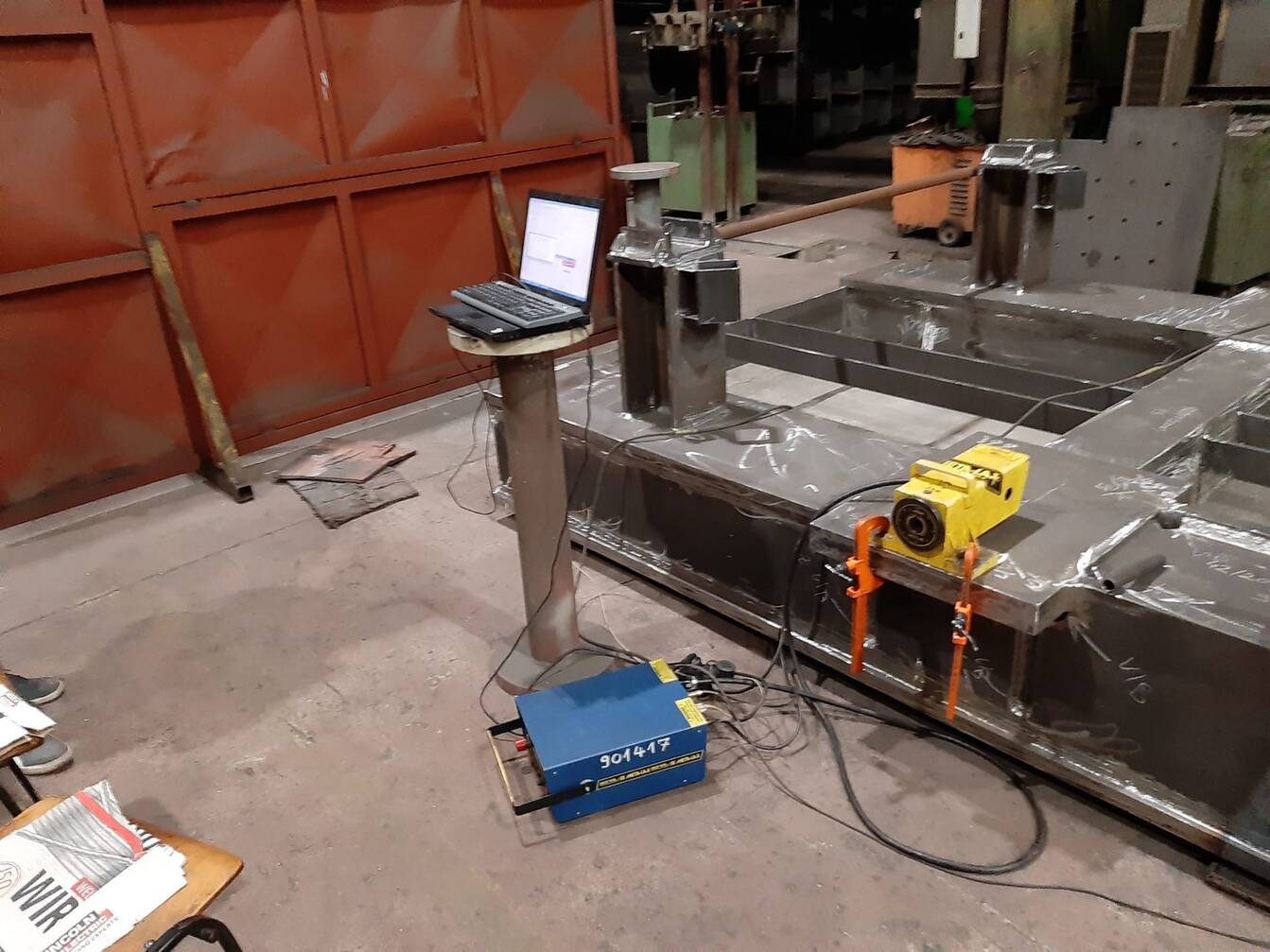
If the work piece is big enough the vibrator can be attached directly on it. The work piece has to be isolated from the floor with rubber pads, these prevent the vibrations from spreading to the surroundings. Another way is to attach the vibrator to a table where the work piece is attached. The table is also isolated by rubber pads which makes stress relief possible for many work pieces simultaneously. Small parts cannot be stress relieved without the table because the harmonic frequency is out of range for the vibrator. The frequency of the vibrations depends on the material, size and shape of the work piece. Usually, the vibration frequency is in the range of 0-100Hz. The time for vibration treatment is often less than 30 minutes [3].
And what are the benefits:
- Up to 95% less distortion during machining
- Up to 98% less distortion over time
- Lower susceptibility to cracking
- Possibility to detect the state when the voltage is released
- It is possible to relax complete assembly units, i.e. also molds
- It is not necessary to take into account the previous sequence of tempering temperatures
- Significant time saving, the process of tension release by vibration takes up to 1 hour, the thermal process at least 6 hours [2]
So much for the theory. Unfortunately, the practical verification of the die casting still awaits. But since pressure foundries have to solve this problem by repeated, periodic stress relaxation annealing from thermal fatigue, in the case of a successful application of this method, the greatest benefits will be here.
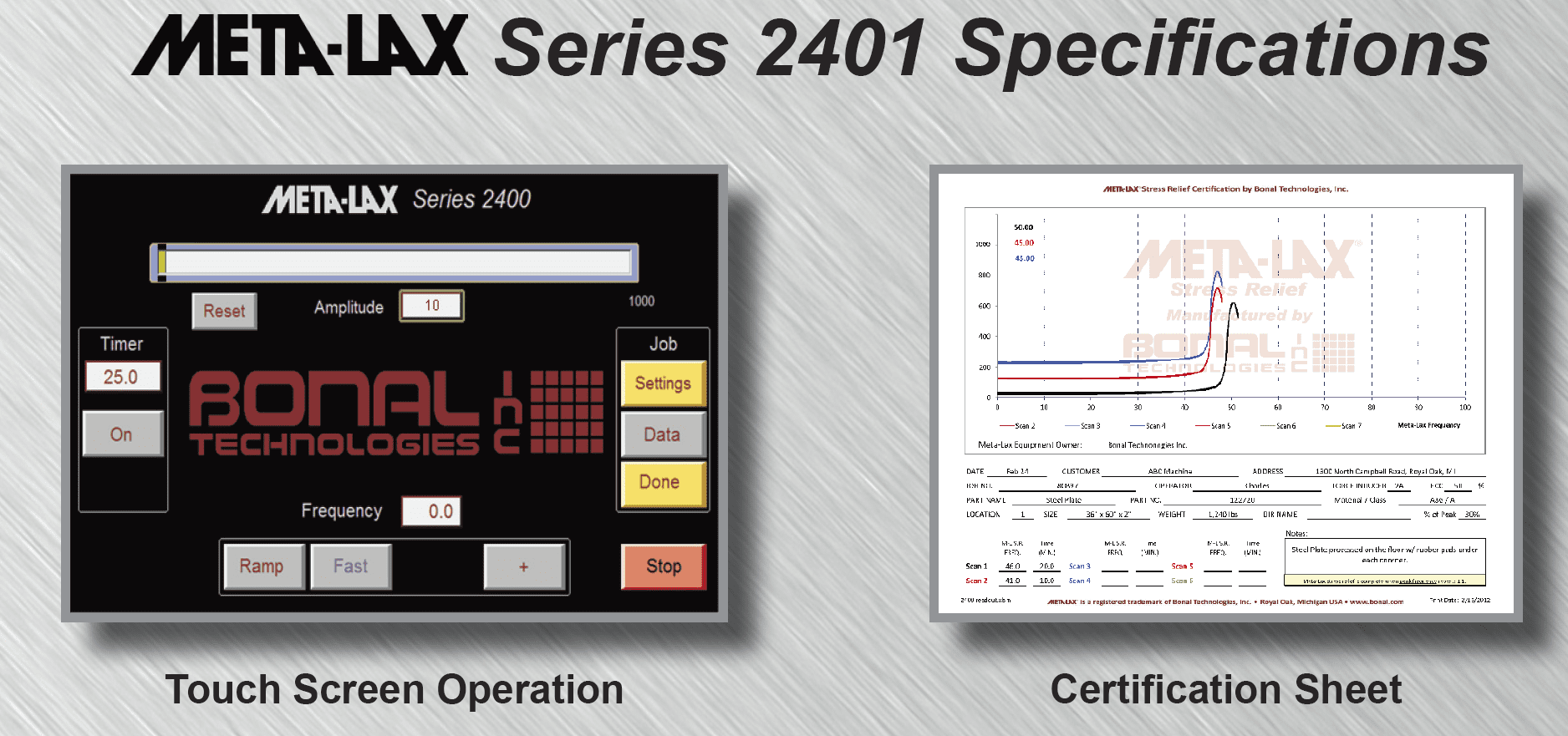
As for the results of the effect of vibrations on the change in tension in the material, the vibration method shows this change on the difference between the detected curves at the beginning and at the end of the relaxation process. However, the resulting effect can also be verified radiographically, based on the measurement of the shift of the diffraction lines, e.g. according to ASTM E2860-12 [4].
The company Bonal Technologie supplies equipment under the name Meta-Lax.
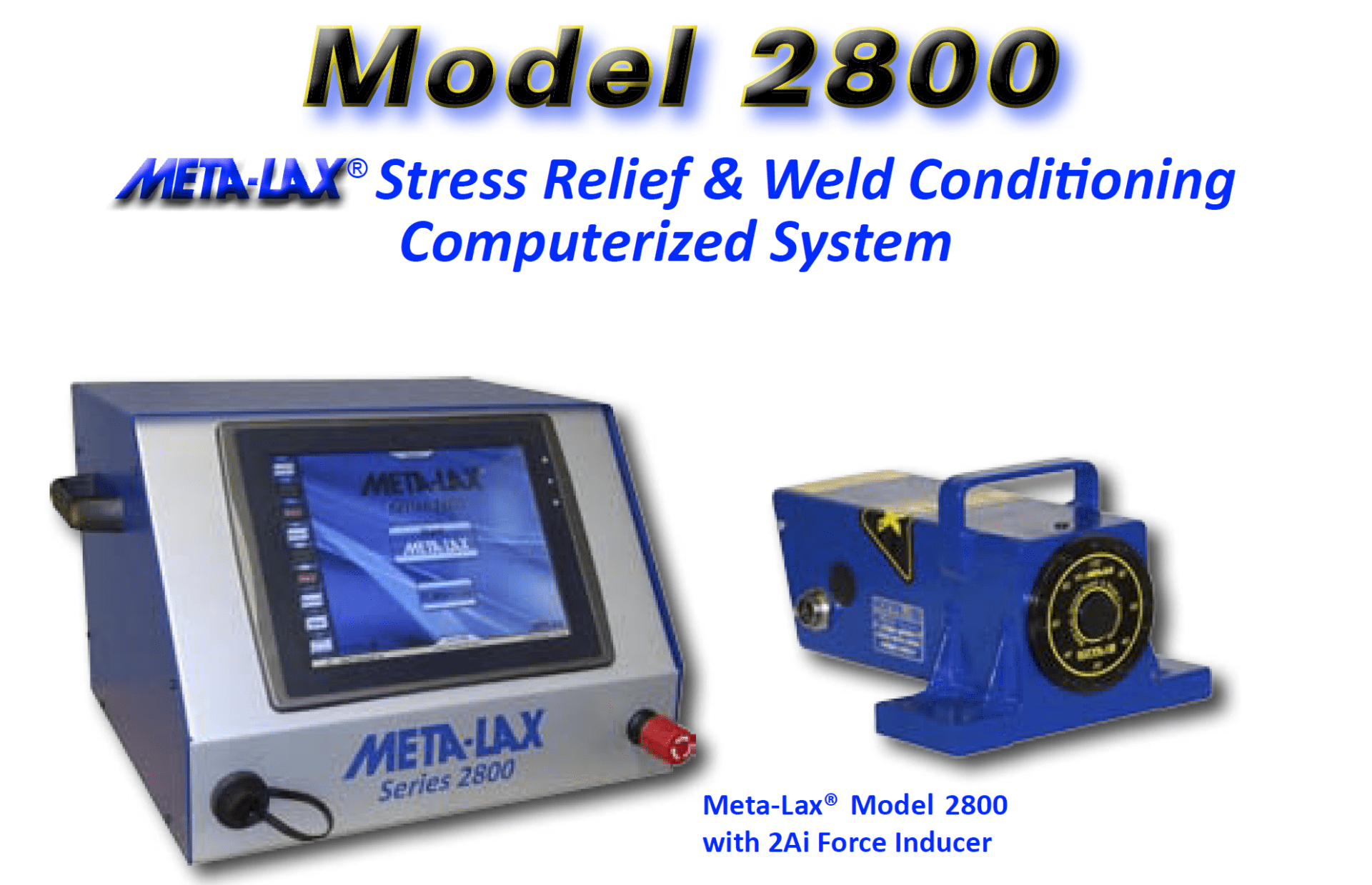
And the prices? From USD 20k to 30k.
Contact person:
Daniel Kazmierski, DKaz@bonal.com
[1] Study on the Effect of Vibratory Stress Relief on the Quality of Gravity Die Casting – Theory and Justifications, Nazal Sallem, Zarqa University, 2019 IOP Conf. Ser.: Mater. Sci. Eng. 473
[2] Conditioning of Metals, A. George Hebel III, Bonal Technologies, Royal Oak, Mich, 2004
[3] Alternative Method for Heat Treat Relief, Stefan Linqvist, Jonas Holmgren, Lulea University of Technology, 2007
[4] ASTM E2860-12, Standard Test Method for Residual Stress Measurement by X-Ray Diffraction for Bearing Steels
October 7, 2022
Jiří Stanislav