Nuclear Energy and Energy
Nuclear energy is a closed sector. The main players like Škoda JS, Doosan Škoda Power, Rolls-Royce SMR, Westinghouse, Framatome, EDF, Rosatom have their own equipment:
- they have their own vacuum furnaces
- their own annealing furnaces
- their own PWHT lines (Post Weld Heat Treatment)
- their own NDT
- their own qualification according to ASME (1)/ RCC‑M (2)/ EN 13445 (3), ISO 19443 (4)
a dále
- OEM Process Specifications
- OEM Heat Treatment Specifications
- OEM NDT Specifications
External services are only used where the OEM does not have the technology. Critical safety-grade components are predominantly manufactured and heat-treated in qualified OEM plants or by long-term qualified suppliers. However, outsourcing is limited to qualified partners with approved technologies and with approved NQA-1 (5)
These can be:
- diffusion coatings (aluminizing, chromizing)
- vacuum brazing
- HIP (for some components)
- special high-temperature annealing
- heat treatment of large castings
- heat treatment of special alloys (Ni‑based, ODS (6), HEA (7))
The nuclear sector only outsources when:
- it is a unique technology that the OEM does not have
- it is oversized
- it is a new project (SMR(8), SCW(9), HTR(10)
- these are materials outside the standard portfolio
SMR (8) – projects (Rolls‑Royce, GE Hitachi BWRX‑300, Westinghouse AP300, EDF NUWARD) will need:
- HIP for AM parts (holders, spacers, valves, pumps, seals)
- Vacuum HT for Ni alloys
- Brazing (heat exchangers, steam generators)
- Diffusion coatings (aluminizing, chromizing)
- HT for SCW (9) materials (IN617, 800H, 316H, ODS)
To even get into the nuclear sector, we need to get an ASME Sec. III Div. 1 / Div. 5 qualification. Essentially, this is a specific part of the American Boiler and Pressure Vessel Code (ASME (11) BPVC (12)), which defines the rules for the design, manufacture and testing of nuclear equipment components. Even if there is no chance of reactor parts, this sector needs
- HIP
- AM post-processing
- Diffusion coatings
- Vacuum HT
- HT for materials in contact with SCW
- HT support for turbine parts
- HT support in SMR programs
- HT support in research projects
Also requires a wide range of standard parts such as valves, gate valves, actuators, pumps, heat exchangers, etc.
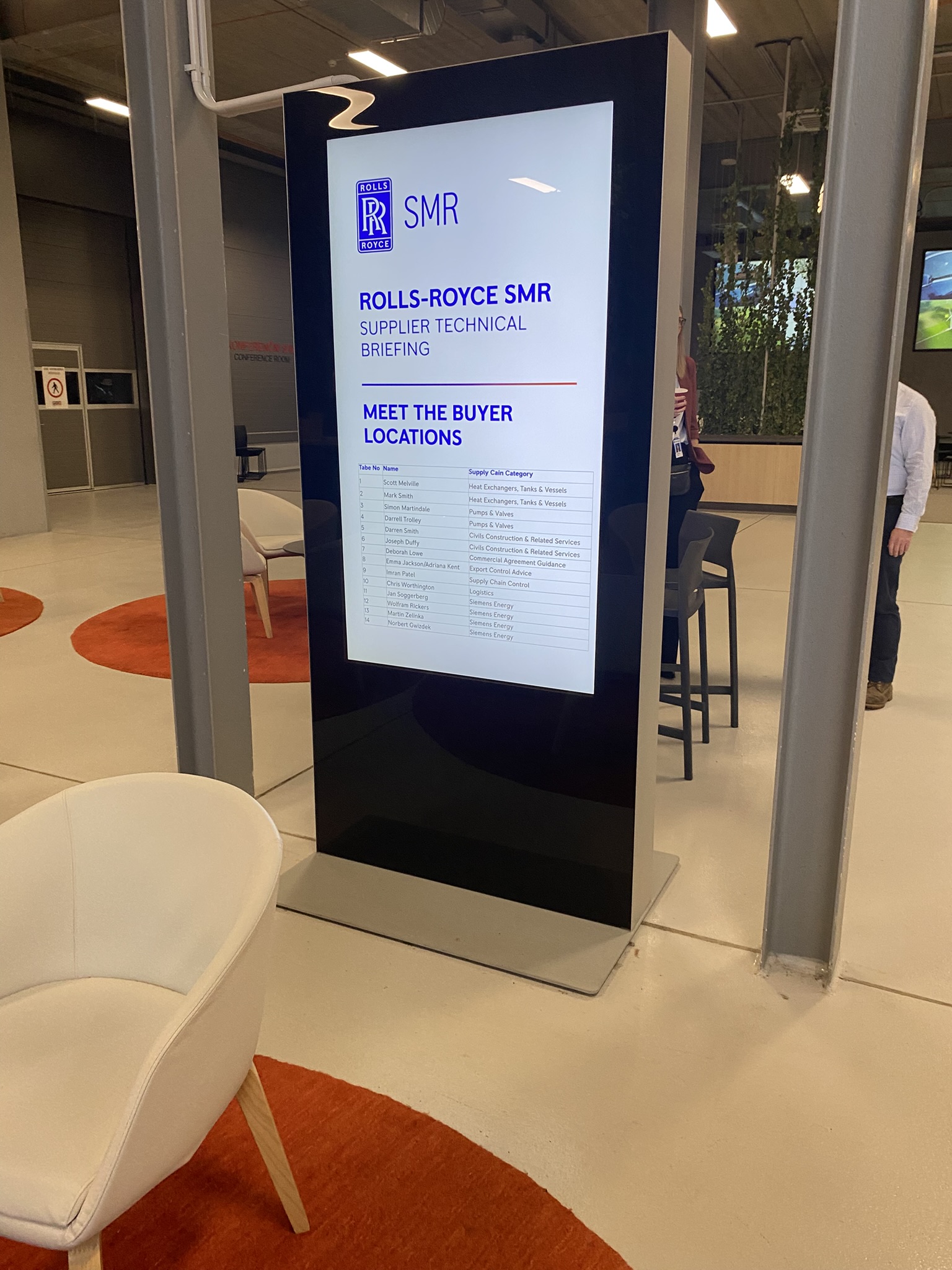
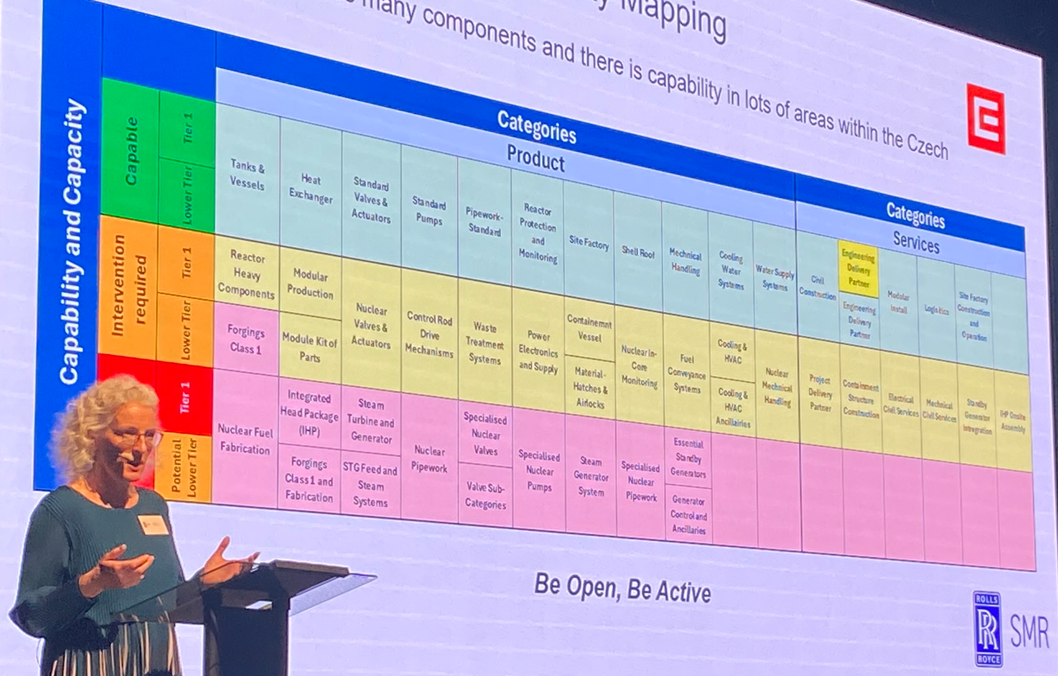
Fig. 1 and 2 – Pictures from Rolls-Royce SMR supplier technical briefing in Prague, November 2025
Energy Gas, Hydrogen, Geothermal
In addition to nuclear energy, this segment also includes energy production from combustion gas turbines, hydrogen technology or geothermal energy. What comes to mind most for us is the production of combustion turbines. The demand for them is growing significantly, especially with regard to powering data centers. They are built decentralized in order to limit the impact of the system. This is a sector where the material requirements are comparable to the aerospace industry, but with a different qualification philosophy focused on long-term creep properties and equipment reliability. The reasons are:
- The turbine operates at 600–1100 °C
- Extreme centrifugal forces
- Creep, fatigue, oxidation
- Lifetime 100,000+ hours
- Safety criticality (turbine explosion = destruction of the power plant)
This sector uses a number of thermal processes, but access to them is heavily restricted, only on the basis of NDA, only to long-term partners
- after NDA
- after audit review
- after pre-qualification process
This sector works exclusively with its internal OEM specifications.
- own specifications (e.g. Siemens TLV, Doosan DPS, GE P-specs)
- own process qualification
- own audit system
- own material standards
- own NDT requirements
However, there are standard standards for specific materials, but they are further implemented into the OEM‘s own internal specifications, which are not public and are not subject to ASTM, EN or ISO.
The reason is simple:
- turbine blades, discs, rotors and combustion components are OEM know-how
- thermal cycles are secret
- microstructure is patented
- life is a competitive advantage
Therefore:
- ❌ does not exist ASTM „Heat Treatment for Gas Turbine Blades“
- ❌ does not exist ASTM „PWHT for Ni‑based Superalloys in Turbines“
- ❌ does not exist ASTM „HT for Hot Section Components“
The OEMs keep it to themselves. ASTM is used only as a basic material framework, not as a process standard. See examples:
✔ ASTM material standards (examples)
- ASTM A182 – Standard Specification for Forged or Rolled Alloy and Stainless Steel Pipe Flanges, Forged Fittings, and Valves and Parts for High-Temperature Service, kované díly
- ASTM A213 Standard Specification for Seamless Ferritic and Austenitic Alloy-Steel Boiler, Superheater, and Heat-Exchanger Tubes, Cr‑Mo oceli (P91, P92)
- ASTM A217 – Standard Specification for Steel Castings, Martensitic Stainless and Alloy, for Pressure-Containing Parts, Suitable for High-Temperature Service, odlitky pro vysoké teploty
- ASTM A335 – Standard Specification for Seamless Ferritic Alloy-Steel Pipe for High-Temperature Service
- ASTM B333 – Standard Specification for Nickel-Molybdenum Alloy Plate, Sheet, and Strip, Hastelloy
- ASTM B335 – Standard Specification for Nickel-Molybdenum Alloy Rod
- ASTM B637 – Standard Specification for Precipitation-Hardening and Cold Worked Nickel Alloy Bars, Forgings, and Forging Stock for Moderate or High Temperature Service, IN718
- ASTM B670 – Standard Specification for Precipitation-Hardening Nickel Alloy (UNS N07718) Plate, Sheet, and Strip for High-Temperature Service, IN625
- ASTM F2924 – Standard Specification for Additive Manufacturing Titanium-6 Aluminum-4 Vanadium with Powder Bed Fusion, Ti6Al4V
- ASTM F3001 – Standard Specification for Additive Manufacturing Titanium-6 Aluminum-4 Vanadium ELI (Extra Low Interstitial) with Powder Bed Fusion
- ASTM F3055 – Standard Specification for Additive Manufacturing Nickel Alloy (UNS N07718) with Powder Bed Fusion,
- ASTM F3056 – Standard Specification for Additive Manufacturing Nickel Alloy (UNS N06625) with Powder Bed Fusion
- ASTM F3302 – Standard for Additive Manufacturing – Finished Part Properties – Standard Specification for Titanium Alloys via Powder Bed Fusion
The sector itself shows and will show continuous growth, but very small, 1-3% per year. What is important to see, however, is that it is a huge resource for Modernization and repowering, and for the Service market (MRO – Maintenance, Repair, Overhauls).
Even though it is a very interesting market segment, if we are looking for a new job as a replacement for automotive, then most hardening shops are simply not ready for it. Neither in terms of certification, nor in terms of personnel, nor in terms of equipment. It will be a market only for the chosen ones, or rather for those who are not afraid to put effort into these new processes.
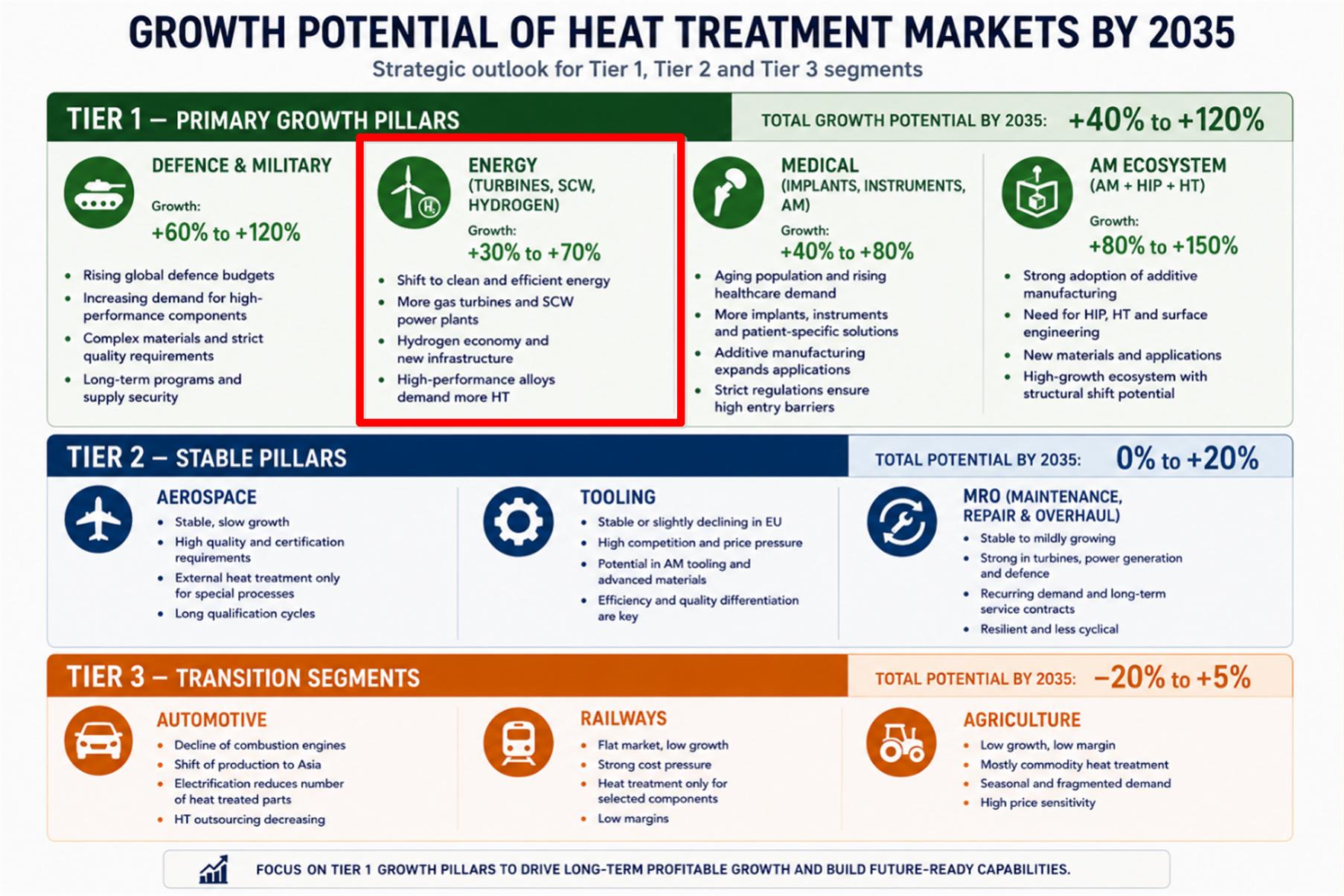
An attempt to summarize is in this infographic
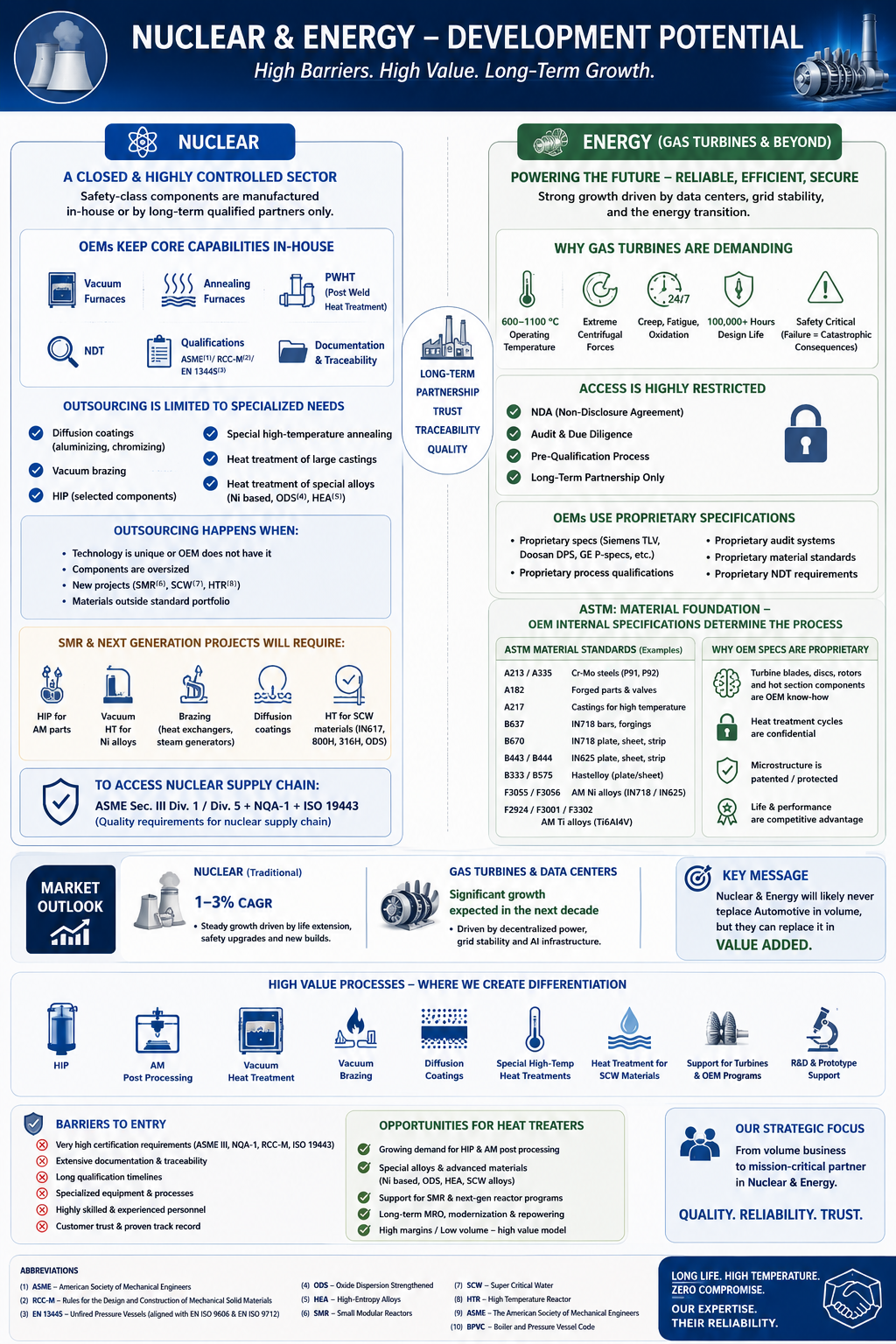
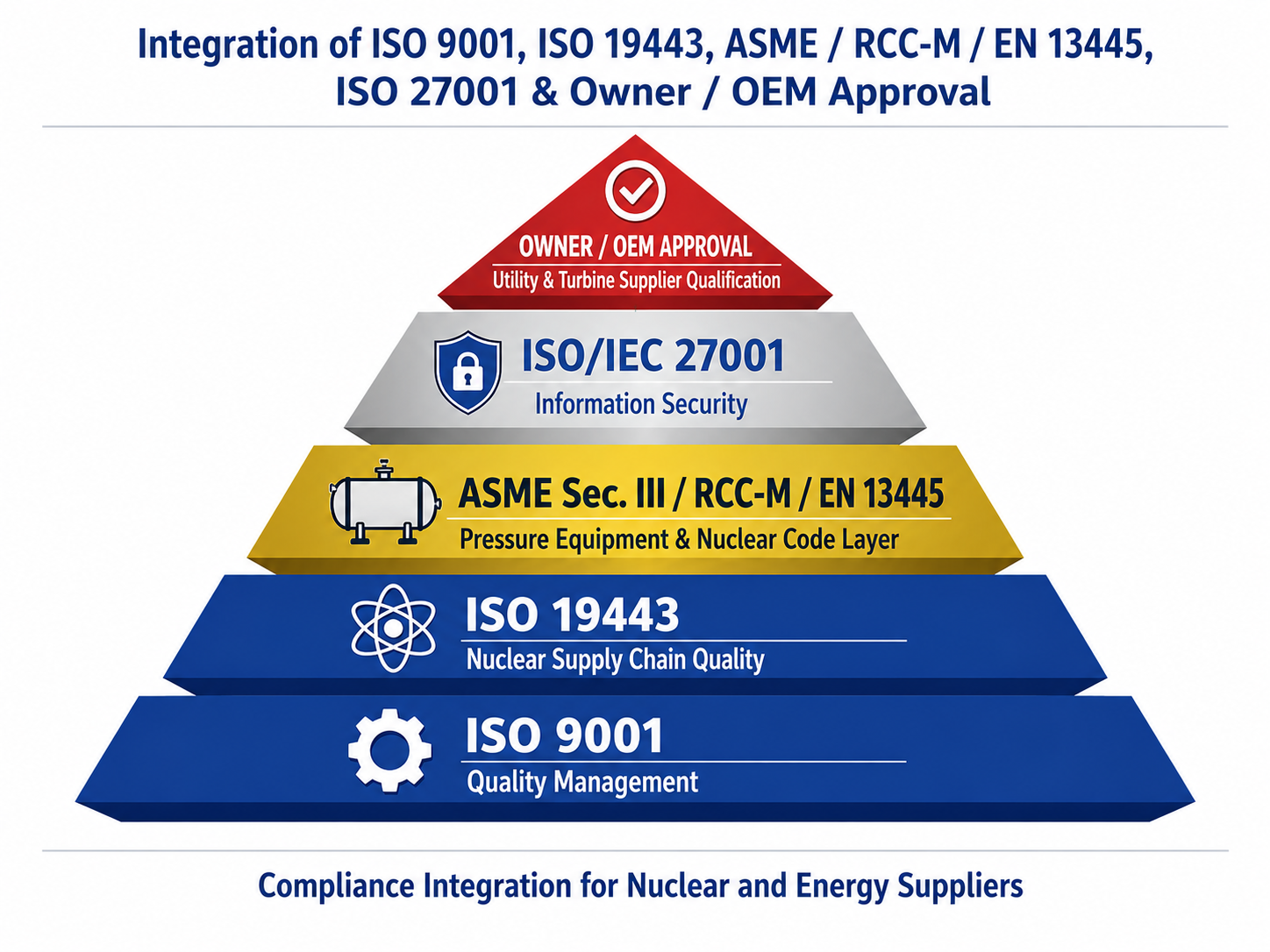
Fig. 3 – Infographic of the potential for commercial heat treatment
Fig. 4 – The pyramid of quality management systems
Abbreviations used
(1) ASME Code (American Society of Mechanical Engineers)
(2) RCC-M (Règles de Conception et de Construction des Matériels Mécano-Soudés)
(3) EN 13445 Unfired Pressure Vessels, references qualified welding procedures and personnel qualifications according to applicable EN ISO standards (e.g. EN ISO 9606, EN ISO 15614) and NDT personnel qualification according to EN ISO 9712 where applicable.
(4) ISO 19443 – Quality management systems — Specific requirements for the application of ISO 9001:2015 by organizations in the supply chain of the nuclear energy sector supplying products and services important to nuclear safety (ITNS)
(5) NQA- 1 – Nuclear Quality Assurance
(6) ODS – Oxide Dispersion Strengthened
(7) HEA – High-Entropy Alloys
(8) SMR – Small Modular Reactors
(9) SCW – Super Critical Water
(10) HTR – High Temperature Reactor
(11) ASME – The American Society of Mechanical Engineers
(12) BPVC – Boiler and Pressure Vessel Code
=======================================================================================================
Are you solving a similar problem? I will help you with the analysis…
 40+ years of experience in the field
30+ years of experience… HT-PROGRES, Bodycote, Galvamet
cooperation… VŠB, Czechimplant, ECM Technologies, TAV Vacuum Furnaces, GHC Invest
12+ years of expert activity
Want to ask for a solution or want a non-binding consultation? Click on this link, I will usually respond within 24 hours. Contact email
========================================================================================================
Jiří Stanislav, Ing. CSc.
Consultant and forensic expert
========================================================================================================
28/6/2026