Development potential and ISO 20431
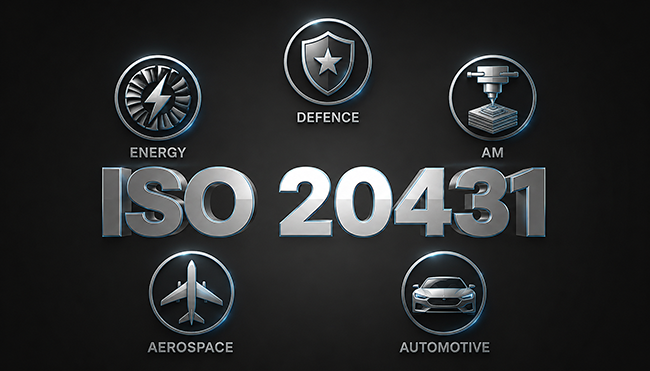
When we started writing about the development potential for commercial quenching plants by 2035, I neglected to emphasize the position of ISO 20431. Whether it is Defense, Nuclear energy, AM Ecosystem, Aerospace or Automotive, compliance with this standard is the absolute foundation, just like ISO 9001. Why? It is the only standard that openly says what the order receipt and its contract review must look like, how to create, assign and implement a technological routing, how to check the result, and finally how to send and invoice the finished order.
It describes the entire Order to Invoice – OTI process (OTI)
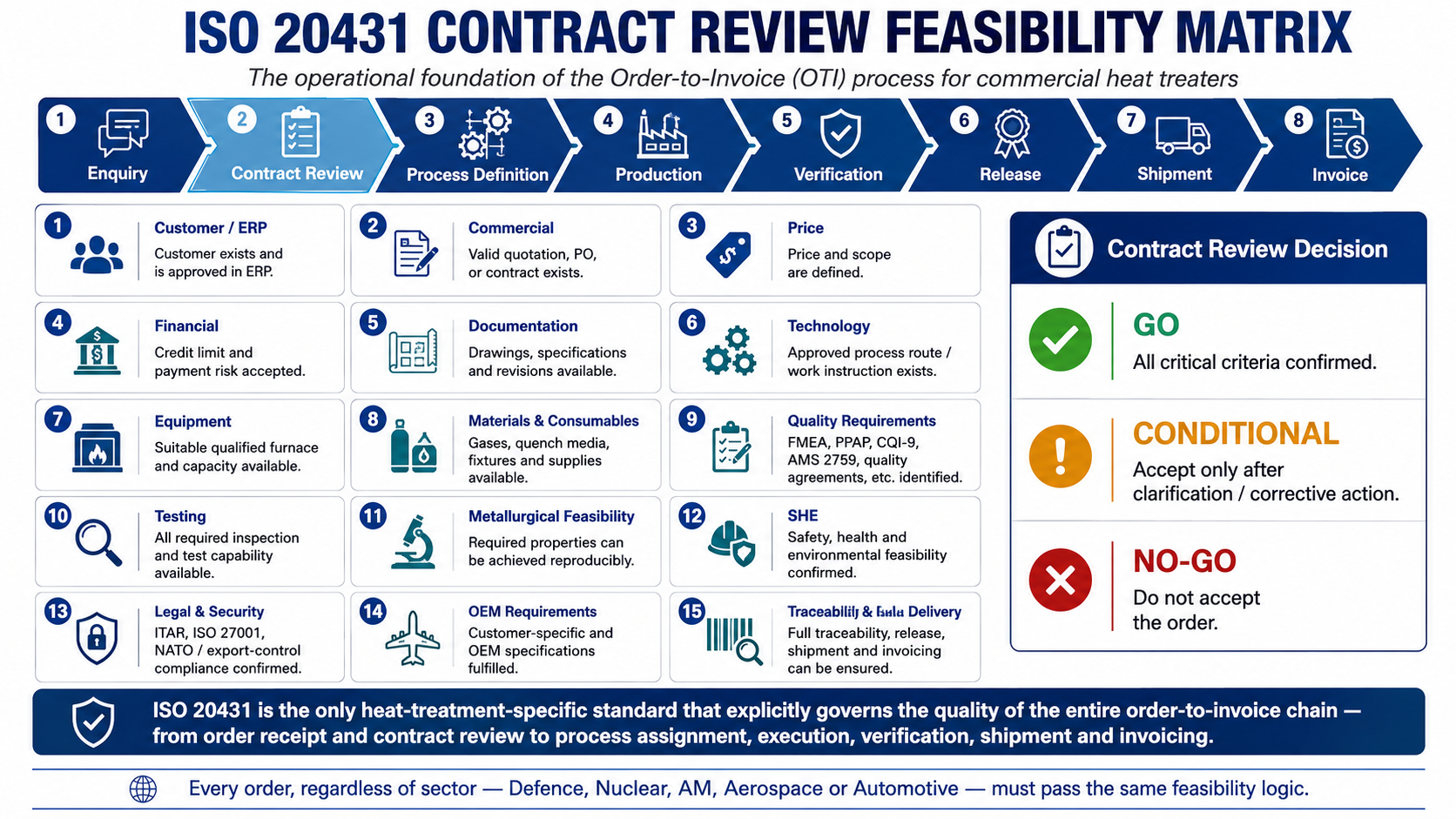
And it doesn’t matter what sector the order comes from, I have to perform these activities always, and always correctly. ISO 20431 represents a revolutionary contribution in that it is the first standard that says how the traceability of the order for which we have determined feasibility actually arises. The feasibility test (Contract Review) is a review of the contract, saying that I can accept and register the order to ERP system with regard to:
- For documentary feasibility – the customer exists in our ERP system: yes/no
- For commercial feasibility – the order offer exists: yes/no
- For price feasibility – the price has already been set: yes/no
- For time feasibility – we are able to meet the delivery date: yes/no
- For technological feasibility – we already have a production process: yes/no
- For technical feasibility – we have furnaces to carry out the process: yes/no
- For material feasibility – we have purchased everything we need to fulfill the order: yes/no
- For quality standards feasibility – we have FMEA, PPAP, Quality Agreement, AMS 2759, CQI-9, etc.: yes/no
- For testing feasibility – we have all the necessary control equipment: yes/no
- For metallurgical and other properties of the part after heat treatment. Are we able to achieve them reproducibly: yes/no
- For SHE feasibility – are we able to implement the order without violating safety regulations or endangering the health of employees or the environment: yes/no
- For legal feasibility – are we in compliance with ITAR, ISO 27001, NATO standards: yes/no
- For OEM feasibility – are we in compliance with all OEM standards and specifications of customers such as Airbus, Boeing, Safran
- For financial feasibility – will the customer pay us for our work, testing against credit limit: yes/no
Although this standard is not talked about much, it is clearly a document that determines the behavior of every commercial tempering plant, regardless of market segment and customer structure. And only then, when we have all this implemented, can we build other elements of the pyramid of compliance with the standards.
And what do the quality pyramids for individual segments look like?
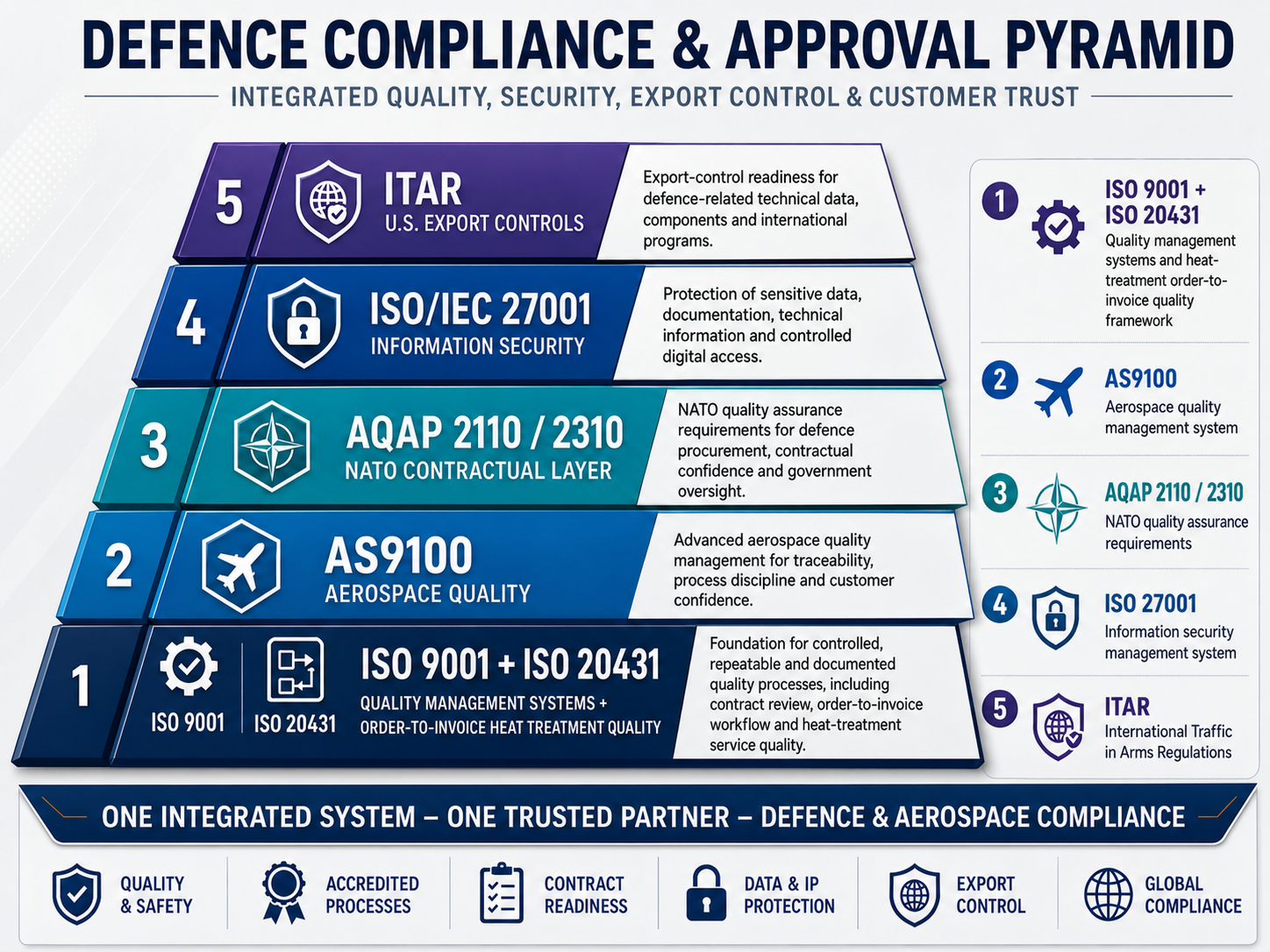
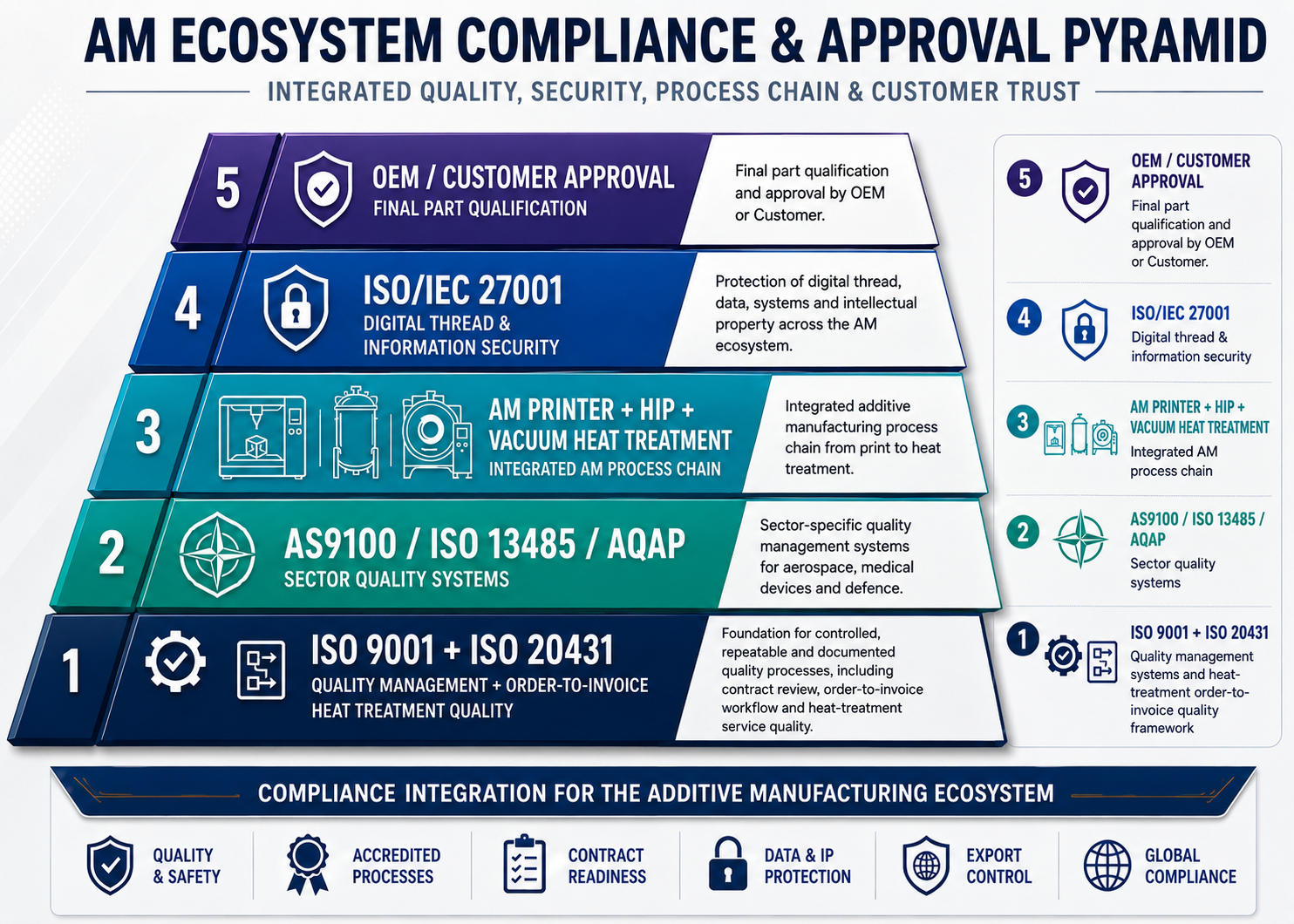
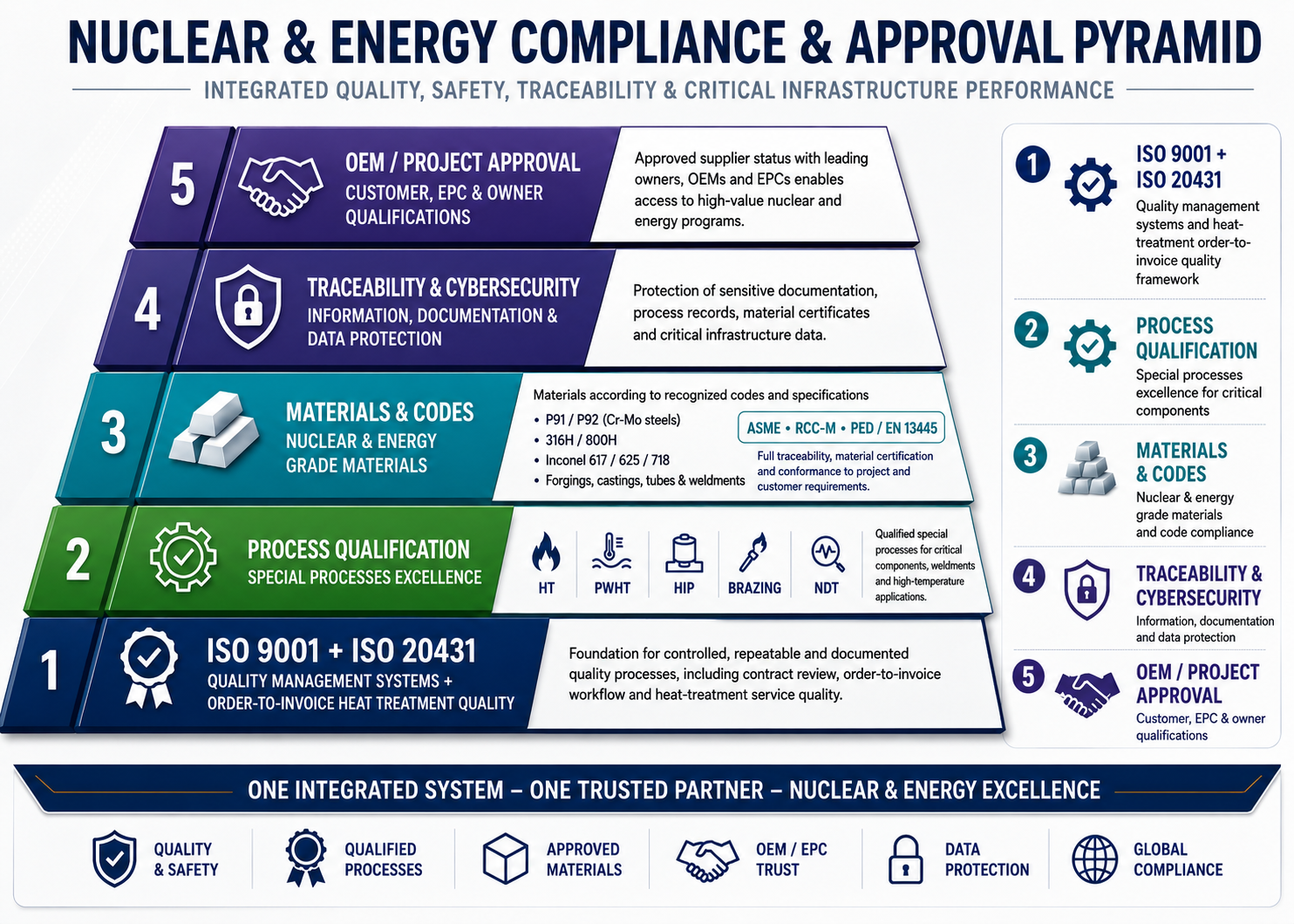
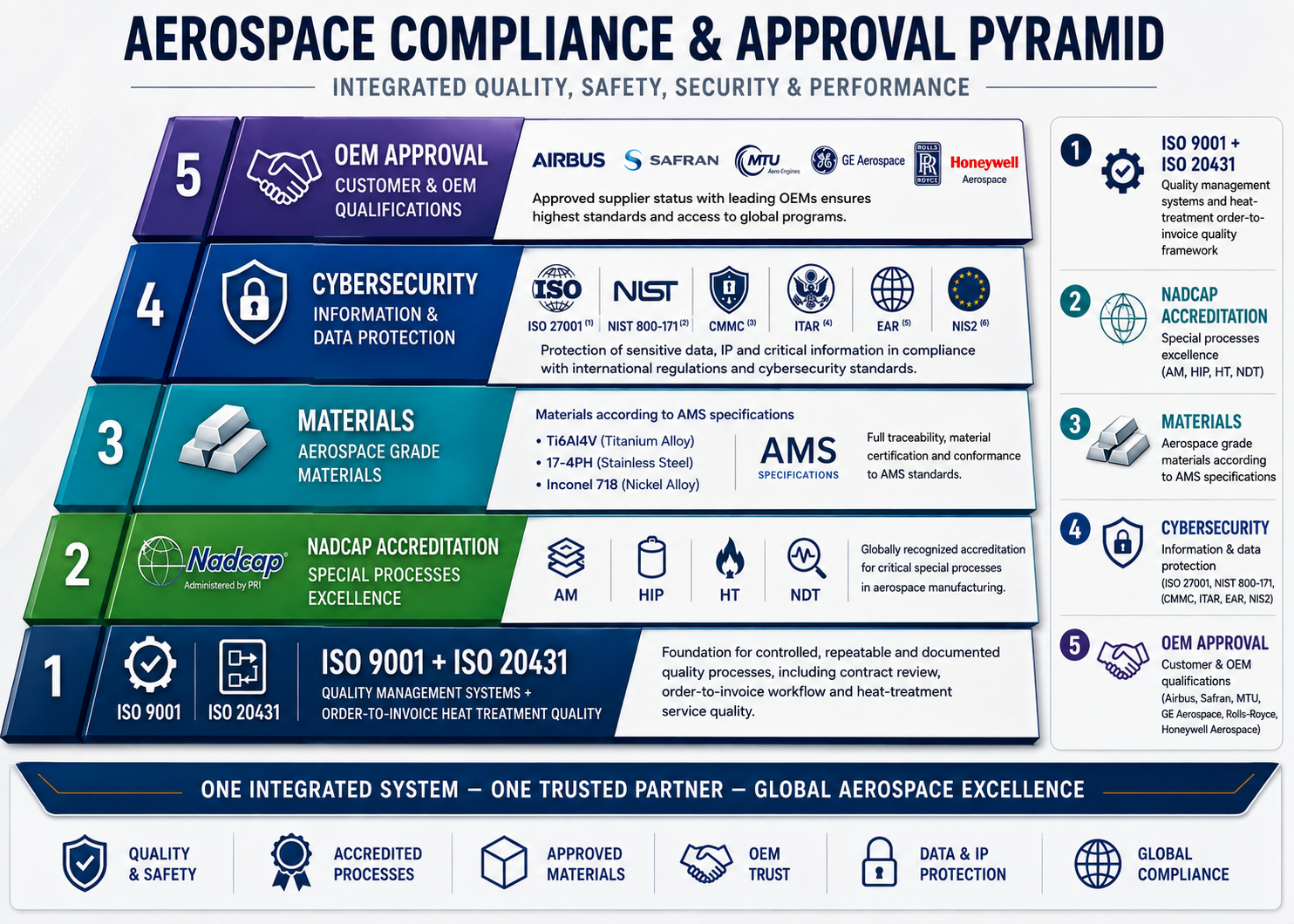
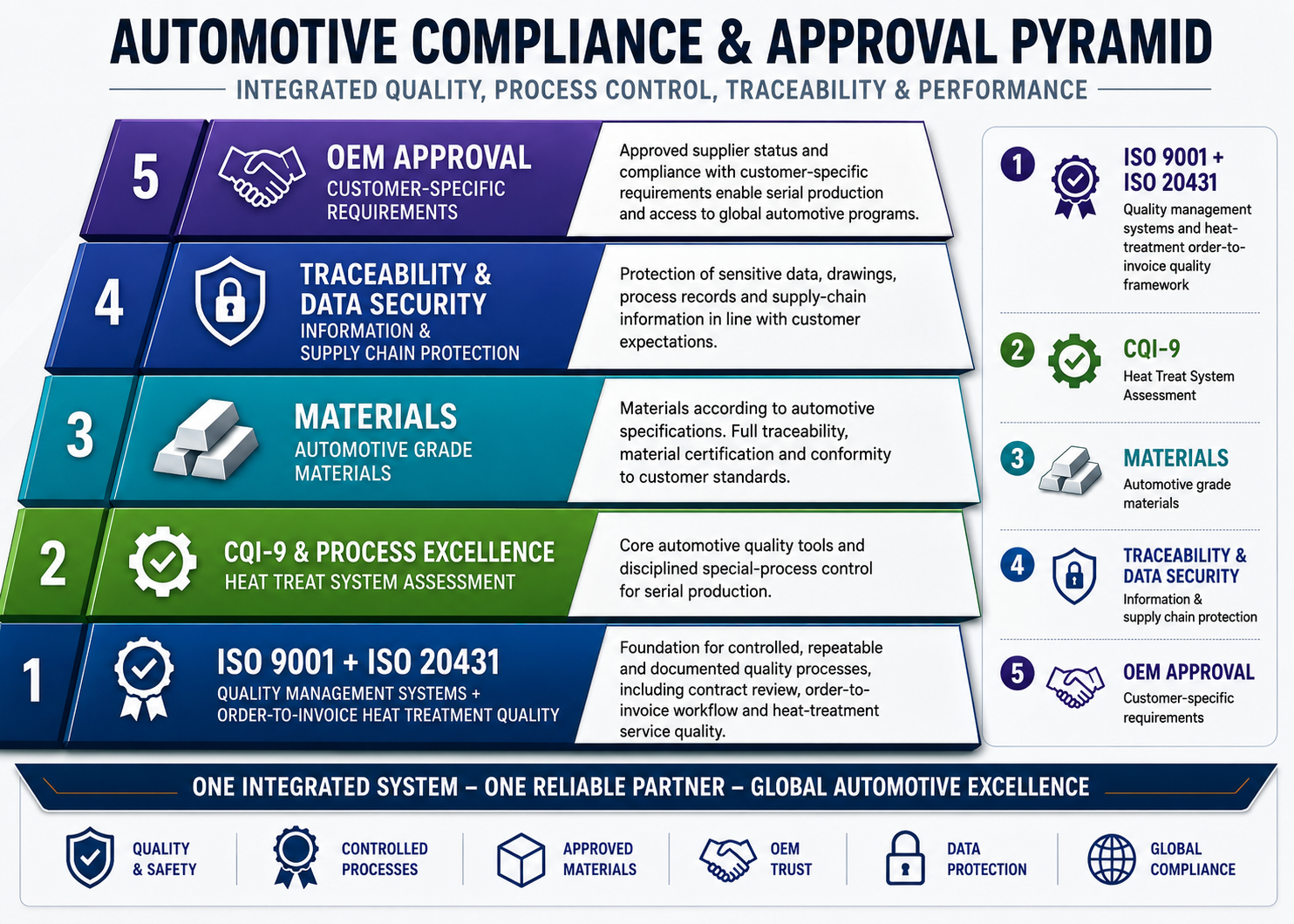
Essentially at levels 1, 4 and 5 they are identical. They differ at levels 2 and 3, where they are related to certification related to a given production segment. At the top of the pyramid, superior to everything else, are the OEM specifications of the end manufacturer. For the Aerospace, Automotive, Energy and Nuclear Energy sectors, AM technology, there is a clear trend towards global unification of quality management in the global world. The exception is Defence, where no global standard exists, and quality is managed at the national level by individual states and governments. For NATO states, NATO standards are a certain link, but even in this case their implementation and control is managed by the state. At the top of the pyramid is ITAR, applied in the USA. Its role is different from that of ISO 27001, and it is quite obvious that in the future it must also be applied within NATO.
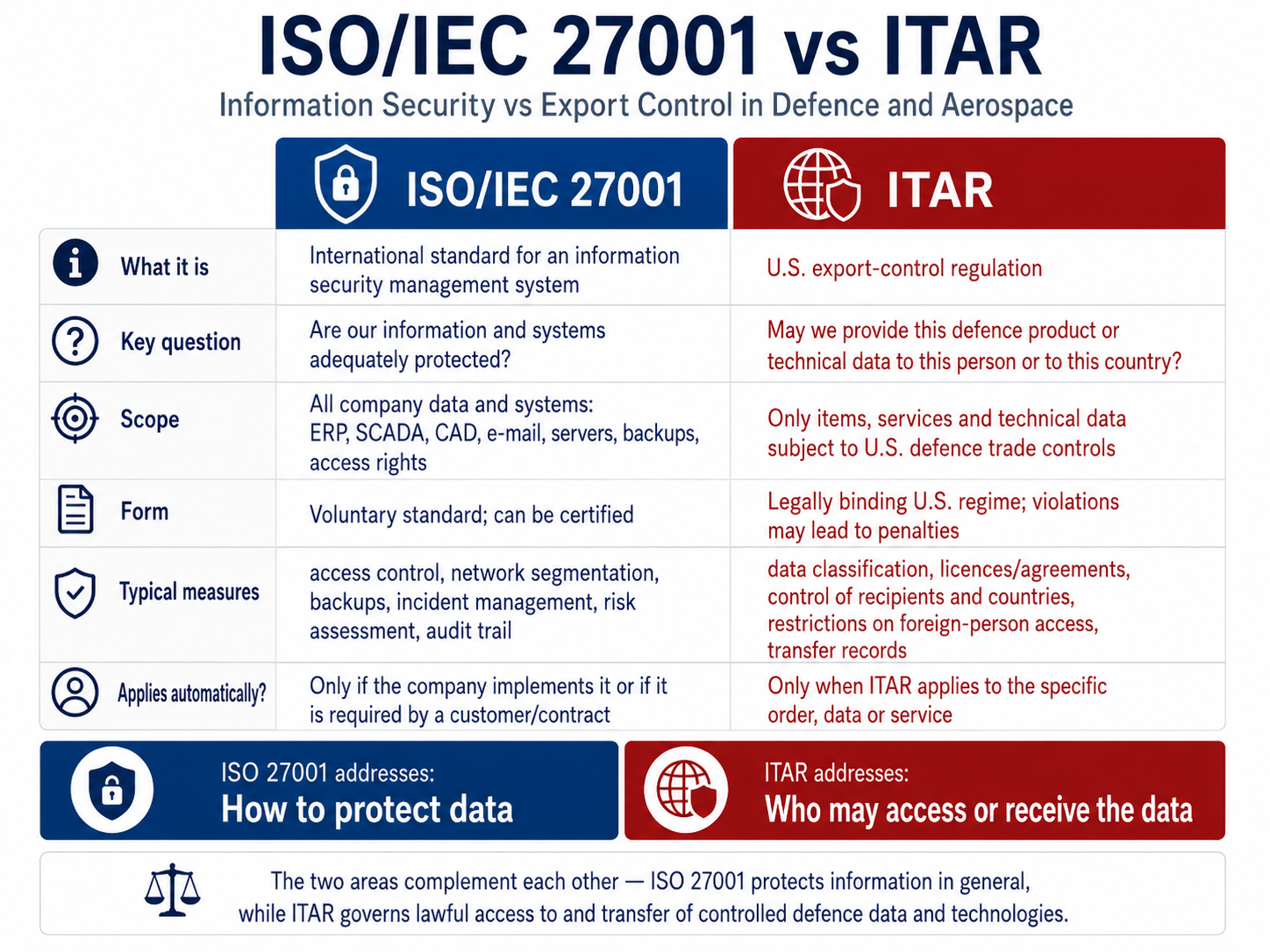
What are the differences? ISO 27001 protects information in general. ITAR restricts who you can share certain defense information or technology with.
ISO 27001 sets out the requirements for an ISMS: identifying risks, implementing and maintaining controls, and continually improving them. However, it does not say whether a particular drawing, STL file, or process rule can leave the company or be shown to a particular employee.
In contrast, ITAR regulates manufacturing, export, temporary import, brokering, defense services, and technical data under 22 CFR 120–130 (1). The key point with technical data is that sharing it with a foreign person can be considered an export, even if the data does not physically leave the United States.
(1) Parts 120-130 of 22 CFR contain the International Traffic in Arms Regulations (ITAR). Administered by the U.S. Department of State’s Directorate of Defense Trade Controls (DDTC), these regulations regulate the import and export of defense-related items, services, and related technical data that are inherently military in design or purpose.
=======================================================================================================
Are you solving a similar problem? I will help you with the analysis…
 40+ years of experience in the field
30+ years of experience… HT-PROGRES, Bodycote, Galvamet
cooperation… VŠB, Czechimplant, ECM Technologies, TAV Vacuum Furnaces, GHC Invest
12+ years of expert activity
Want to ask for a solution or want a non-binding consultation? Click on this link, I will usually respond within 24 hours. Contact email
========================================================================================================
Jiří Stanislav, Ing. CSc.
Consultant and forensic expert
========================================================================================================
7/7/2026