Low-pressure Carburizing versus AMS 2750 and Furnace Class
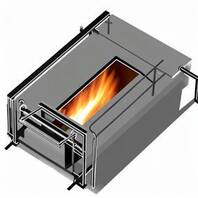
I ran into a problem. A reputable supplier of low-pressure carburizing furnaces has supplied a brand-new vacuum furnace for this technology, but without the default TUS. The supplier performed TUS measurements only at itself, before delivery during acceptance tests, but no longer after delivery, at the customer’s location. According to AMS 2750, Article 3.5.4.1.1 a, a new TUS and SAT must be performed after the equipment is relocated, except for heat treatment equipment designed to be portable. But this is not the case.
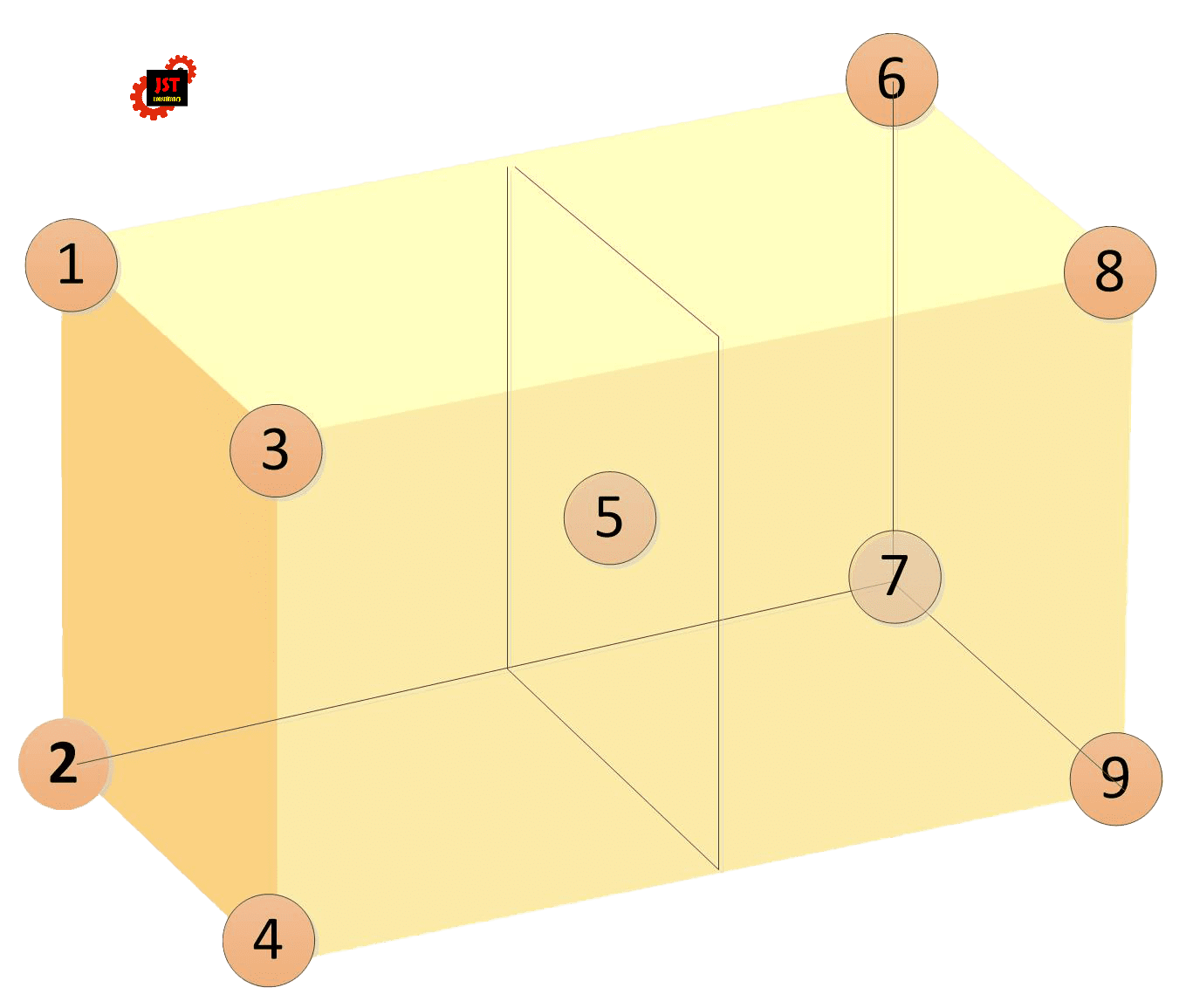
What can be expected? How would it look if the furnace was not in furnace class 2 (+/- 5 C) but in furnace class 5 (+/-14 C)? What will be the difference in CHD at the 9 points of the furnace where TUS is measured?
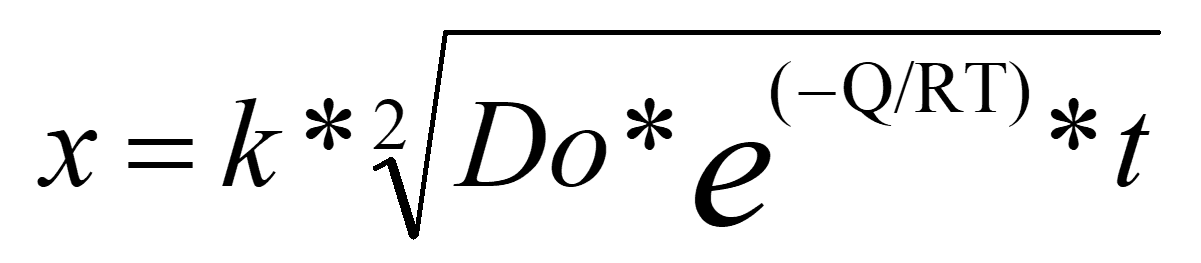
I used the classic diffusion equation for the calculation, where D0 is the diffusion coefficient, Q is the activation energy, R is the gas constant, T is the temperature, and t is the time. Since there was no time, I just tried to use the values I once calculated in the past for plasma nitriding and for nitrogen diffusion.
I expected results completely out of the zone of reality. But I was surprised by the agreement of my model with what the simulation programs for low-pressure cementation calculate. The results were surprising also because the radius of the carbon atom is larger than that of nitrogen, but it differs by only +7%. A better agreement was achieved for a temperature of 950 C, which, however, fully suits my purpose.
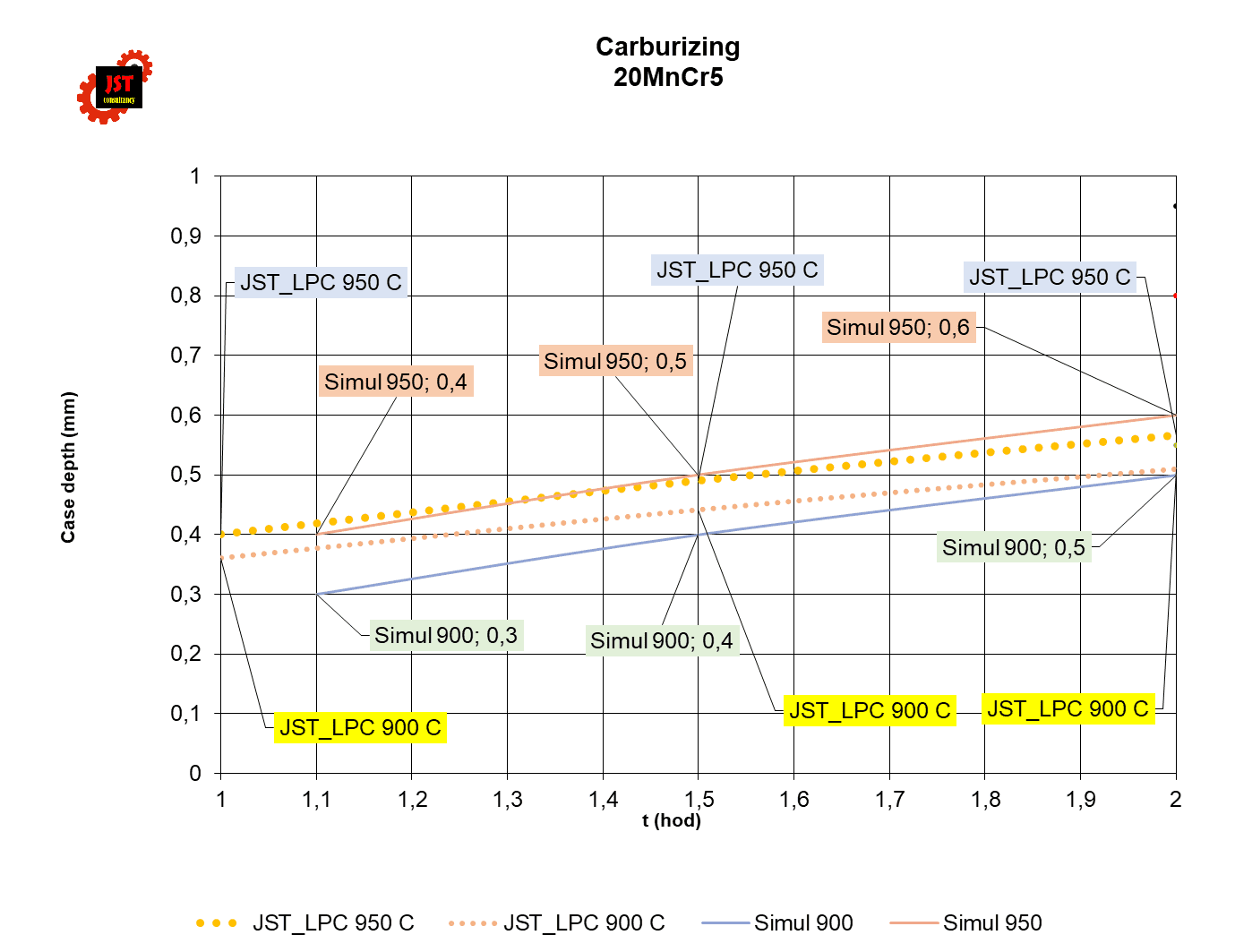
Fig. 1 – The Simul 900 and Simul 950 values are calculated by the furnace supplier’s simulation software, the JST_LPC_900 and JST_LPC_950 values are then from my model.
However, the aim of the assignment was not to calculate the absolute values of CHD, but only to find out if the calculation would allow estimating the extent of CHD change within the temperature difference corresponding to the furnace class, i.e. basically, what is the sensitivity of CHD to the temperature range of +/-5 C, or +/-14 C.
The result is surprising. For furnace class 2, CHD deviations caused by the temperature range of the furnace, measured using TUS for furnace class 2, are up to 2%, for furnace class 5 then up to 6%. However, since ISO 15787 defines the limit deviations of CHD in a considerable range, +50 to 60%, in practice we would fit into the standard even with absolute values.
ISO 15787 extract from specification:
CHD 0,3 + 0,2 mm
CHD 0,5 + 0,3 mm
CHD 0,8 + 0,4 mm
The result of my analysis is below. According to the diagram below, for furnace class 2, for a furnace temperature of 945 °C CHD = 0.561 mm, for a temperature of 955 °C then CHD = 0.572 mm, i.e. 1.96%.
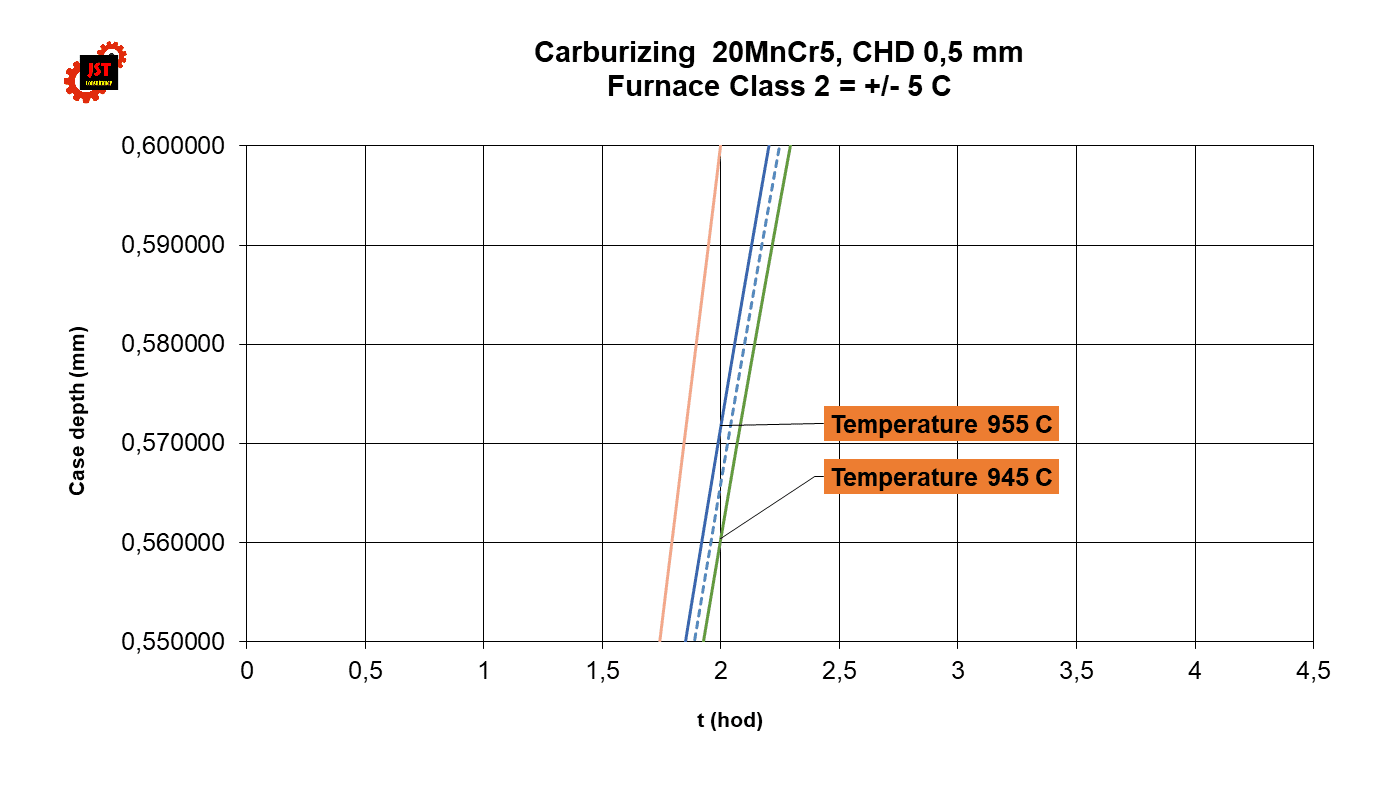
Fig. 2 – Chart for CHD at 945 and 955 C for Class 2 Furnace, for LPC at 950 C
For furnace class 5, for a furnace temperature of 936 °C, CHD = 0.550 mm, and for a temperature of 964 °C, CHD = 0.582 mm. The difference is therefore 5.8%.
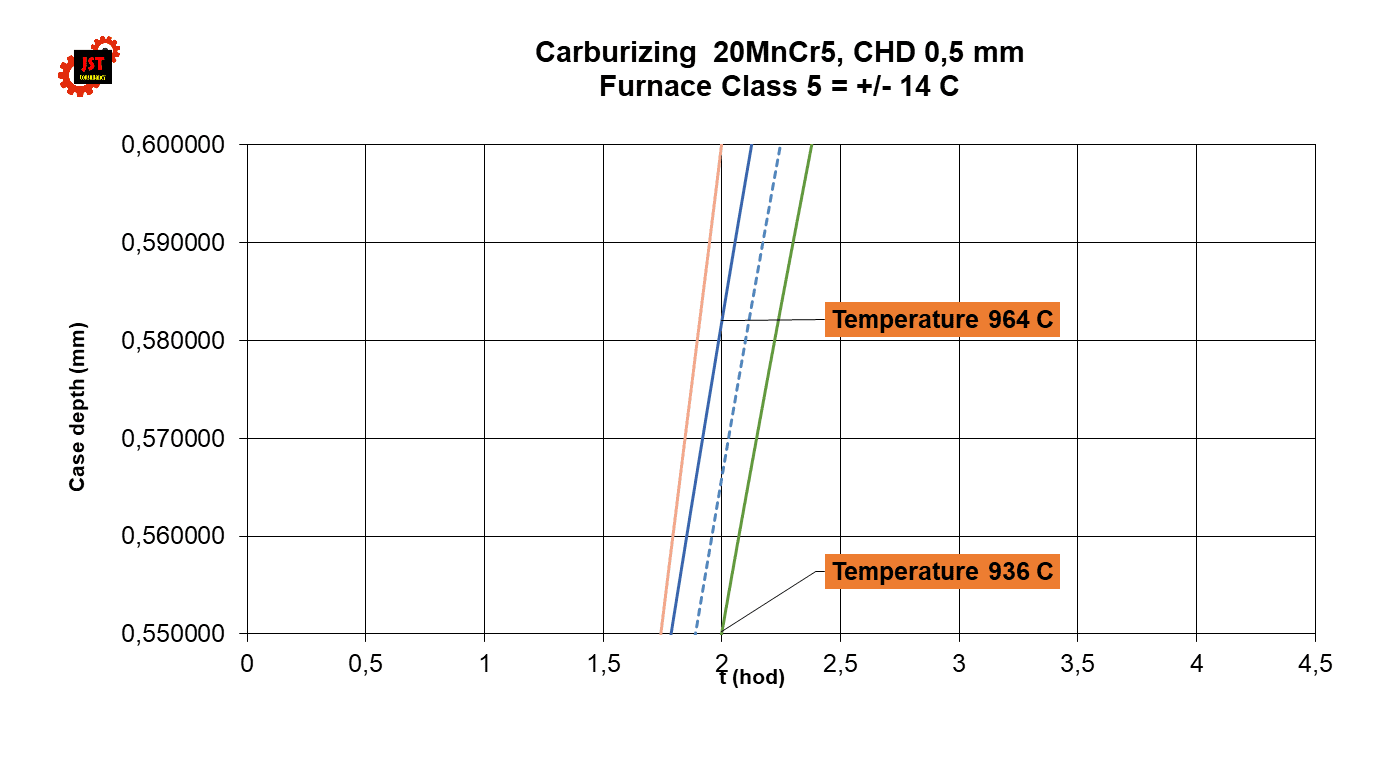
Obr. č. 3 – Chart for CHD at 936 and 964 C for Class 5 furnace, for LPC at 950 C
What does this imply? If we don’t have a TUS and at the same time, we don’t even have the possibility to measure it, then we can try to replace it by samples carburizing placed in 9 points, just as thermocouples for TUS would be placed, and measure CHD. If the results are within 2%, then it can be assumed that we have a temperature uniformity in the oven of +/- 5 C, if they are within 6%, then +/- 14 C.
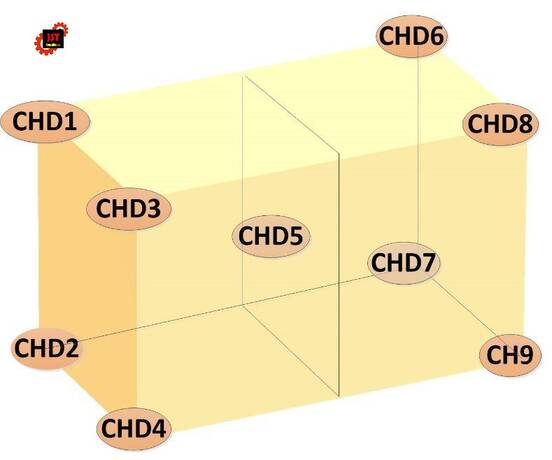
But there is one pitfall. We measure CHD through hardness, usually the Vickers method. According to ISO 6507-2, the accuracy of this measurement is 4%. So even if we had results in 2%, it will depend a lot on how well we can measure with the Vickers method. Whether we have a furnace in class 2 is probably difficult to determine, but if our furnace runs up to +/- 14 C, then there is a chance to find out and react, for example, by actual TUS measurement with 9 thermocouples.
Is that too bold a claim? Probably yes, but there are companies producing parts of a general nature, which do not fall under either CQI-9 or AMS 2750. They try to do anything. A partial change is brought by ISO 20431, no one should escape from this standard, however, if we chose a supplier who supplied us the furnace as “black box”, do we have another option, how to verify what we actually bought?
Jiří Stanislav
December 10, 2023