How to do AI in practice, part V – Strategy
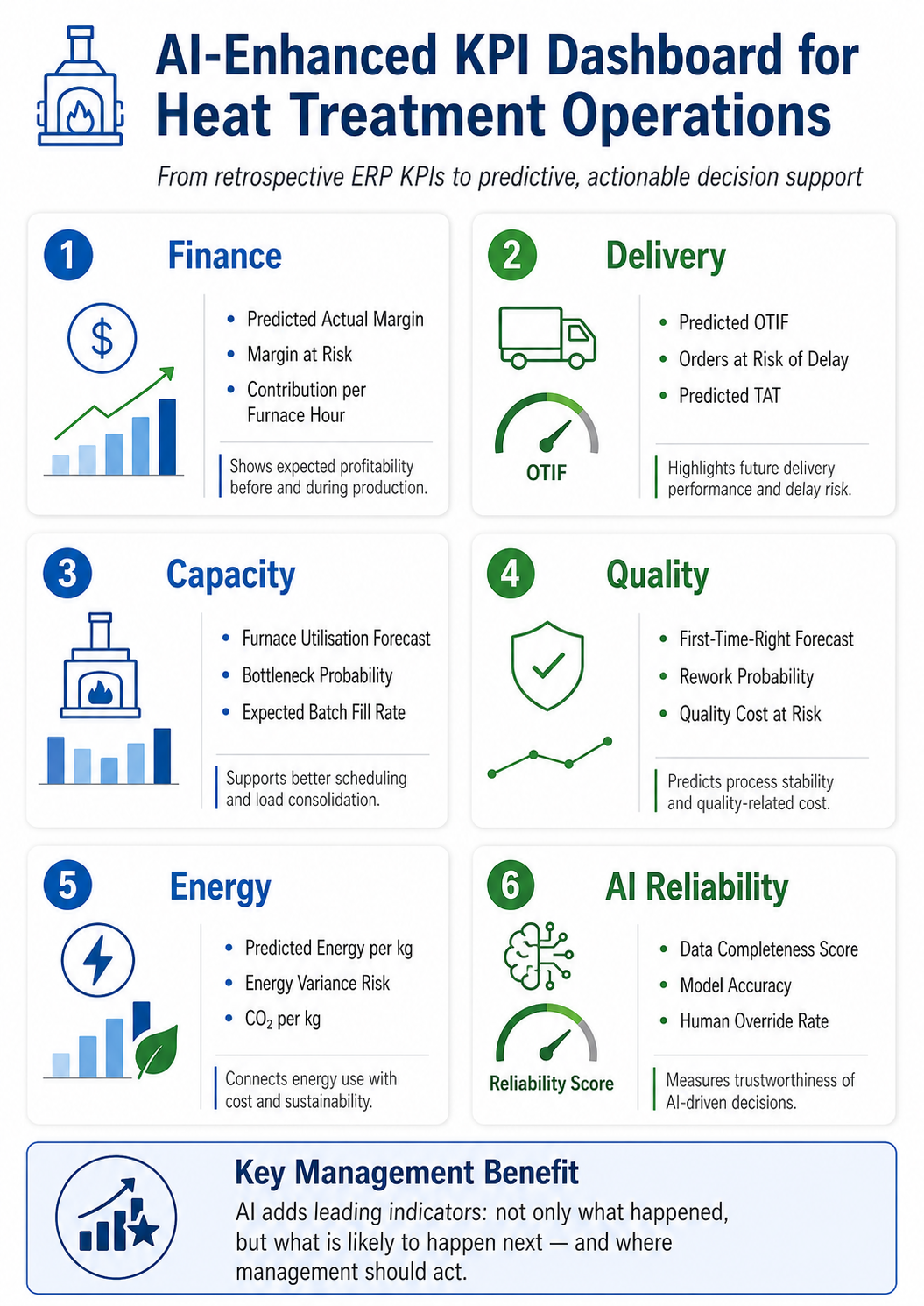
Is what was said in the previous parts tempting? In my opinion, yes. The ability to see the status of the offers, their volume, potential profitability, future capacity requirements for the furnaces, quality requirements and control equipment, all this is very important information for further decision-making.
If the order is accepted for an already issued offer, we have another set of cost data, this time planned. In the meantime, many weeks and months may have passed, and the cost ratios have changed.
When an order is accepted for an issued offer, the bid costs must be recalculated to the planned ones, if possible automatically. If the costs for the period between the request and the order were to increase dramatically, we could accept a loss-making order. This cannot be allowed.
Once the order is released into production, a third set of data on real costs is loaded, based on actual times, actual hours worked, actual cost prices, and actual furnaces allocated. This is every heat treater dream. Once the order is closed, usually by printing a delivery note, we can see if it was profitable or not. And if we use Power BI, it can present this visualization for everyone on a central plant screen in the hall.
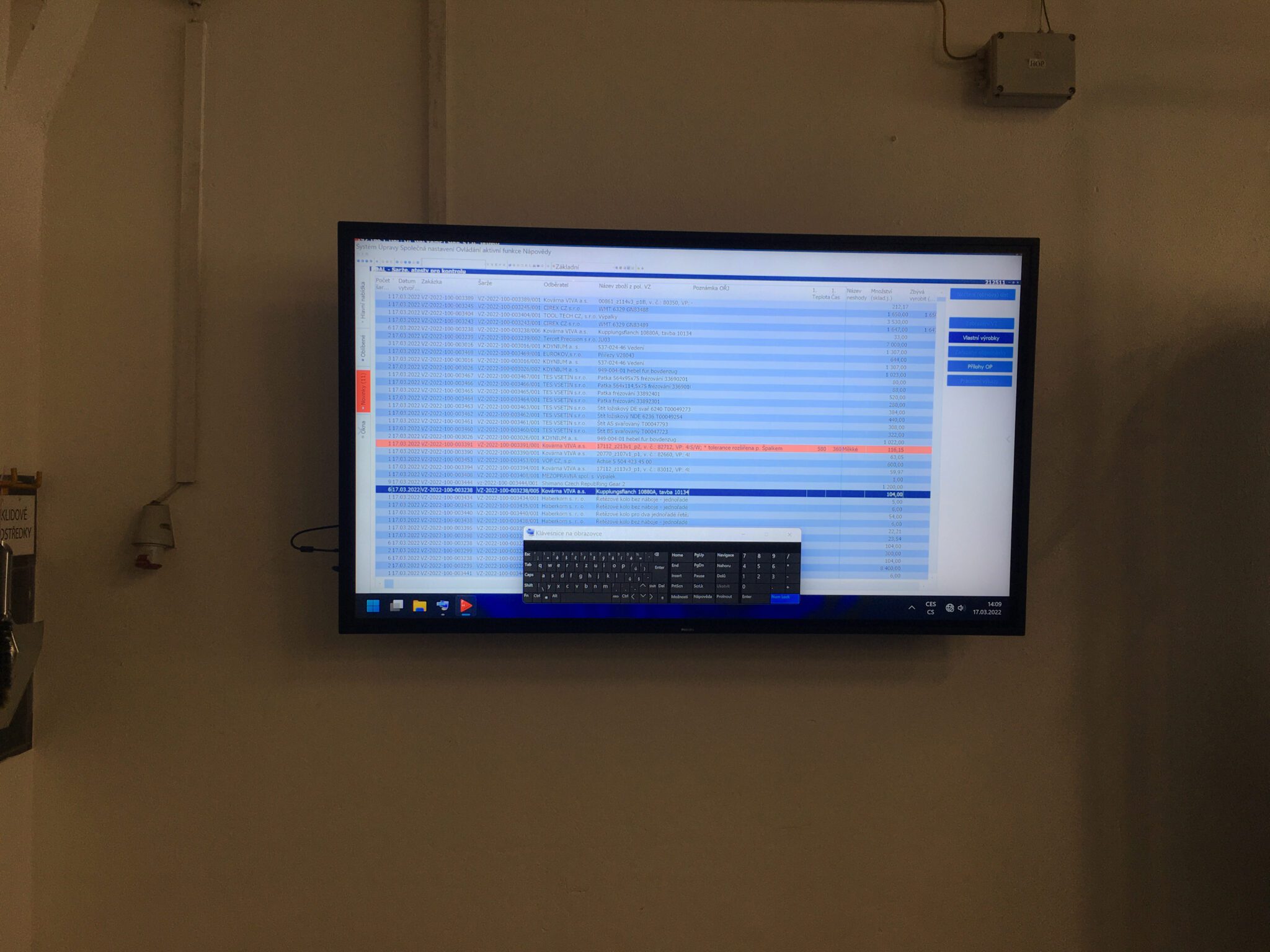
But the heat atreatment plant itself cannot handle this. For metallurgists, IT is a very distant activity. But there are expert companies that can do it, such as AIMTEC, ADASTRA, MELZER, depending on the ERP system (SAP, Navision, QI … ) that is used.
And the price? For this entry into the world of AI, at least 50 to 150 k€. And that is just the beginning. But you have to start somewhere, and this area in particular does not require any significant technical changes, only setting up the correct communication between individual databases and systems. It therefore plays an important role in understanding the benefits of AI and in communicating with it.
So does it make sense? It will probably be individual, plant by plant. Our model in Bodycote Liberec (plant with only vacuum furnaces for heat treatment, mainly of tool steels) was built on general technological procedures and a general price list. In that case, up to 40% of orders are accepted without a tender, without an RFQ. Another 30% of orders are long-term contracts, with fixed terms and conditions, negotiated for 1 year or more. The remaining 30% are contracts where a tender is required. Therefore, only 30% of turnover can be expected to be supported by AI.
But there are heat treatment plants where offers are made for 100% of orders. These differences must be taken into account. However, if we take this phase as a learning stage, we can accept that it is an inevitable step for the future. The benefits will be minimal at first, and the investment in AI will seem to us to be not very effective. But with increasing data, things will improve, and once we start connecting furnaces via OPC UA, we will know what to expect. And the more data we have, the more beneficial this investment will seem to us. And this is all the more so the less qualified personnel we have.
The worst option is that we start, and after the first failures or negative reactions we stop again. In essence, we will scrap the entire investment in AI. Here, the heat treatment shop needs a visionary at the helm, a person who will tirelessly pursue his goal. Without his support, this cannot work out well, because in the short term it will bring minimal results. And in the long term? The worst is the so-called management burnout. His expectations are usually greater than the speed of implementation.
=======================================================================================================
Abbreviations used:
AI: Artificial Intelligence
API: Application Programming Interface: definované rozhraní a soubor pravidel, podle kterých si dva systémy předávají data a příkazy. Webové API může být dostupné prostřednictvím jedné nebo více URL adres, označovaných jako endpoints.
JSON: JavaScript Object Notation: textový formát pro strukturovaný přenos dat. Vznikl v prostředí JavaScriptu, ale dnes je nezávislý na programovacím jazyce.
Middleware: integrační vrstva, která propojuje systémy, transformuje data, řídí komunikaci, zabezpečení a auditní záznamy.
AI model: matematický nebo statistický model, který provádí klasifikaci, predikci, detekci odchylek nebo doporučení.
OPC UA: Open Platform Communications nebo OPC Unified Architecture
AI vrstva: řešení sestavené ze standardních platforem, konektorů, pravidel a individuálně nakonfigurovaných nebo vyvinutých modelů.
Document AI: Technologie využívaná k extrakci využívá k extrakci informací z tištěných i digitálních dokumentů, jako jsou obrázky, texty, znaky
DMS: Document Management System
FQ: Request For Quotation
APQP: Advanced Product Quality Planning
PPAP: Production Part Approval Process
ERP: Enterprise Resource Planning
OTIF: On Time In Full (%) – percentage of orders delivered within the required deadline
TAT: Turn Around Time (hrs) – the time between order recording and packing slip printing
=======================================================================================================
Are you solving a similar problem? I will help you with the analysis…
 40+ years of experience in the field
30+ years of experience… HT-PROGRES, Bodycote, Galvamet
cooperation… VŠB, Czechimplant, ECM Technologies, TAV Vacuum Furnaces, GHC Invest
12+ years of expert activity
Want to ask for a solution or want a non-binding consultation? Click on this link, I will usually respond within 24 hours. Contact email
========================================================================================================
Jiří Stanislav, Ing. CSc.
Consultant and forensic expert
========================================================================================================
1/8/2026