How to do AI in practice, part I – Introduction
Thomas Wingens published an interesting article on the topic of “THE AUTONOMOUS THERMAL PLANT: HOW AI AND ROBOTICS ARE CHANGING HEAT TREATMENT”. For those who don’t know Thomas, he is a man who was born in a hardening plant and has held managerial and executive positions in companies in the metalworking and heat treatment industries during his working life, including Bodycote, Ipsen, Tenova Group, Seco/Warwick, ThyssenKrupp and Voestalpine Group. I have known him personally for years, we worked together at Bodycote, and in my time he was responsible for acquisitions. (www.wingens.com).
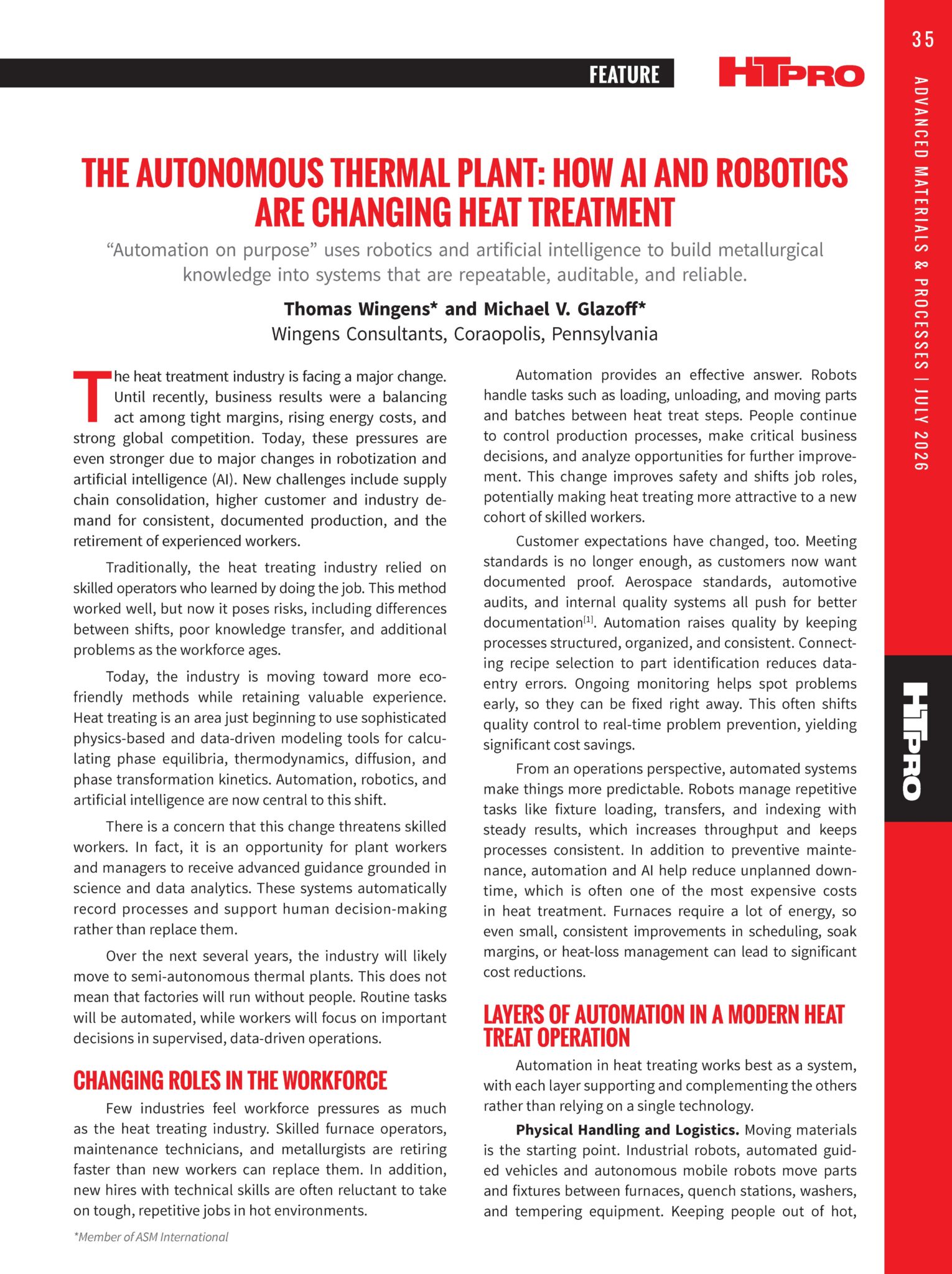
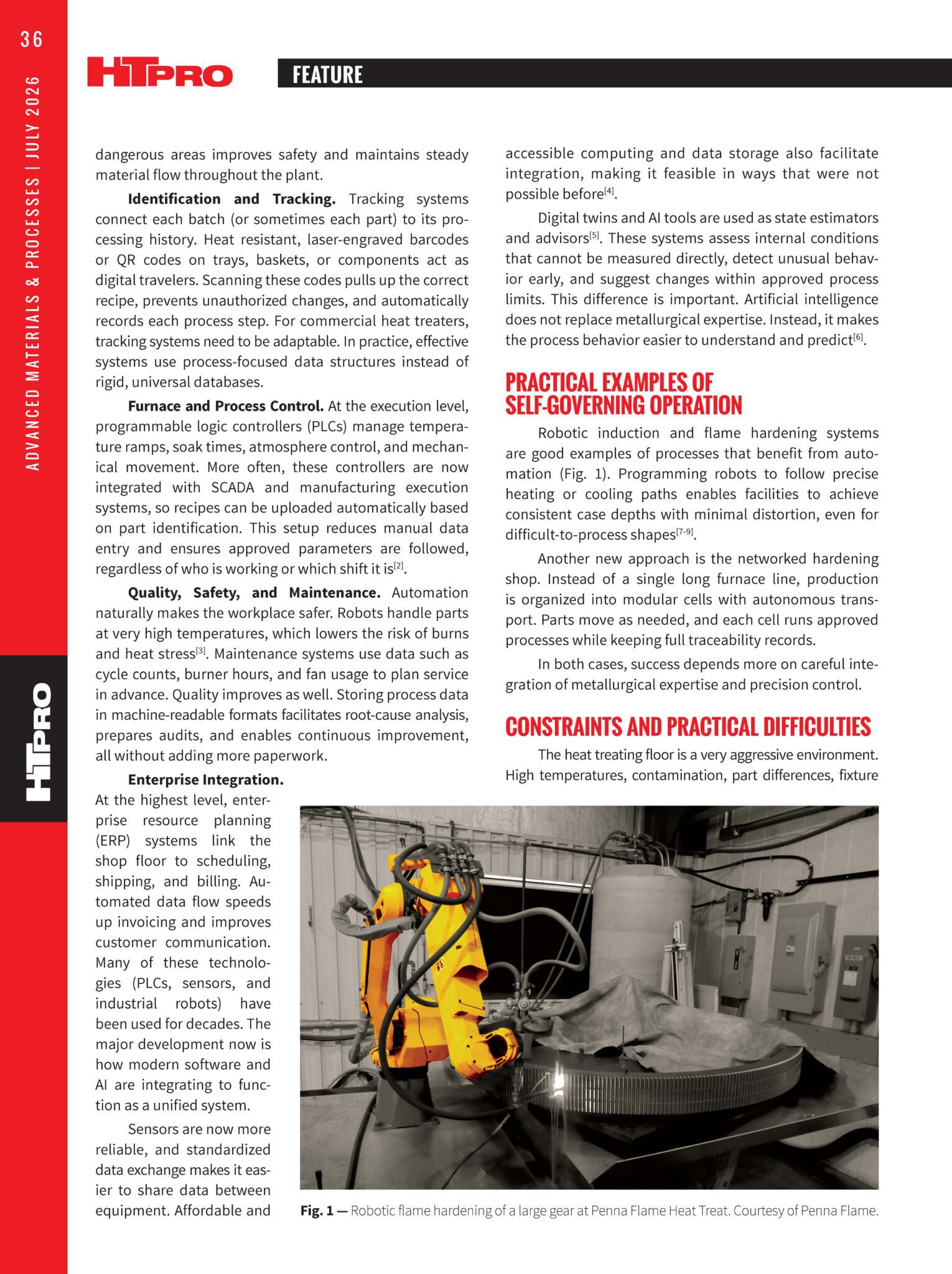
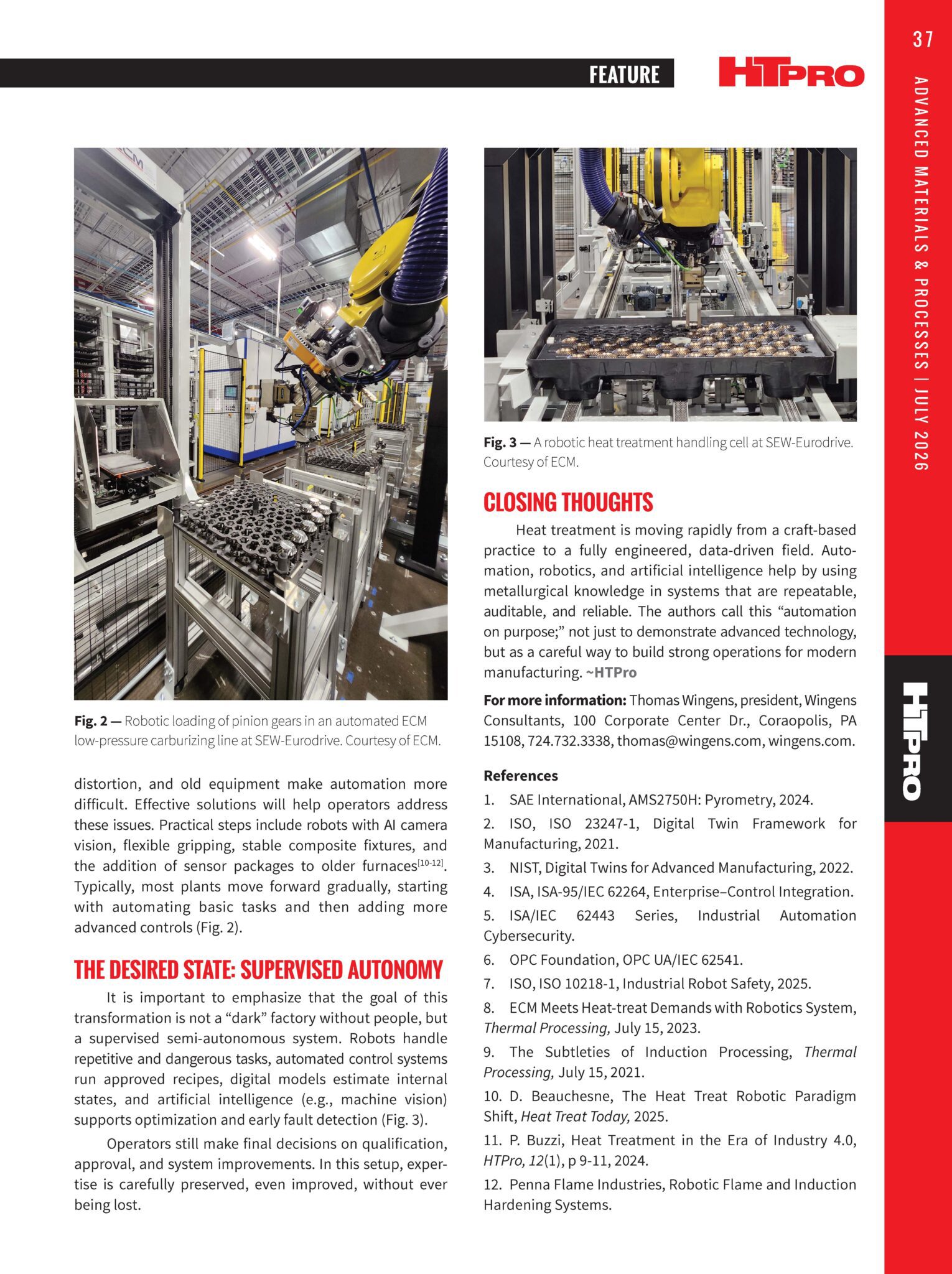
When I read it, the content intrigued me, but I couldn’t imagine how to do it practically. Although I fully agree with the content of his article, it is not a guide. So I started to research what can be done with it. How can AI actually intervene in the life of a tempering plant from receipt to invoicing.
The first thing I learned was that AI in a heat treatment plant is not like AI like Copilot or ChatGPT. They communicate with us, have a language model, understand text, and respond. But AI in a heat treatment plant usually doesn’t talk, doesn’t write texts, doesn’t communicate with people, doesn’t have a personality, doesn’t have consciousness, and doesn’t ask anyone questions.
The core of industrial AI in a heat treatment plant is usually not a conversational model, but an analytical or predictive model. It evaluates data, classifies states, and predicts results. In addition, however, Document AI or a language model can be used to read RFQs, technical documents, and prepare explanations or protocols.
AI in the heat treatment shop is a silent mathematical module that: reads data, looks for patterns, detects deviations, predicts failures, recommends parameters, checks preparation, generates protocols.
AI takes: furnace logs, batch preparation photos, photos from batch loading, CHD results, hardness, microstructure, order history, vacuum pump and fan vibrations, flow rates, temperature gradients. And it “asks”: What does the normal state look like? What does the deviation look like? What is likely to happen next? What parameter is optimal? Is the preparation correct? Is the fan OK? Is the pump OK? Is the CHD within tolerance?
AI does not ask people. AI asks history and looks for patterns in historical, reference and current data
What AI “sees”: T1, T2, T3, pressure, vacuum, acetylene flow, diffusion time, temperature gradient, CHD results from past batches.
What AI “does”: compares the current batch with 500 previous ones, finds deviation, assesses risk, recommends correction.
What the AI “says” (in practice, in the form of a report): “Diffusion is slower than usual. I recommend extending the time by 3 minutes.”
The AI does not ask a person. The AI asks a data pattern. And how to imagine it simply?
ChatGPT = “AI that talks, writes, communicates”, AI in the heat treatment plant = “AI that calculates”. Both are AI, but of a completely different type.
So what is AI in the heat treatment plant technically?
AI in the heat treatment is: a prediction model (time to ventilator failure), a deviation detection model (poor preparation), a recommendation model (optimal diffusion), a classification model (correct part orientation), a regression model (prediction of CHD), a segmentation model (recognition of parts on a preparation). These are mathematical functions, not personalities.
Now it’s getting interesting. AI in the heat treatment plant is:
a query engine (asks for data),
an analytical engine (evaluates),
a prediction engine (predicts),
an advisory engine (recommends).
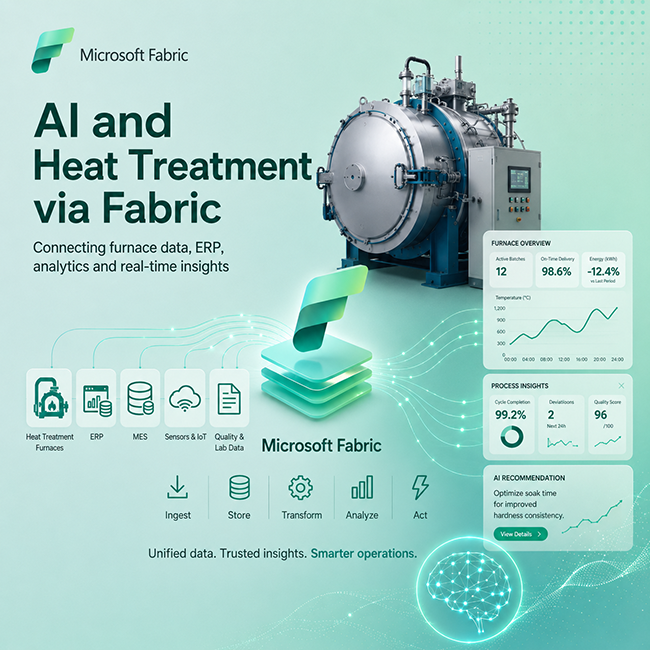
So how do I start with AI? I am not an “IT guy” but a metallurgist. That is why I have to realize that ERP does not ask the data warehouse, but this query is automatically raised by AI, connected to ERP via API, which communicates with the data warehouse. ERP only asks AI in the form of a JSON query.
ERP is the “query submitter”, AI is the “query resolver”. The data warehouse is the “data source”. AI provides technological analyses, predictions and recommendations, but ERP remains a system of official records, workflow management and approved business and production data. And what it could look like is in the following infographic.
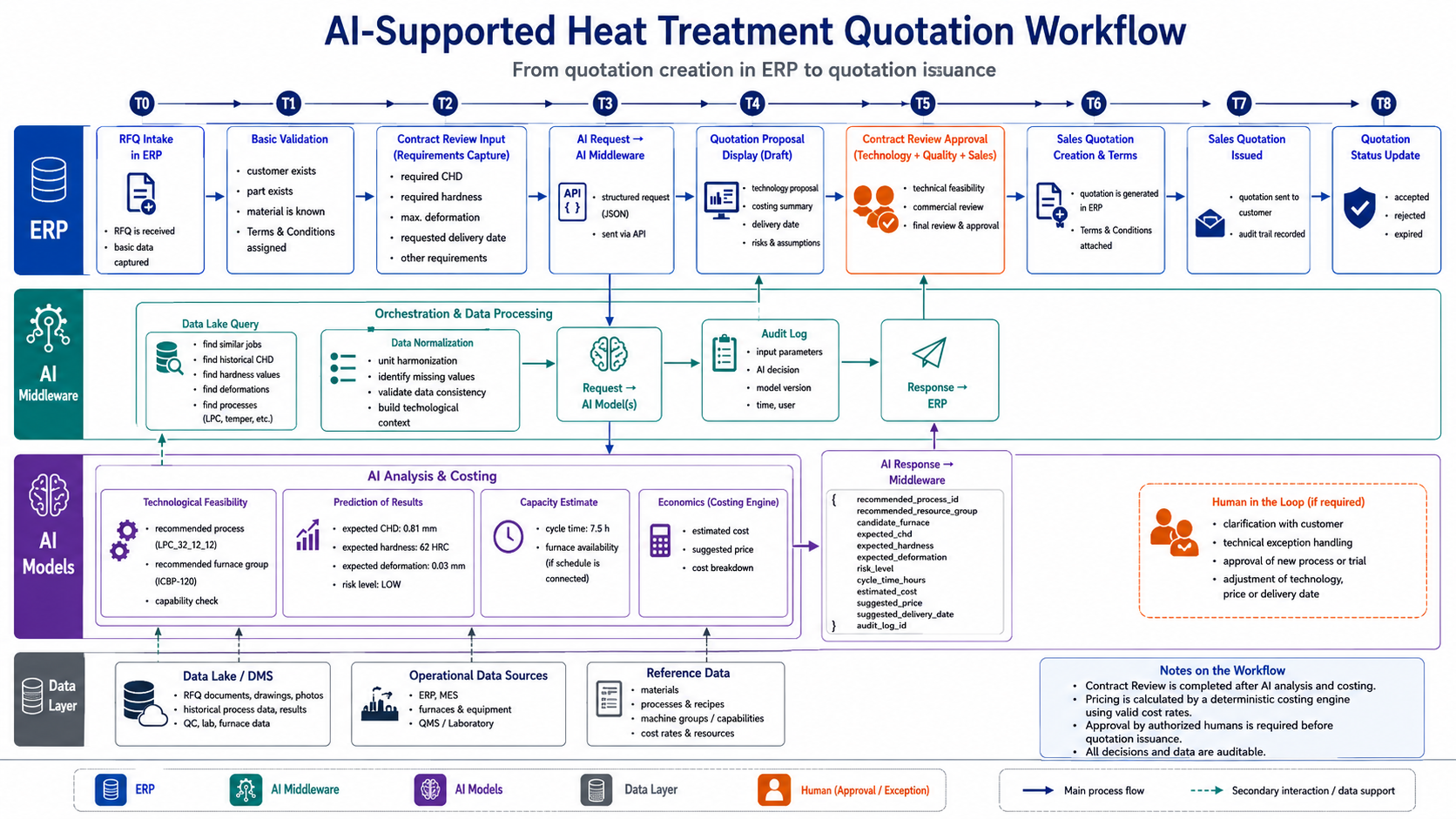
One of the possibilities to test and use AI is the bidding process after receiving an RFQ. This is one of the few areas where they do not need to have connected furnaces and monitor data from IoT. On the other hand, it is also one of the few areas where we need predictive and analytical functions of AI to help us guess what we normally do not see during the bidding process. If we receive CAD data as part of the request, then AI will perform the entire risk analysis for us, can prepare the entire APQP, PPAP, Control Plan process, based on prediction functions, it will propose Routing, batch preparation, and estimate energy consumption and total costs so that we can propose the correct price, giving us sufficient margin.
There is one limit, however. All data for this phase comes primarily from ERP. If we don’t have this data in ERP, AI has nothing to deal with. This needs to be realized before we start. In the area of accounting data, all ERP systems are essentially the same, but the fundamental difference is in the production module. Before implementing AI in the heat treatment plant, we must first consider whether the ERP provides us with the right data at the right time in the right structure. And since I have implemented several ERP systems (Altus Vario, Navision, Dynamic AX 2012, QI) in my 40 years of experience, I have worked for companies that use SAP, I can say with certainty that this phase will be as important as the AI implementation phase.
In the past, all the development steps we took in ERP were focused on improving traceability and definability functions, with the aim of making our work easier and satisfying the customer or legislation. We never did it to satisfy AI. But looking back, our path was exceptionally correct. I can say this because I spent the last 5 years at Bodycote doing just this, developing the global manufacturing module.
Anyone who starts today without this preparation has to start from the end. What to do in ERP to satisfy AI. And only if they solve this in ERP, then they can think about AI.
=======================================================================================================
Abbreviations used::
AI: Artificial Intelligence
API: Application Programming Interface: definované rozhraní a soubor pravidel, podle kterých si dva systémy předávají data a příkazy. Webové API může být dostupné prostřednictvím jedné nebo více URL adres, označovaných jako endpoints.
JSON: JavaScript Object Notation: textový formát pro strukturovaný přenos dat. Vznikl v prostředí JavaScriptu, ale dnes je nezávislý na programovacím jazyce.
Middleware: integrační vrstva, která propojuje systémy, transformuje data, řídí komunikaci, zabezpečení a auditní záznamy.
AI model: matematický nebo statistický model, který provádí klasifikaci, predikci, detekci odchylek nebo doporučení.
OPC UA: Open Platform Communications nebo OPC Unified Architecture
AI vrstva: řešení sestavené ze standardních platforem, konektorů, pravidel a individuálně nakonfigurovaných nebo vyvinutých modelů.
Document AI: Technologie využívaná k extrakci využívá k extrakci informací z tištěných i digitálních dokumentů, jako jsou obrázky, texty, znaky
DMS: Document Management System
FQ: Request For Quotation
APQP: Advanced Product Quality Planning
PPAP: Production Part Approval Process
ERP: Enterprise Resource Planning
=======================================================================================================
Are you solving a similar problem? I will help you with the analysis…
 40+ years of experience in the field
30+ years of experience… HT-PROGRES, Bodycote, Galvamet
cooperation… VŠB, Czechimplant, ECM Technologies, TAV Vacuum Furnaces, GHC Invest
12+ years of expert activity
Want to ask for a solution or want a non-binding consultation? Click on this link, I will usually respond within 24 hours. Contact email
========================================================================================================
Jiří Stanislav, Ing. CSc.
Consultant and forensic expert
========================================================================================================
31/7/2026