Energy savings in commercial heat treatment III

In this new t blog, I no longer wanted to deal with “technical consumption” and wanted to move on to that “technological consumption“. But somehow it doesn’t work very well, because it keeps getting mixed up. A technologist and his work depend not only on knowledge, but also on money, and it is difficult to separate one without the other. So, two topics today:
Effect of baskets and fixtures
As we have already stated, “technological consumption” is the energy that I have to supply to the batch, including the baskets and fixtures, in order to bring it to the required temperature. The calculation is relatively simple:
Q = Cp * m * dT, where Cp = 0.6 kJ/kg for steel, and m is the mass of the charge including baskets and fixtures.
From this consideration, it can be easily concluded that by reducing the weight of baskets and fixtures, we will also reduce the required energy. For now, however, the only known and proven alternative are CFC (Carbon Fiber Composite) products. These have a weight 5 times lower than steel baskets and fixures (1.5-1.7 g/cm3), have good thermal conductivity of 20-40 W/mK, and above all stability of dimensions and shape at high temperatures.
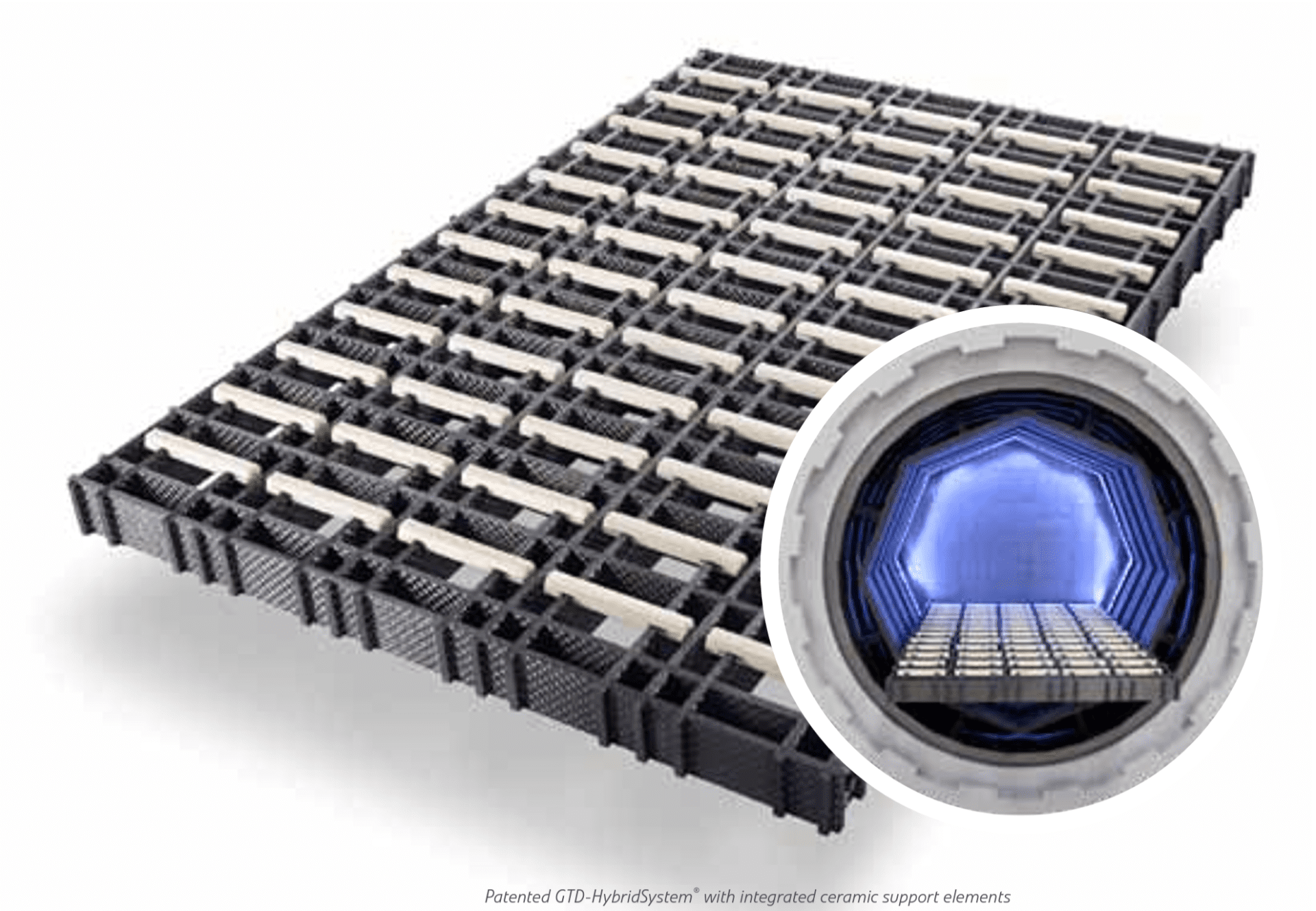
Fig. 1 – Example of fixture from company GTD Graphite Technologie GmbH with ceramic segments
Their disadvantage is the high cost, relative brittleness and susceptibility to damage, and finally the problem of eutectic when in contact with other metallic materials. A table of critical eutectic pairs is given below. However, it is necessary to take into account that under certain circumstances, without melting, parts can be glued even at significantly lower temperatures.
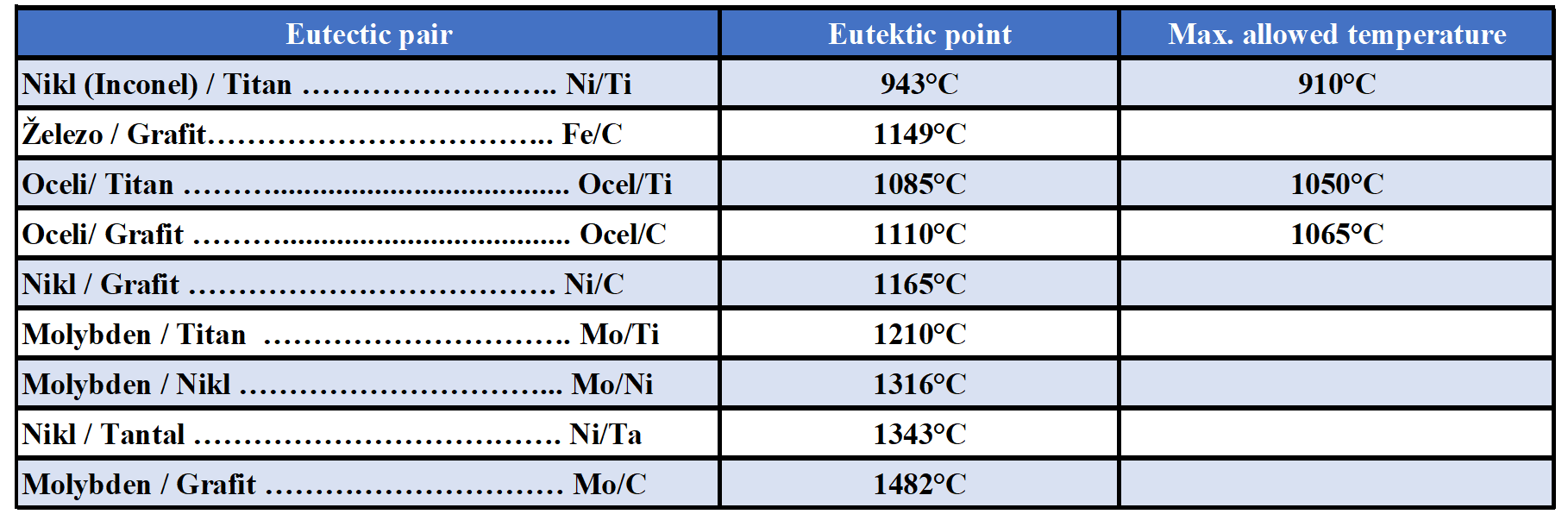
Tab. 1 – Eutectic temperatures for the contact of different metallic materials
And how will this affect energy consumption? The table shows a comparison of the basic properties of steel 1.4818 and CFC. Even though the Cp for CFC is more than 2x higher than for steel, due to the 20% weight, the heating costs of CFC grates and fixtures are half that of steel baskets or fixtures.
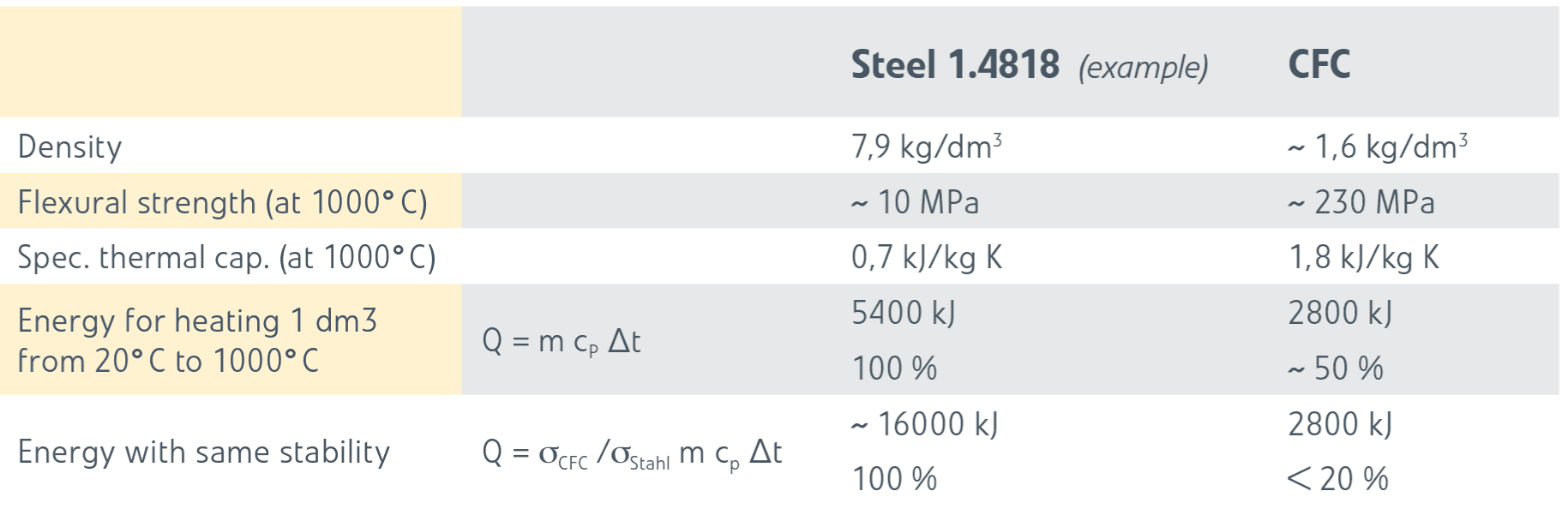
Tab. 2 – Comparison of physical values for 1.4818 steel and CFC (GTD Graphite Technology GmbH, D)
Since the heating of baskets and fixtures represents a fixed cost of the process, the variable costs are only related to the goods themselves for processing. How it manifests itself in energies is shown in Fig. 2 and 3.
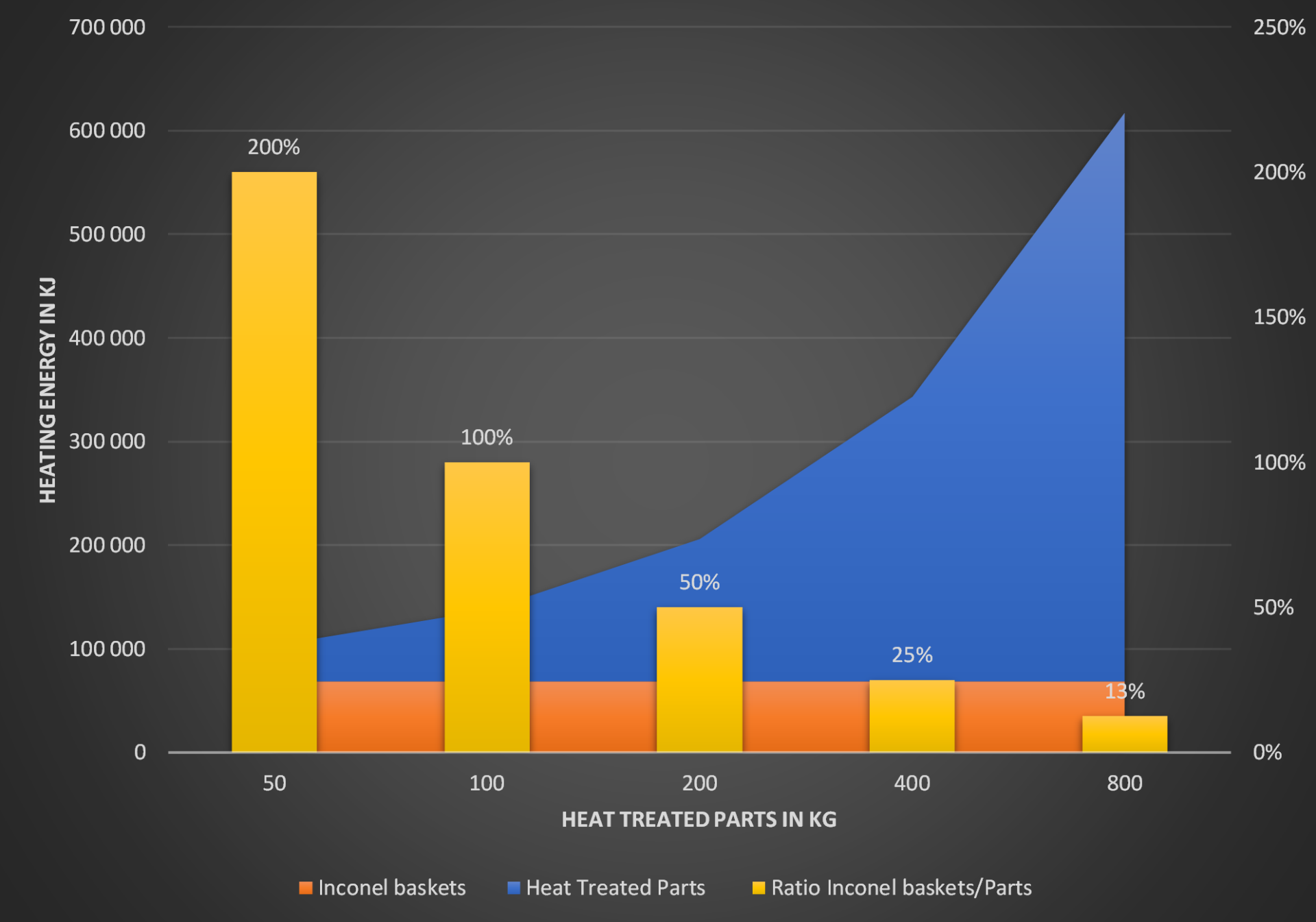
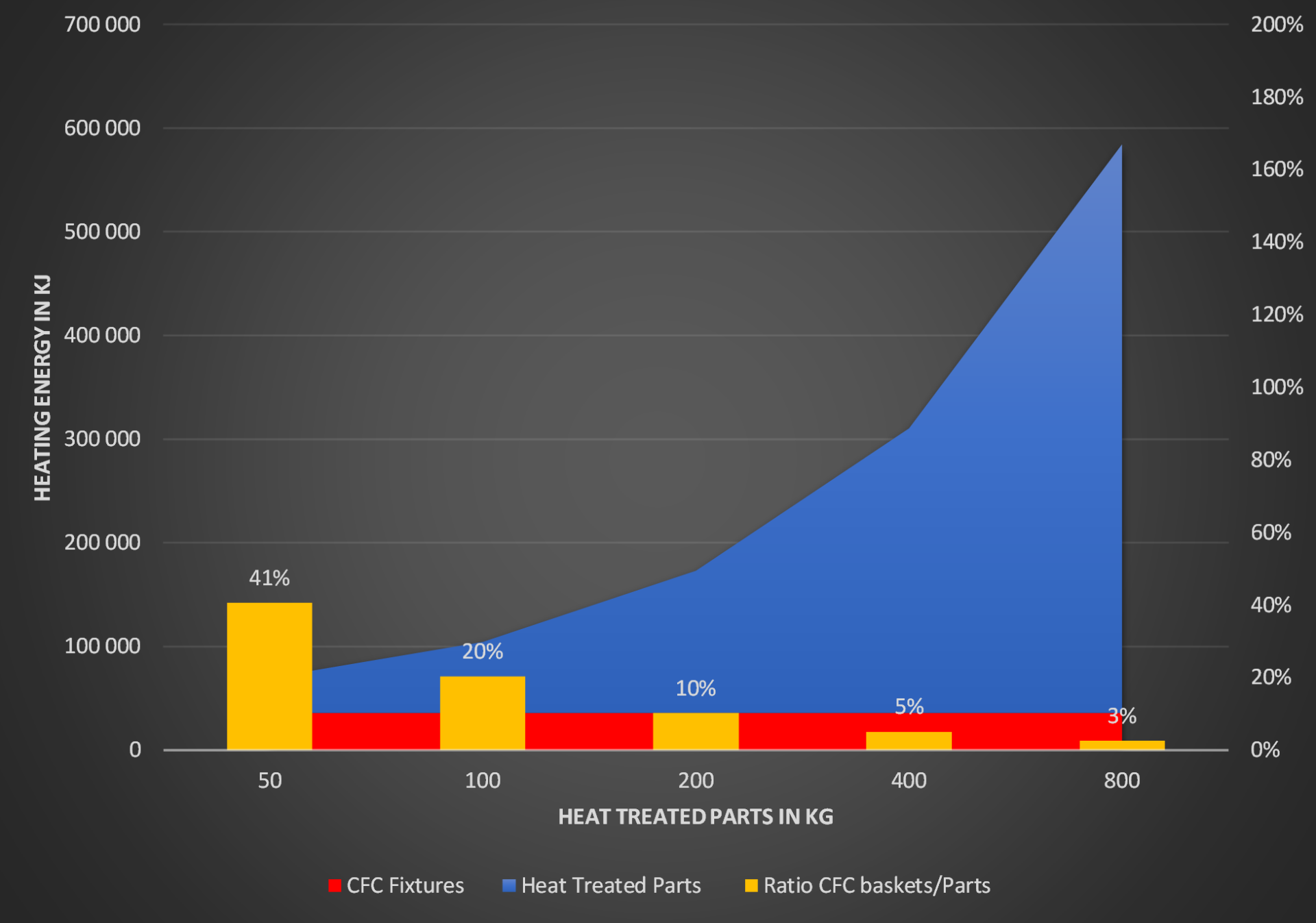
Fig. 2 – Ratio of consumed energy for baskets and load weighing 50 to 800 kg with Inconel base tray weight 100 kg
Fig. 3 – Ratio of consumed energy for baskets and load weighing 50 to 800 kg with CFC base tray weight 20 kg
Therefore, if we start from the theoretical value of consumption of 1 kWh/kg, then, for example, for a batch with Inconel fixtures and 50 kg of goods, the costs for heating the fixtures weighing 100 kg will be twice as high as for heating the goods. For the same case, however, CFC fixture will consume only 40% of the energy supplied to the batch, as they will weigh only 20 kg.
The ratio changes with increasing batch weight, which is logical. The share of fixed costs for heating the grates decreases and the share of effective energy for heating goods increases.
If we take the example of a batch with goods weighing 100 kg, since in this case the weight ratio between the fixtures and the goods is 1:1, we will use 0.5 kWh/kg to heat the fixtures and also 0.5 kWh/kg to heat the goods. By using CFC fixtures, the proportion of energy input to the fixtures will drop to 0.2 kWh/kg. The saving is the difference between the two values, i.e. 0.3 kWh/kg.
A classic single-chamber vacuum furnace 600x600x900 mm, up to 800 kg, should process approximately 16 tons of steel per month, i.e. 192 tons of steel per year. The result could therefore be a saving of 192,000 kg x 0.3 kWh/kg x 5 CZK/kWh = 288,000 CZK per year for energy. Is it an interesting amount? Absolutely, and you need to think about it.
If we are talking about the LPC process with gas overpressure cooling, the lightweight assembly will increase the cooling capacity of the whole batch and thus the hardenability. It is possible to work with CFC products even when quenching in oil, but it is necessary to prevent their oxidation at high temperatures above 350 C.
https://themonty.com/advantages-of-cfc-fixtures-when-case-hardening-in-automotive-construction/
Impact of the type of tempering furnace
Each furnace type has a different economic and energy efficiency. For multi-purpose furnaces, it is not possible to temper in a quenching furnace, but it is usual for vacuum furnaces. The picture shows data from my blog on the topic of the furnace energy label. https://intelligent-kalam.80-240-27-133.plesk.page/vime-kolik-potrebujeme-energie-na-tepelne-zpracovani/
From the mentioned monitoring, it can be seen that tempering in a vacuum tempering furnace with direct heating involves a consumption of 0.56 kWh/kg for the new TAV H6-T tempering furnace, but the same tempering in a quenching furnace requires 0.90 kWh/kg. So, it is 60% more. Although this is data from a one-time analysis, but in general I think it is so logical that there can be no doubt about it. For the gas quenching furnace, I took the value of 1.31 kWh/kg valid for the TAV H8-T gas quenching single-chamber furnace.
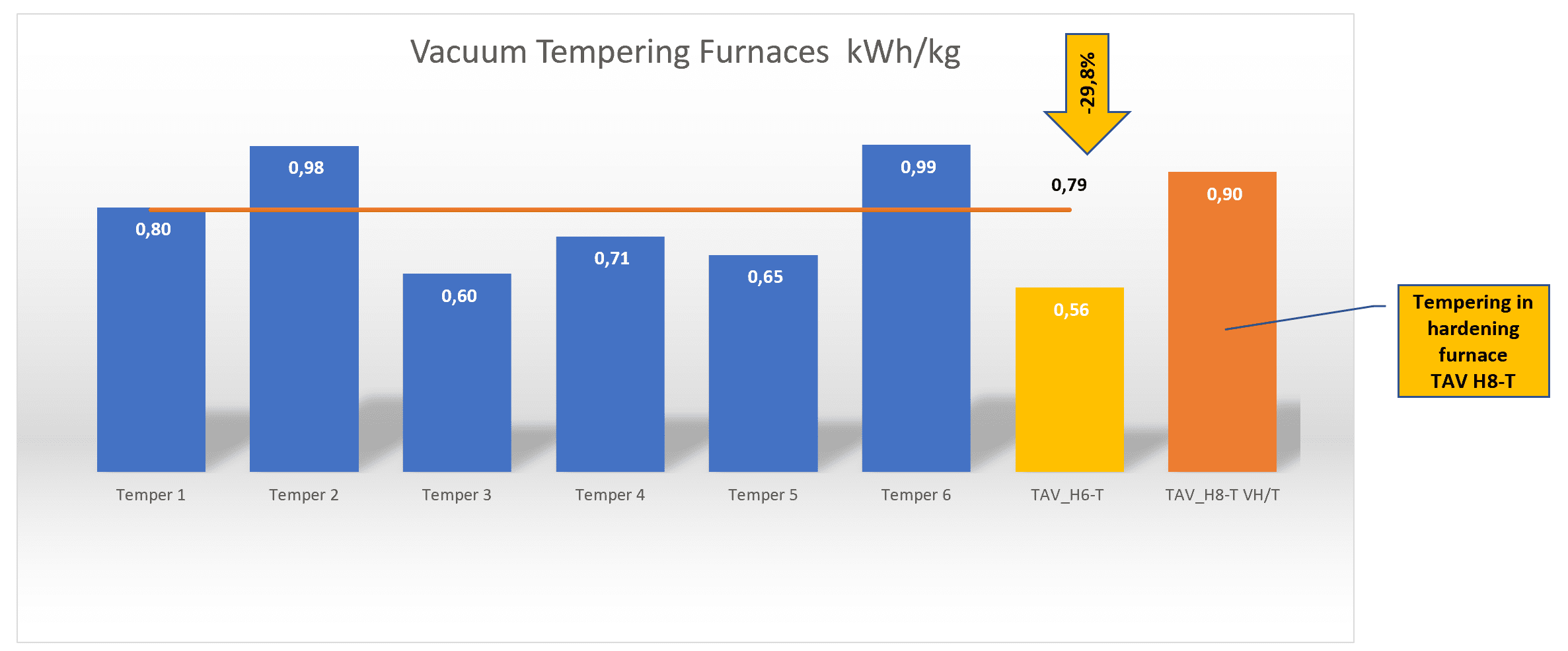
Fig. 4 – Values of unit energy consumption in kWh/kg for the monitored ovens
If I take all 3 figures of unit consumption in kWh/kg, we have a batch weight of 400 kg, then there are 3 options to perform the treatment consisting of quenching in a gas stream and with two tempers. For each cycle, I consider a time of 8 hours.
- Variant H+0T – Hardening and both tempering is done in a quenching furnace
- Variant H+1T – Hardening and first tempering are carried out in a quenching furnace, second tempering in a tempering furnace
- Variant H+2T – Hardening is done in a quenching furnace, both tempering in a tempering furnace
It is clear from the result that if we always temper in a separate tempering furnace with direct heating, energy costs will be up to 22% lower than if we carried out the entire process in a hardening furnace.
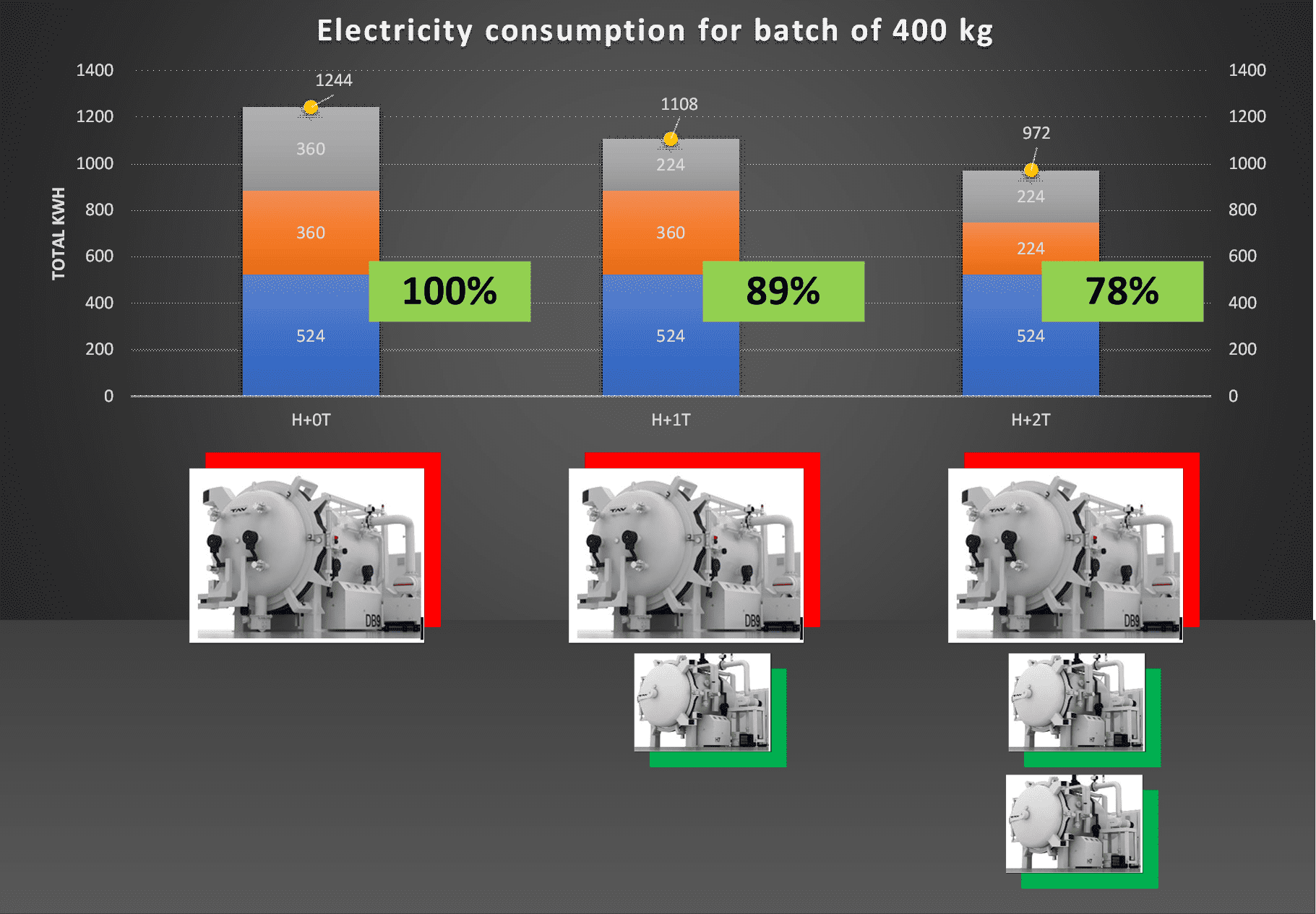
Fig. 5 – Total energy consumption for a batch of 400 kg with different combinations of quenching and tempering furnaces with direct heating
If I were to absolutize it to the previous example, then the processing of 16 tons of steel in a hardening furnace represents 40 processing cycles per month with a batch weighing 400 kg. So, if I take the ideal case of H+2T with the lowest consumption, then 972 kWh * 40 cycles * 5 CZK/kWh = 194,400 CZK in monthly energy costs. In the case of H+0T, it is 1,244 kWh * 40 cycles * 5 CZK/kWh = 248,800 CZK, i.e. 54,400 CZK more per month, 652,800 CZK more per year. Even if the H+0T variant is realistically unfeasible with regard to the time required for the furnace (the quenching and tempering process will take 3*8 hours = 24 hours, 40 cycles = 40 days), it is sufficiently exemplary for illustrative purposes.
Is it an interesting amount? Absolutely definitely. In this case, however, the connection between “technical consumption” and “technological consumption” can be seen. If we really want to save energy, then we have to invest correctly.
However, this variant applies to tempering furnaces with direct heating. If we take into account retort furnaces for tempering, their consumption will be 30% higher. The result then looks like Figure 6. Savings for tempering in a retort furnace will be significantly lower, only 11%. In other words, this means that if we have a combination of a quenching furnace and a tempering furnace with direct heating, and a quenching furnace with tempering in a retort furnace, in the latter case we spend 1,106 – 972 kWh = 134 kWh more for each process. In terms of money, it is 134 kWh * 40 cycles * 5 CZK/kWh = 26,800 CZK per month. Although it is a lower amount than in the previous case, it is still very interesting. This way, you can save up to CZK 321,600 per year.
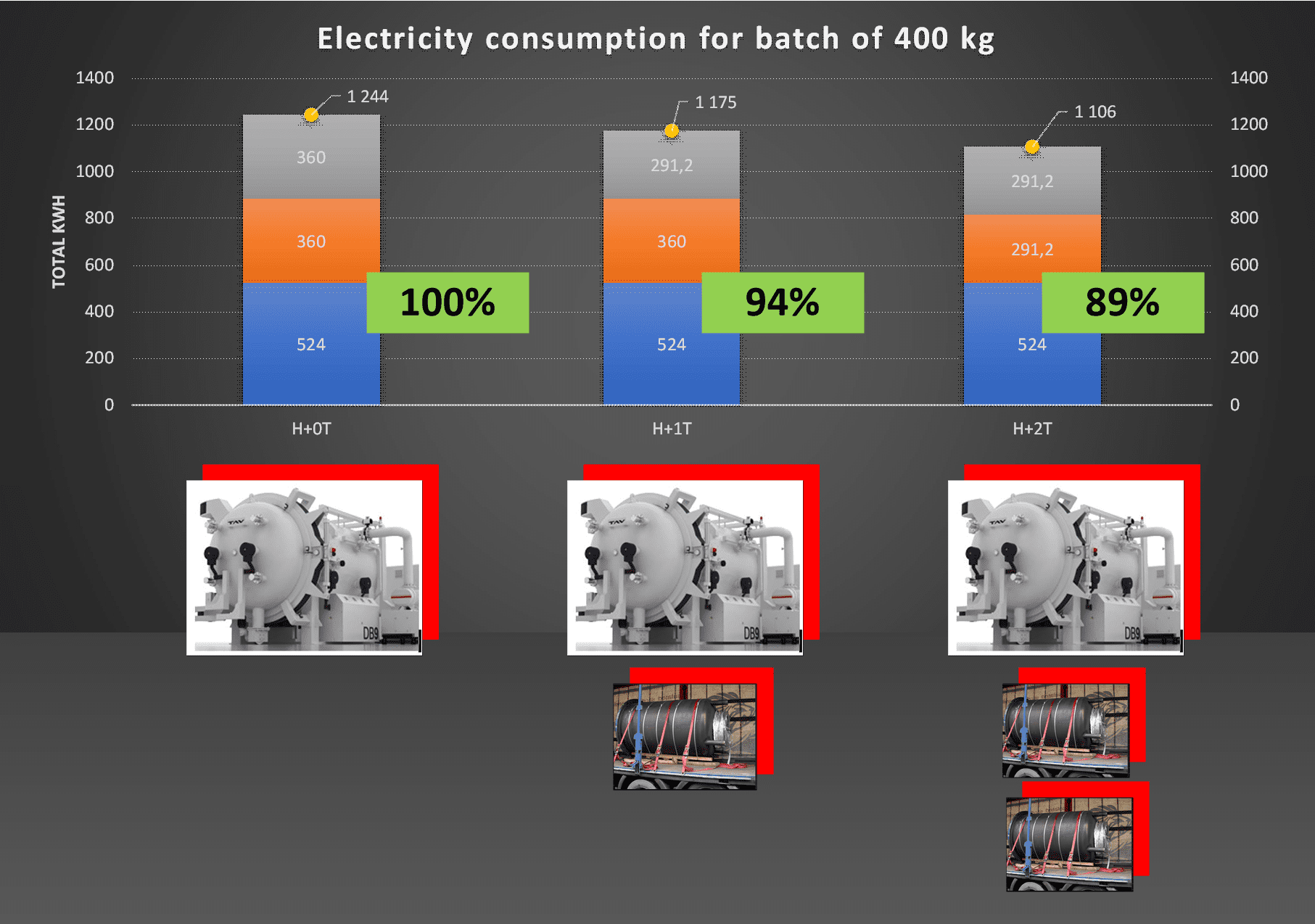
Fig. 6 – Total energy consumption for a batch of 400 kg with different combinations of quenching and tempering furnaces with retort
However, if we choose a double-chamber hardening vacuum furnace or a multi-chamber solution, we reach an even more favourable energy balance. Since in this case we can completely exclude tempering in the heating cell, then the result corresponds to Figure No. 7. For the heating cell on double chamber furnace, I assume an energy requirement of 0.5 kWh/kg, i.e. a little lower than for the separate tempering furnace. Although it seems illogical, it is based on my earlier calculations. ECM even quotes even lower values for the ECM Flex multi-chamber solution.
The total energy requirement drops to a value of 648 kWh for the entire processing. This is therefore a reduction of 972-648 = 324 kWh per quenching and two tempering processes. The total monthly savings will therefore be 324 kWh * 40 cycles * 5 CZK/kWh = 64,800 CZK per month and 777,600 CZK per year.
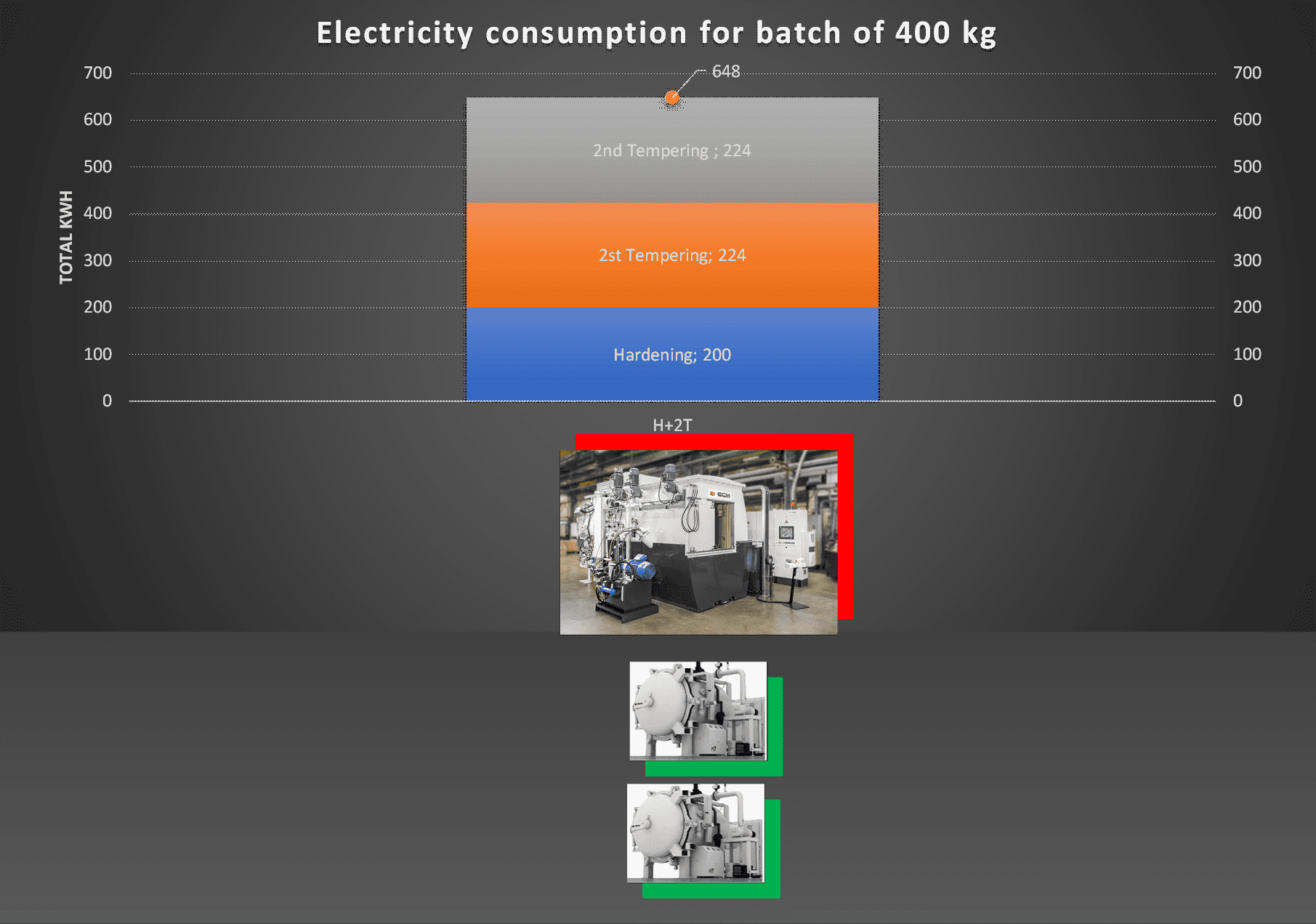
Fig. 7 – Total energy consumption for a batch of 400 kg for a two-chamber vacuum tempering furnace in combination with direct heating vacuum tempering furnaces.
And how is it in absolute terms? In our hypothetical case with 16 tons of steel per month? In the worst case, we would pay almost 3 million CZK for an electricity bill, in the best case, 48% less.
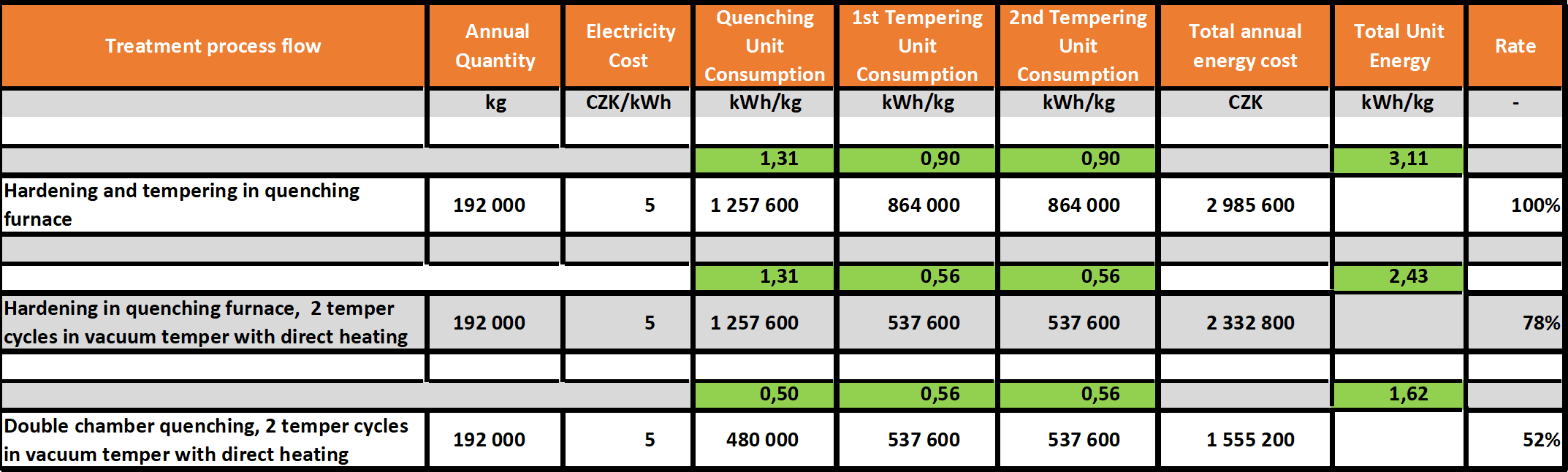
Tab. 2 – The impact of different process flows at annual cost
Are these interesting numbers? Of course, yes. But the road to them can be quite thorny, we don’t have time to spare. Either this means additional investments or a completely new concept of the heata treatment plant.
But it must be said that it also depends on the structure of orders. There are many variants of heat treatment, as well as variants of different types of ovens. And it is not always possible to apply my simplified views. But because they are simplified, they are also illustrative.
To be continued next time.
January 17, 2023
Jiří Stanislav