Heating of dies in a vacuum furnace, part I
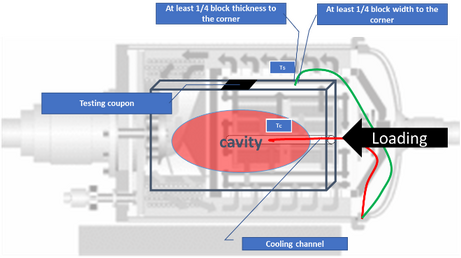
Correct heating in a vacuum furnace has some drawbacks. Its success depends not only on the heat treater, but also on the tool manufacturer. Therefore, in order for the heating to take place, it is necessary to measure the temperature of the dies with load thermocouples Ts (surface) and Tc (core). I’m not sure if all tool manufacturers are aware of this.
Their requirement is usually concentrated on the final hardness after hardening and tempering, but at the same time they also require minimal distortions. But they seldom realize that it also depends on how they prepare the dies themselves for hardening.
If we omit the requirement for stress relieving, then their basic duty includes primarily the preparation of holes for load thermocouples. It just can’t be without them. In doing so, they must be aware that no heat treatment shop has the equipment to make these holes. The designer or the tool manufacturer simply has to consider this.
So, what are the pitfalls of heating? The Fig. 1 shows the ideal heating process according to Nadca 207. The black line represents the programmed furnace temperature, the purple the temperature of the surface thermocouple Ts, and the blue the thermocouple Tc, measuring the temperature in the core of the die.
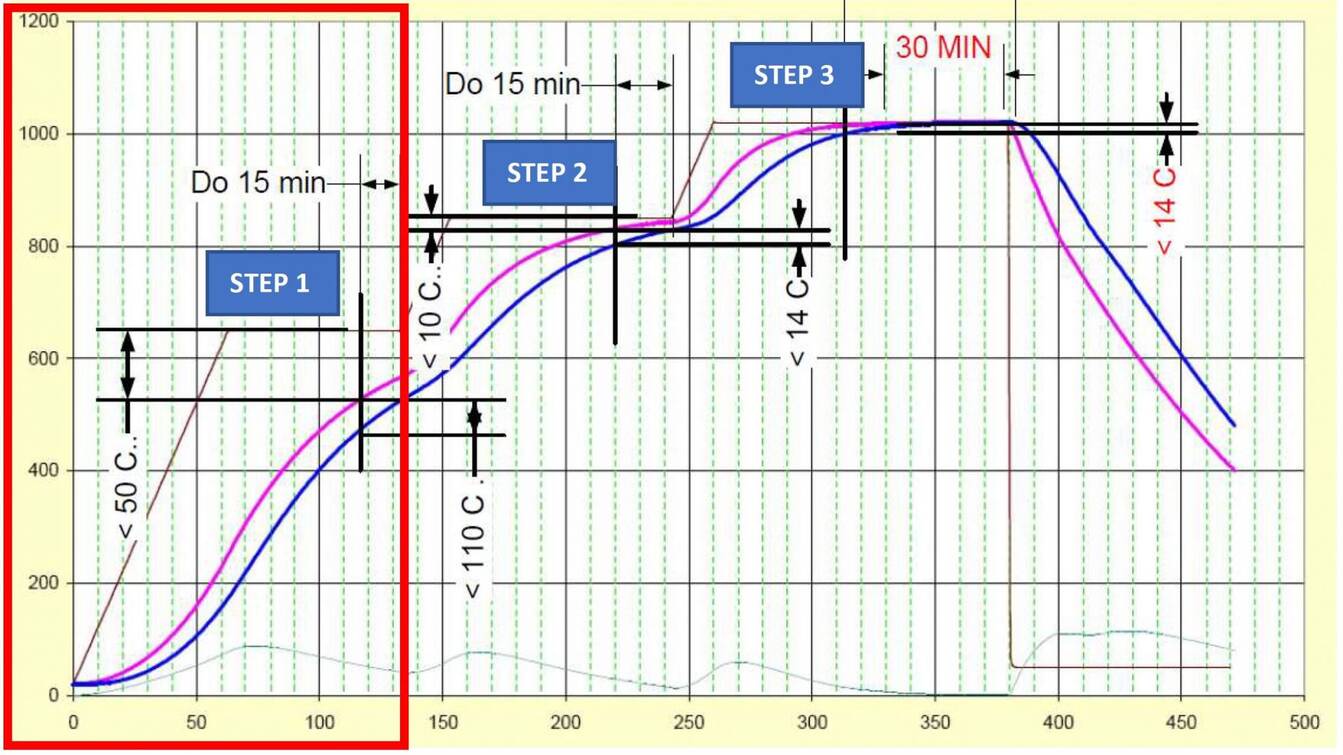
Fig. 1 – Heating cycle with marking of part I
What is not very well known is that the first part of the heating up to 650 C is especially critical for heating and for limiting the final deformation. The reason is that up to about 600 C the material of the die is in elastic state. Above this temperature, however, it turns into a plastic state. I mention a temperature of 600 C, but in reality, this temperature is different for different steels depending on its alloying. So, it can be lower, but also slightly higher.
If the material is in elastic state, the so-called Hooke’s law acts on it, and thus also the stress from the temperature difference Ts and Tc. If the heating is too fast, stress cracks may occur where the tensile stress is too high, but in terms of deformations, all possible deformations are reversible. In order to minimize the risk of cracks, it is necessary to control both the heating rate according to Tc and the temperature difference between Ts and Tc. The heating rate should not exceed 220 C/h measured on a thermocouple Tc, and the temperature difference between Ts and Tc in the whole heating phase up to 650 C should not exceed 110 C.
If we look at it from the point of view of the tool manufacturer, we must be sure that the processing takes place in a furnace that is able to evaluate these parameters. At the same time, the furnace must be able to respond to these parameters being exceeded. If the heating speed at Tc exceeds the permitted limit of 220 C/h, the furnace must be able to automatically reduce the heating input so that this parameter is observed. Similarly, for the difference Ts – Tc> 110 C. Classically programmed furnaces cannot do this. Usually, the heating end point is set, ie 650 C, and the ramp to the furnace heating temperature, eg 10 C/min. However, this is a control of the furnace heating, not the parts in the furnace. Therefore, if we consider the above heating conditions, this ramp must be not fixed, but variable.
However, the inability to control heating via Ts and Tc is not the only problem. An even more important factor in terms of future permanent deformation is the phase of transition of the material from the elastic to the plastic state. The positioning of the dies in the furnace, the thermal conductivity of the heated material, but above all the heat flow between the heating elements and the treated parts play an important role here.
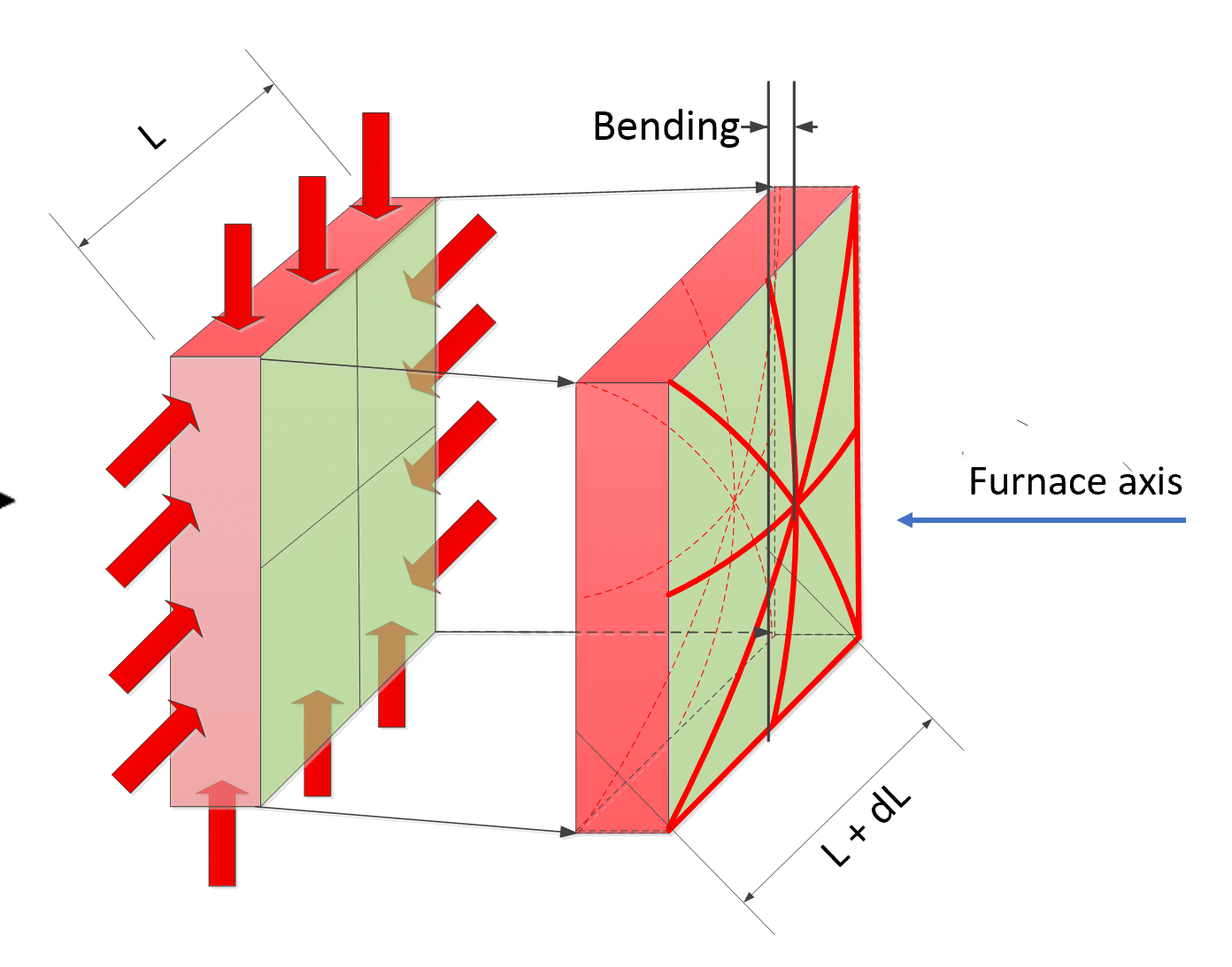
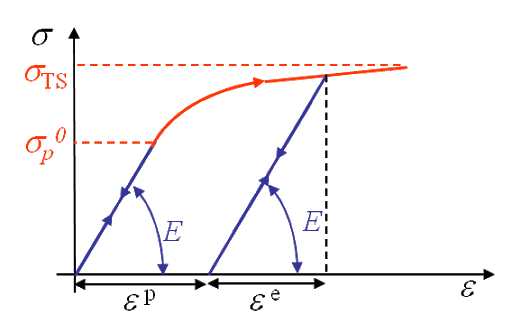
Fig. 2 – Modelling of bending of dies during heating
Fig. 3 – Plastic and elastic deformation
Figure 2 shows the heating of the die, placed perpendicular to the axis of the furnace. The die is heated uniformly around the outer side by the heating elements of the furnace. Because we are in the heating phase, the outer side of the die (Ts) is warmer than its core (Tc). However, as soon as the temperature of the outer layers exceeds the critical temperature, which means the transition of the material from the elastic to the plastic state, then we have a situation where the core of the die is still elastic, the outer surface in the plastic state (Fig.3)
Due to the thermal expansion, the outer side of die expands in length more than the center of the die. Thus, deformation occurs. If the material were homogeneously heated, then nothing significant would happen. However, because the heating is heterogeneous on the die, in places where the material changes into a plastic state, permanent deformation occurs and the die bends. Although this deformation is usually addressed to hardening, ie. rapid cooling, the opposite is true. Too high a heating rate is the main reason for this type of distortion and bending of the dies. Unfortunately, because deformation is permanent, it is usually no longer possible to correct it. This is especially true for hot work steels such as H11, H13, RPU, Dievar etc. Even the subsequent hardening of such a deformed die, even if we use its additional heavy load in the furnace, usually does not bring success. Permanent deformation is therefore really permanent.
In order not to cause this effect, this is another reason why we must control the heating of dies not only through the programmed temperature of the furnace, but also through Ts and Tc, and if possible, limit the ramp to Nadca 207 parameters so that both parameters heating rate according to Tc, so the difference Ts-Tc were under control. This will not only eliminate possible cracks during heating, but above all the risk of unexpected bending of the dies.
When you return to the beginning, the condition for such a process led by the correct positioning of the thermocouple Ts and Tc, and is therefore in the interest of the manufacturer’s tools give to the hardening shop possibility to control these parameters. And what should these holes look like?
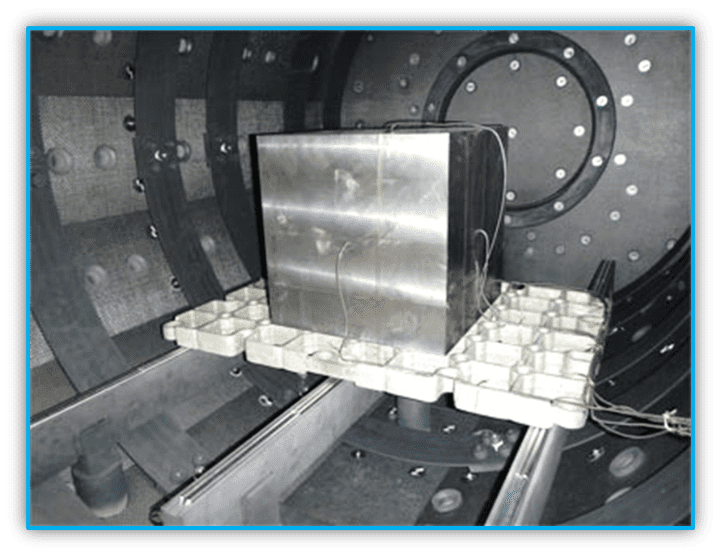
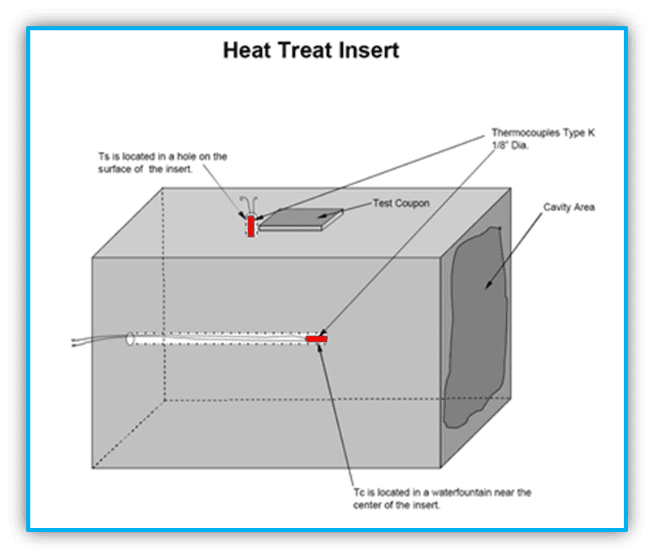
Fig. 4 – Example of placement of a die and load thermocouples in a furnace
Fig. 5 – Thermocouple’s placement into die
This is usually easier for the thermocouple Tc, because cooling channels, for example, can be used. However, for the Ts thermocouple, the tool shop must prepare the required hole for the measurement. Its diameter is tied to the heat treatment shop standards, as each heat treatment supplier uses different diameters of load thermocouples from 1.6 mm to 3.2 mm. So there is a second reason why the tool shop must work closely with the heat treaters, and at least know the diameters of the load thermocouples used. The depth of the hole is 12 to 19 mm, and must usually be located on the back or side of the die at a distance of approximately ¼ the thickness or width of the die from the edge (Fig. 4 and 5).
If we heat one die, we can afford to place it in the axis of the furnace. Then the heating process is almost ideal, because the die is uniformly heated from all sides in the same way (Fig. 6).
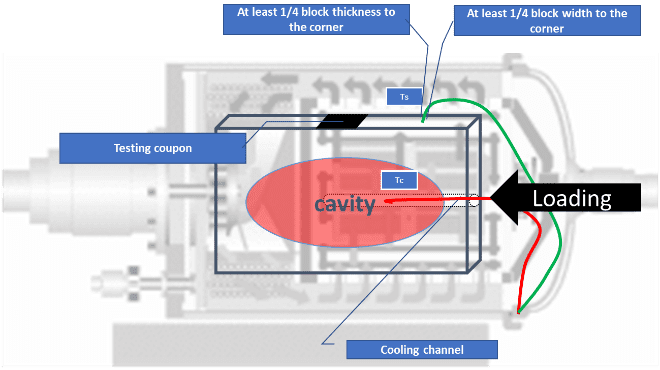
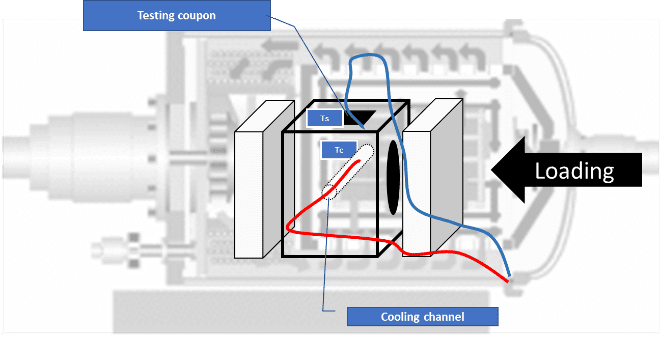
Fig. 6 – Example of one die placement into furnace
Fig. 7 – Example of placing several dies perpendicular to the furnace axis
However, if we harden several dies at once (Fig.7), it is more common to position the parts perpendicular to the furnace axis. In that case, however, everything mentioned above applies, including the risk of bending. The control of the process via Ts and Tc is all the more important. It should be noted here that if we harden dies of different dimensions together, the thermocouples Ts and Tc are inserted into the body of the largest. However, in order for everything to proceed correctly during heating and hardening, the dies must not be too different in size. It is therefore the task for the heat treater to optimize the batch, so that this size and weight of parts should be more less similar.
Of course, the entire heating process in the phase up to 650 C can be improved by using convection heating. This can significantly improve the uniformity of the heating. However, this function of the vacuum hardening furnace also has its drawbacks, also because it is mostly convective fan in the furnace axis, and if the nitrogen flow is not sufficiently turbulent, in the case of dies perpendicular to the furnace axis, and perpendicular to the nitrogen flow, the convetion heating may not be self-saving. Even in this case, it is important to measure the temperatures Ts and Tc, and to have these parameters under direct control.
12th of July, 2021
Jiří Stanislav